
What is Oni Mask?

An Oni mask is a Japanese demon- or ogre-inspired mask based on oni (鬼), supernatural beings found throughout Japanese folklore, religion, art, festivals, and popular culture. The familiar look usually combines horns, fangs, a fierce expression, and bold colors such as red or blue.
Today, Oni masks are worn or displayed for cosplay, Halloween, photography, festivals, collections, décor, and Japanese-inspired styling. Their meaning is not simply “evil”: depending on the story or setting, Oni can represent danger, punishment, fear, strength, the driving away of misfortune, or the idea of confronting destructive forces.
What Is an Oni Mask?
An Oni mask is a visual representation of an oni, a supernatural figure in Japanese tradition often translated into English as an ogre or demon. That translation is useful, but it can also make the figure sound simpler than it is.
Oni appear in different roles across folktales, Buddhist imagery, seasonal customs, local traditions, theater, art, and modern entertainment. Some are threatening or punitive. In other contexts, frightening imagery is used symbolically to drive away misfortune or represent a force powerful enough to confront danger.
The modern phrase Japanese Oni mask covers a wide range of objects, from festival and folk-inspired masks to decorative wall pieces, sculpted cosplay masks, and contemporary designs that borrow Oni features. That is why two products called “Oni masks” can look very different.
If you came here asking “what is an Oni mask?”, this guide focuses specifically on the mask: how it looks, what it represents, the main styles, how it differs from Hannya and samurai face armor, how modern masks are used, and what to check before choosing one. For a deeper guide to the creature itself, read What Is Oni? The Mythology of the Japanese Oni in Folklore.
What Does an Oni Mask Represent?
There is no single meaning that applies to every Oni mask. The meaning depends on the story, artistic tradition, setting, color, expression, and how the wearer or owner uses the design.
Horns, fangs, glaring eyes and an exaggerated snarl communicate a threatening supernatural presence.
Oni are commonly depicted as physically powerful, so modern designs often use the face as a symbol of raw strength or intensity.
Oni appear in religious and folkloric imagery as fearsome figures associated with punishment and the consequences of wrongdoing.
In seasonal customs such as Setsubun, Oni imagery becomes part of a ritual in which evil or bad fortune is expelled and good fortune welcomed.
Modern art, tattoos, fashion and décor sometimes use the Oni face as a metaphor for anger, temptation, fear, or destructive impulses.
There is no one-word answer. Oni are usually frightening beings, but frightening imagery can function as a warning, an antagonist, a ritual figure, or a modern symbol of power and self-control.
What Does Wearing an Oni Mask Mean?
Wearing an Oni mask today usually says more about the event and styling than about a fixed religious meaning. A person may wear one for cosplay, a Japanese-inspired costume, Halloween, stage photography, a themed party, a festival performance, or simply because the sculpted face creates a dramatic visual identity.
In a traditional setting, context matters. A mask used in a local festival or ritual is not automatically equivalent to a commercial costume mask. Japan has many regional traditions, and masks can have specific roles that should not be generalized into one nationwide “Oni mask meaning.”
If you are wearing a modern Oni-inspired mask, think of it primarily as a visual reference to the fierce Oni figure unless the particular mask, maker, performance, or tradition provides a more specific meaning.
Types of Oni Masks
One reason shoppers find Oni masks confusing is that there is no single standardized shape. Modern designs range from simple wearable costume pieces to rigid sculpted display masks.
Coverage, horn size, material and interior construction can change both the appearance and the practical use of a mask.

Full-Face Oni Masks
Full-face masks cover most or all of the face and create the strongest transformation. Check dimensions, eye openings, ventilation, weight, padding and strap placement.
Half-Face and Mempo-Inspired Masks
Half masks focus on the lower face. Modern “samurai Oni” or “mempo-style” descriptions explain the look, but a decorative half mask should not be confused with historical samurai armor.
Horned Oni Masks
Some designs use short horns for a compact profile; others use exaggerated horns for cosplay or wall display. Large horns affect storage, comfort and display depth.
Decorative Oni Masks
For wall décor, shelf display, studios or collections, finish, depth, symmetry, mounting method and how light catches the sculpted features can matter more than wearable comfort.
Modern Tactical-Style Oni Masks
Some modern designs combine an Oni face with mesh, straps or segmented construction. The tactical appearance is a style; it does not automatically establish a protective rating.
What Are Oni Masks Made Of?
Historical and artistic Japanese masks have been made in many materials, while modern commercial Oni masks use an even broader range. You may see wood, lacquered materials, paper-based constructions, resin-like materials, PVC, TPU, latex, and fiberglass depending on the maker and intended use.
The useful distinction is the material listed on the individual product page rather than assuming every Oni mask is built the same way.

Often chosen for a rigid, sculpted shape and crisp surface detail. It can work especially well for display pieces and structured wearable designs.
Used in some lighter, more flexible designs. Certain products are specified as using high-impact-resistant TPU; that is a material property, not certification of the complete mask.
Common in lighter costume-style masks and designs where lower weight is useful.
Can create a lighter traditional-looking decorative or costume piece depending on how the mask is finished.
Bottom line: use the product-specific material, dimensions and construction details as the source of truth. “Oni mask” describes the design family, not one manufacturing method.
Oni Mask Colors and What They Mean
Red and blue are the colors most strongly associated with Oni in popular imagery, but Oni masks also appear in black, green, yellow, white, gold, silver, purple and multicolor finishes.
Be careful with rigid color dictionaries that imply every Oni mask in Japanese history followed one universal code. Meanings vary by source, religious interpretation, local custom, artwork and modern design.
Hot, aggressive, energetic and immediately recognizable.
A colder visual tone and strong contrast with familiar red Oni imagery.
Emphasizes shadow, shape and a darker or more restrained appearance.
Emphasizes ornament, display presence and sculptural detail.
Draws attention to linework, teeth, horns, paint accents and contrast.
There are specific Buddhist and festival-related interpretations of groups of colored Oni, but that topic deserves more nuance than a one-line chart. This page therefore keeps color guidance practical rather than claiming every mask color has one mandatory meaning.
Why Are Oni Masks Used at Setsubun?
Setsubun is one of the clearest places where many people encounter Oni imagery. Around the beginning of February, a custom called mamemaki involves throwing roasted soybeans while calling for Oni or evil influences to go out and good fortune to come in.
In home celebrations, one person may wear an Oni mask while others throw beans toward the “Oni.” Japan’s official tourism information describes the familiar call as “Oni wa soto! Fuku wa uchi!” — essentially “Demons out! Good luck in!”
The frightening figure represents what is being driven away. The mask is part of a ritual about clearing out misfortune rather than a promise that the object itself physically protects the wearer.
For cultural background, see the Japan National Tourism Organization’s Setsubun overview.

Oni Mask vs Hannya Mask
Oni masks and Hannya masks are not the same thing. They are often confused because both can have horns, sharp features and frightening expressions.

| Feature | Oni Mask | Hannya Mask |
|---|---|---|
| Core figure | An Oni, a supernatural ogre/demon figure in Japanese tradition | A specific Noh mask type representing a female demon or a woman transformed by resentment |
| Typical visual feel | Heavy, forceful, monstrous, often with large fangs and bold horns | More human facial structure combined with horns, metallic-looking eyes/teeth, and an anguished demonic expression |
| Where the term belongs | Folklore, festivals, art, décor, costumes, modern popular culture | Strongly associated with the Noh theatrical mask tradition |
| Modern shopping intent | Oni mask, demon mask, horned Japanese mask, cosplay/display mask | Hannya mask, Noh-inspired demoness mask, cosplay/display mask |
The Nohgaku Performers’ Association describes Hannya as “a female demon or a woman transfigured by resentment.” That is much more specific than the broad category of Oni imagery. If you want to compare many traditional Japanese mask families rather than only these two, see our guide to 18 types of Japanese masks.
Is an Oni Mask the Same as a Samurai Mask or Mempo?
No. Historical mempō were facial armor used with samurai armor. The Metropolitan Museum of Art notes that samurai masks served as face defense and helped secure the helmet; many were half masks covering the nose and the face below the eyes.
Modern “samurai Oni masks” often combine an Oni-style expression with a lower-face armor silhouette. That can be a useful style description, but a costume or decorative Oni half mask is not automatically historical armor and should not be presented as such.
If the look you want is a fierce lower-face design, search by Oni half mask, mempo-inspired Oni mask, or samurai-style Oni mask. If your interest is historical armor, look for documented menpō rather than relying on a modern product title.
For a museum reference, see the Metropolitan Museum of Art’s Japanese menpō.
When Can You Wear or Use an Oni Mask?
Oni masks are used in several modern settings. The right choice depends on fit, visibility, weight, finish and whether you intend to wear or display it.
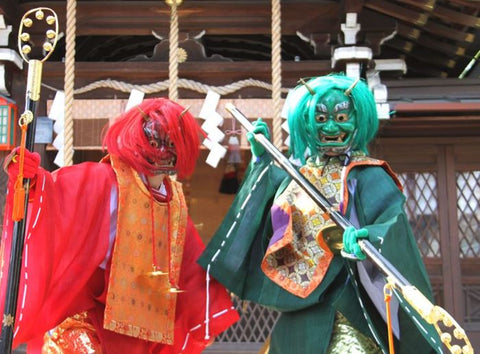
Cosplay and Costume Parties
Oni masks work well for original demon characters, Japanese-inspired fantasy costumes, samurai-fantasy styling and dramatic photo shoots.
A full-face mask creates the strongest transformation. A half mask leaves more of the eyes and upper face visible and may be easier to combine with makeup, wigs, headwear or layered costumes.
Halloween
An Oni mask offers a recognizable horned-demon silhouette without requiring a full character costume. Check sight lines, comfort and ventilation before extended wear.
Photography, Stage Styling and Events
A rigid sculpted mask can create strong shadows and a dramatic profile. For photography, finish and horn shape matter; for stage use, prioritize visibility and secure straps.
Wall Art and Display
An Oni mask can also function as a sculptural décor piece. Full-face fiberglass designs, metallic finishes, deep brow lines and large horns often read especially well on a wall because they produce visible depth instead of looking like a flat print.
For display, check weight and mounting method as carefully as you would check fit for a wearable mask.

Can You Use an Oni Mask for Airsoft or Paintball?

Some shoppers search for an airsoft Oni mask because tactical-style Oni designs use mesh, adjustable straps, rigid shells or high-impact-resistant materials. Those features can describe the construction, but they are not the same thing as a tested protective rating for the complete mask.
A statement such as “high-impact-resistant TPU” can be a valid material specification. Unless an individual product expressly identifies an applicable tested protective standard for the finished product, do not treat that material specification as certification of the whole mask. If an activity requires certified eye or face protection, use equipment specifically tested for that activity.
How to Choose the Right Oni Mask
Instead of choosing only by color, work through the practical details that determine whether the mask suits your intended use.

1. Decide Between Full Face and Half Face
Choose full-face coverage for the most dramatic transformation. Choose a half mask when you want more freedom around the eyes, easier pairing with headwear, or a lighter visual profile.
2. Check the Listed Dimensions
Do not assume “one size” means every mask has the same proportions. Compare height, width, face coverage and strap design. Horns can add significant overall size.
3. Match Material to the Purpose
For display, rigid shape and finish may be your priority. For wearable costume use, weight, edge shape, ventilation, padding and strap adjustment become more important.
4. Look at the Interior
A mask can look excellent from the front but feel very different depending on interior padding, strap position, eye openings and how the edges sit against the face.
5. Choose the Expression and Finish
Fangs, wrinkle depth, horn shape, metallic paint, weathering, gloss, matte surfaces and mesh can completely change the character of the same basic Oni silhouette.
How to Display an Oni Mask
For decorative use, an Oni mask looks strongest when the lighting reveals its three-dimensional features. Side lighting or light from slightly above can emphasize the brow, horns, cheekbones, nose and teeth. Flat front light tends to reduce those shadows.
Before hanging a mask, check its weight and whether it includes a strap, hook point, cord or another mounting method. Do not assume a wearable elastic strap is designed as a permanent wall hanger. For heavier rigid masks, choose hardware suitable for both the mask weight and the wall material.
Popular display locations include an entryway, gaming setup, studio wall, tattoo studio, costume room, shelf arrangement or a Japanese-inspired décor wall. Varying the height and angle of multiple masks can make the display feel like a collection rather than a row of identical objects.
What Are Oni Masks Called in Japanese?
The supernatural being is oni, written 鬼. In English shopping and costume language, “Oni mask” is the widely understood phrase for a mask depicting or inspired by an Oni.
You will also encounter Japanese terminology for specific theatrical masks, festival masks and armor masks, but those terms should not all be treated as synonyms. Mempō refers to a category of facial armor, while Hannya names a specific Noh mask type. Calling every horned Japanese mask “Oni,” “Hannya,” or “samurai mask” erases useful distinctions.
Are Oni Masks Traditional or Modern?
Both the Oni figure and Japanese mask traditions have deep historical roots, but many products sold today are modern interpretations. A contemporary fiberglass, TPU, PVC, LED or fantasy-style Oni mask may borrow the horns, fangs, colors and fierce expression without being a replica of one historical object.
That is not a problem as long as the description is accurate. A modern Oni-inspired mask can be sold for what it actually is: a contemporary costume, display, cosplay or decorative design influenced by Japanese imagery. “Traditional,” “antique,” “authentic,” “handmade,” or specific origin claims should only be used when the individual product supports them.
Oni Mask Symbolism Without the Myths
Online explanations of Oni masks often become more precise than the evidence allows. You may see claims that every forehead mark has an ancient fixed meaning, every color represents one exact emotion, or every fierce Japanese mask was historically worn by samurai.
- the Oni as a folklore figure;
- a specific festival or religious context;
- a Noh or other theatrical mask type;
- samurai facial armor;
- and a modern Oni-inspired commercial design.
If you want the deep folklore rather than the product-focused overview, continue to our Oni mythology guide. For the specific question of marks and symbols on the brow, see our Oni mask forehead-mark guide; that page owns the detailed discussion rather than repeating it here.
Frequently Asked Questions About Oni Masks
What is the meaning of an Oni mask?
An Oni mask represents an Oni, a fearsome supernatural figure from Japanese tradition. Depending on context, the imagery can suggest danger, punishment, strength, fear, driving away misfortune, or confronting destructive forces. It does not have one universal meaning for every wearer or design.
Are Oni masks evil?
Oni are commonly frightening and can be hostile or punitive in folklore, but Oni imagery also appears in customs where the frightening figure is expelled or used symbolically in relation to protection and good fortune. Context matters.
What is the difference between an Oni mask and a Hannya mask?
An Oni mask depicts an Oni, while Hannya is a specific Noh mask type for a female demon or woman transformed by resentment. They can both have horns and fierce expressions, but they come from different character categories and should not be used as interchangeable names.
Is an Oni half mask a samurai mask?
Not automatically. Modern Oni half masks often borrow the silhouette of samurai facial armor, but historical mempō are armor. A costume or decorative half mask should be described as Oni, samurai-style, or mempō-inspired unless it is actually documented armor.
Why do Oni masks have horns and fangs?
Horns and fangs are part of the familiar visual language used to make Oni appear non-human, threatening and physically powerful. Individual artworks vary, so not every Oni is depicted in exactly the same way.
What is the most common Oni mask color?
Red is one of the most recognizable Oni colors, with blue also very common in popular depictions. Modern masks come in many other colors and finishes, and color alone should not be treated as a universal meaning code.
Can an Oni mask be used as wall décor?
Yes. Many modern Oni masks are purchased specifically for wall display, shelves, studios, gaming rooms, tattoo shops, photography sets or themed décor. Check weight and mounting method before hanging a rigid mask.
Can I wear an Oni mask for cosplay?
Yes, if the individual mask is designed to be wearable. Check dimensions, eye openings, ventilation, padding, weight and straps. Full-face and half-face masks create very different costume effects.
Does a high-impact-resistant Oni mask mean it is protective gear?
No. High-impact resistance can describe the material used in a mask, but that alone does not establish a protective certification for the complete product. If your activity requires certified eye or face protection, use equipment specifically tested for that activity.
Where can I see different Oni mask styles?
Browse our Oni Mask collection to compare full-face, half-face, fiberglass, TPU and other modern Oni-inspired designs. Check each product page for exact material, size, fit, construction and intended use.
Explore Japanese Oni Masks
An Oni mask can be a costume centerpiece, a dramatic display object, a photography prop, or simply a way to explore one of the most recognizable supernatural faces in Japanese visual culture. The best choice depends on the shape, material, finish, coverage and use you want.
If you are researching the culture rather than shopping, continue with What Is Oni? and our broader Japanese masks guide.
Browse Oni Masks