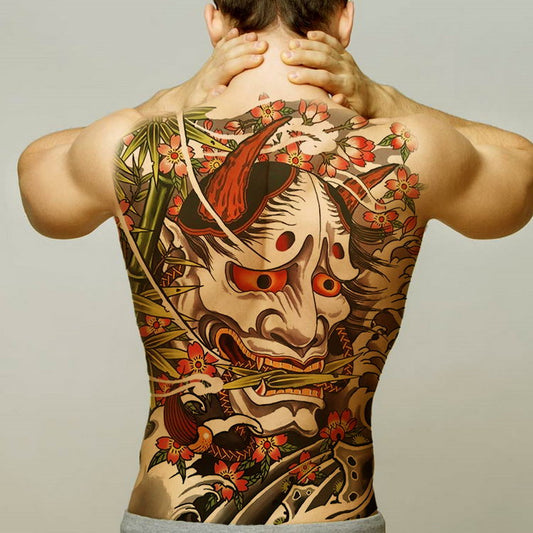
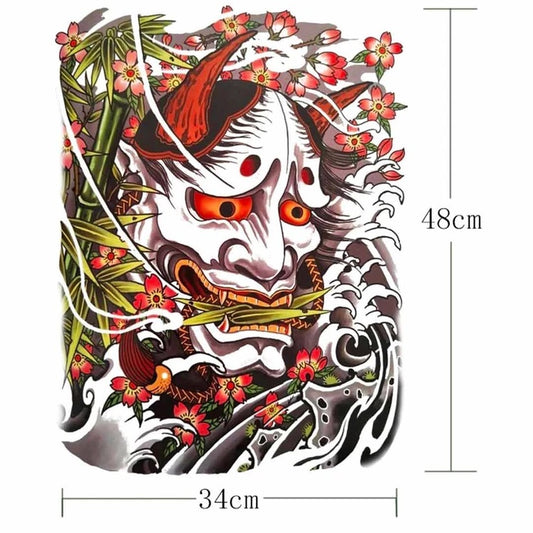
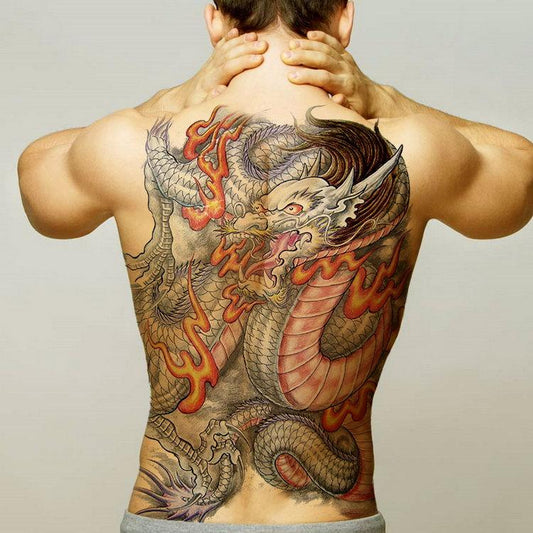
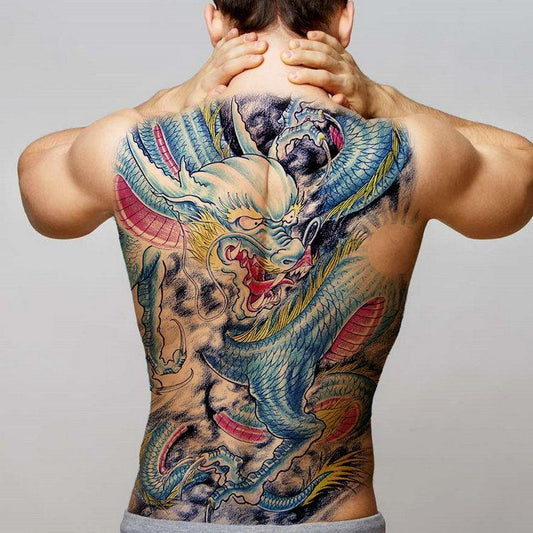
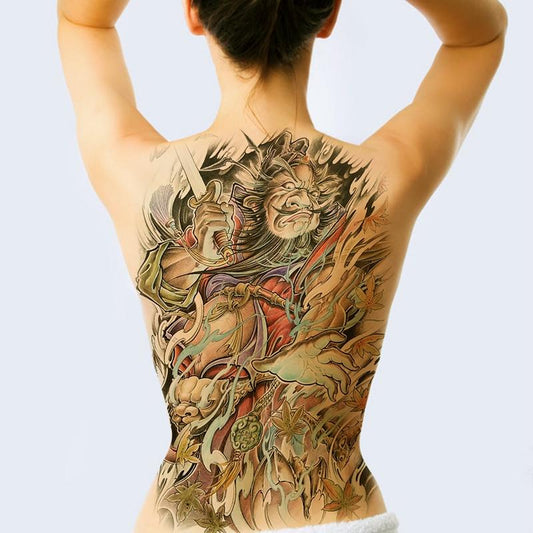
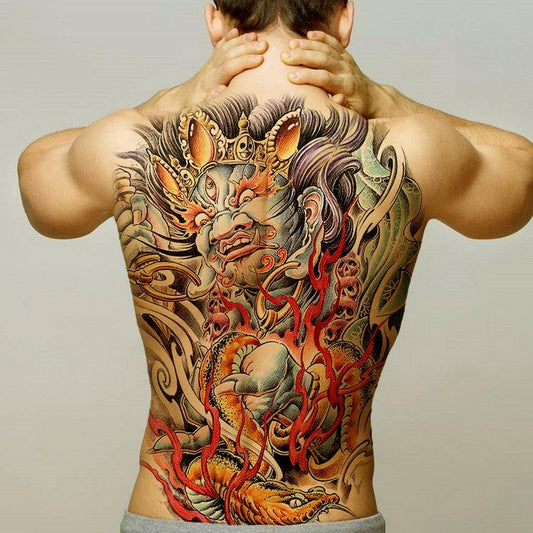
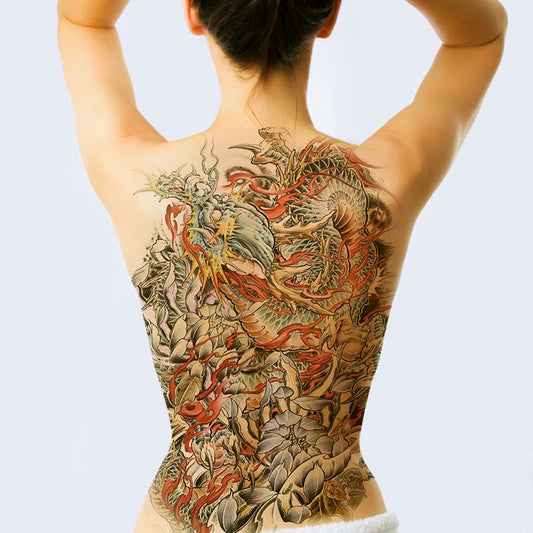
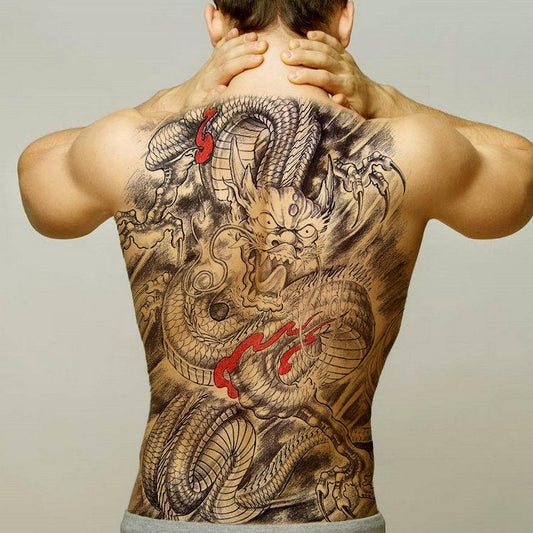
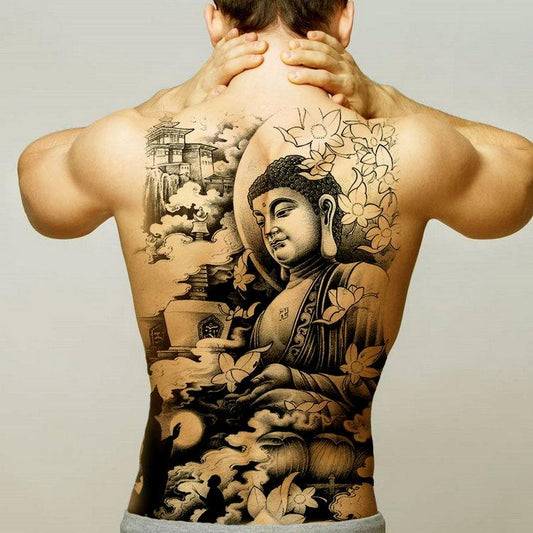
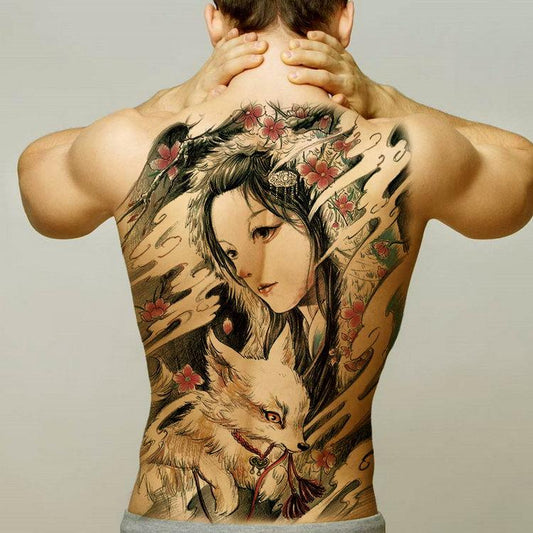
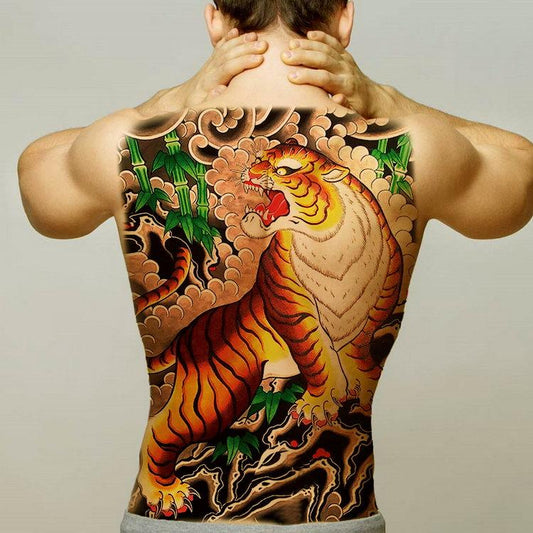
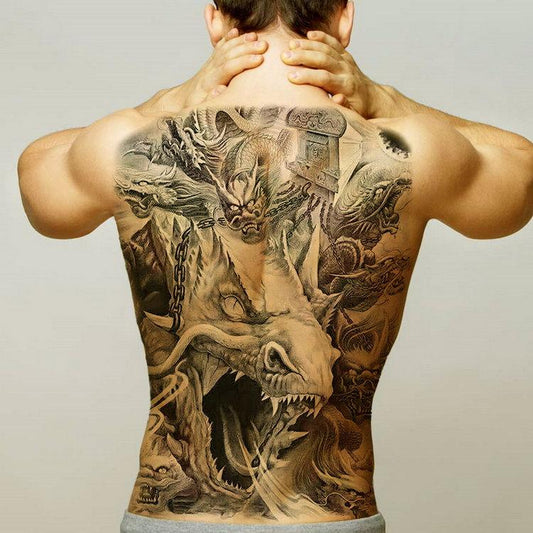
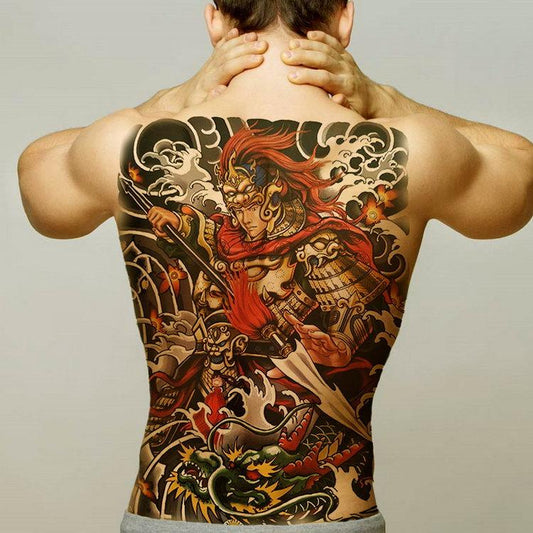
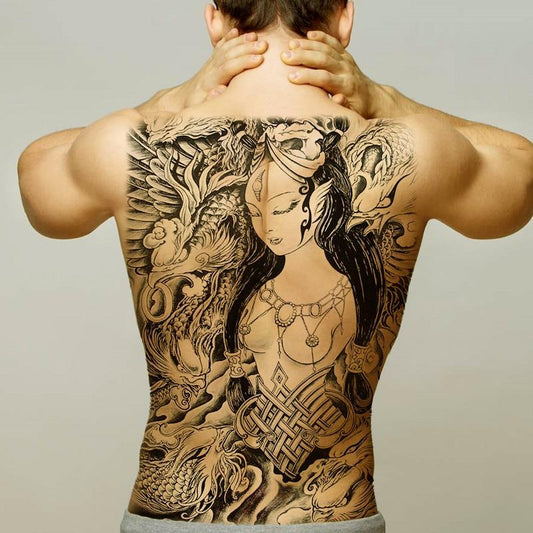
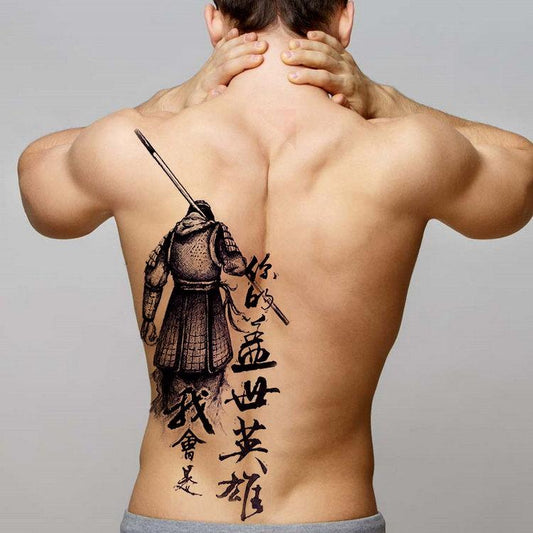
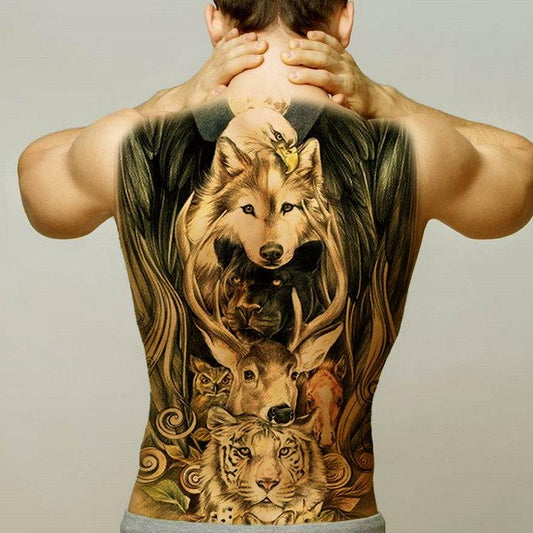
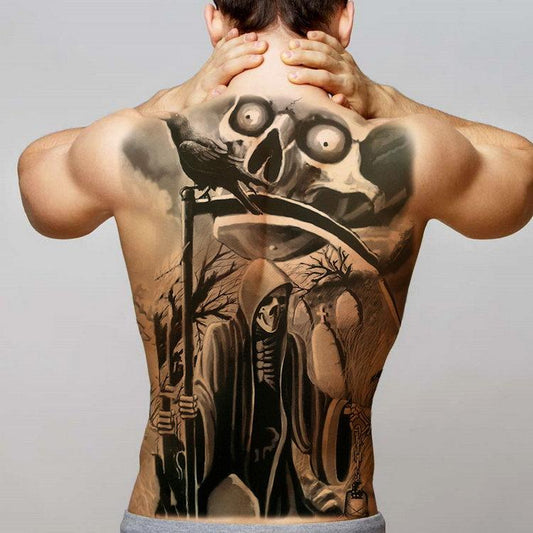
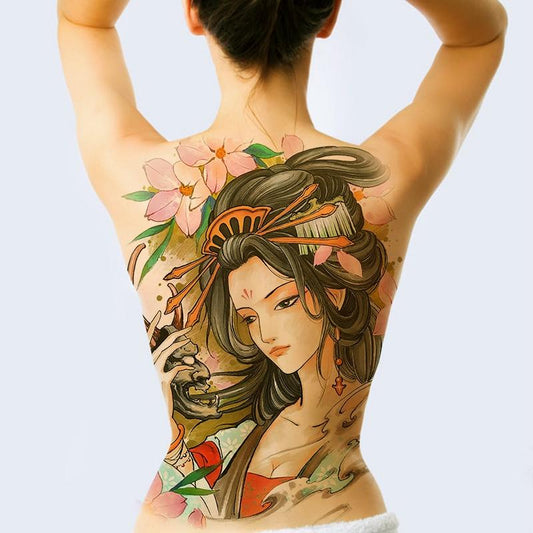
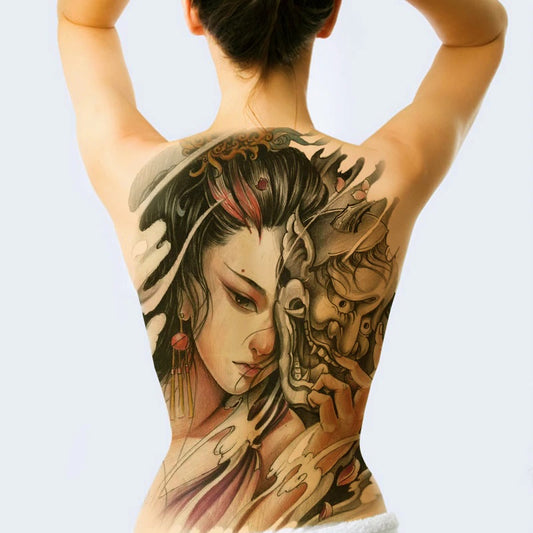
Shop Japanese temporary tattoos with Hannya, dragon, demon, Kitsune, tiger, samurai, warrior, Maiko, geisha and other Japanese-inspired designs. These are removable body-art products for shoppers who want to try a motif without committing to permanent tattooing.
Temporary tattoos are not the same as traditional Japanese tattooing or permanent irezumi. Materials, adhesive systems, dimensions, wear time and removal methods can vary by product, so follow the instructions supplied with the exact item.
Jump to: designs · how to choose · irezumi context · application · skin safety · removal · FAQs
Japanese Temporary Tattoo Designs
| Motif |
Visual direction |
| Hannya and demon masks |
Dramatic mask imagery and darker Japanese-inspired body art |
| Dragon |
Large, flowing animal designs suited to arms, shoulders, back or torso depending on size |
| Kitsune |
Fox-mask and folklore-inspired styling |
| Tiger and animals |
Bold animal-focused artwork |
| Samurai and warrior |
Warrior-inspired illustration and armor references |
| Maiko and geisha imagery |
Portrait-style Japanese cultural and fashion references |
Symbol meanings vary by artist, period and context. Avoid treating one dragon, tiger, Hannya or Kitsune image as having a single universal meaning.
How to Choose a Japanese Temporary Tattoo
-
Start with placement. A large dragon or warrior design needs different space from a smaller mask or portrait motif.
-
Check the dimensions. Product photos can make a tattoo look larger or smaller than it will appear on skin.
-
Choose a body area with the design shape in mind. Long designs often suit arms or legs, while wider designs may fit shoulders, chest or back better.
-
Check the application method. Water-transfer, adhesive and other temporary body-art systems can require different steps.
-
Check the ingredient or material information. Do not assume every product uses the same adhesive, ink or film.
-
Choose the motif for its artwork, not a generic symbolism promise. Cultural motifs can carry multiple meanings.
Japanese Temporary Tattoos and Irezumi
Irezumi is a Japanese term associated with tattooing and is often used in English-language discussion of traditional Japanese tattoo work. Permanent Japanese tattooing developed through complex historical, artistic and social contexts.
Temporary tattoos inspired by dragons, Hannya masks, tigers, warriors or other Japanese imagery are modern removable products. They should not be presented as authentic permanent irezumi, hand-poked tattooing or the work of a trained tattoo artist simply because they borrow related imagery.
Likewise, Japanese tattoo history should not be reduced to one simple origin story. Archaeological imagery, historical records, punishment practices, decorative tattooing and modern tattoo culture belong to different periods and contexts.
Japanese Tattoo Motifs and Cultural Context
Japanese visual culture includes recurring motifs such as dragons, tigers, masks, flowers, waves, warriors and supernatural beings. Their interpretation can change depending on the artwork and surrounding elements.
-
Hannya imagery comes from Japanese Noh theatre mask traditions and is visually associated with intense emotion.
-
Oni and demon imagery draws from Japanese folklore and can represent fearsome supernatural figures in different contexts.
-
Kitsune imagery references fox traditions in Japanese folklore and religious culture.
-
Dragon and tiger imagery appears widely in East Asian art and modern tattoo design and should not be reduced to one fixed meaning.
-
Maiko and geisha imagery references specific Japanese cultural roles and should be treated more carefully than a generic “Japanese girl” label.
How to Apply a Temporary Tattoo
Follow the instructions supplied with the exact product. For a typical water-transfer tattoo, the process may involve cleaning and drying the skin, removing the protective film, placing the design face-down, wetting the backing and then peeling it away after the transfer sets.
Do not assume that procedure applies to every product. If the listing uses a different adhesive or transfer system, follow that method instead.
Before Application
- Choose clean, dry skin free from heavy lotion or oil.
- Avoid applying over cuts, rashes, irritated skin or other damaged areas.
- Check the dimensions and orientation before placing the design.
- If you have known skin sensitivities, review the product ingredients and instructions carefully.
Temporary Tattoo Skin Safety
This collection does not make universal claims that every temporary tattoo is hypoallergenic, allergen-free, dermatologically tested, non-toxic for every user or suitable for sensitive skin. Those claims require product-specific evidence.
Skin can react differently to adhesives, colorants and films. Stop using a temporary tattoo if you develop irritation, burning, swelling or another unexpected skin reaction. Do not apply a product to broken or already irritated skin.
For children, sensitive skin, allergies or other specific skin concerns, use the product instructions and appropriate professional guidance rather than relying on a general collection description.
How Long Do Japanese Temporary Tattoos Last?
Wear time varies by product, placement, skin preparation, friction, water exposure and body oils. Do not assume every temporary tattoo survives swimming, bathing or the same number of days.
Areas that rub against clothing or are washed frequently may wear faster. Use the individual listing for any product-specific longevity claim.
How to Remove a Temporary Tattoo
Use the removal method recommended for the exact product. Depending on the transfer system, removal may involve warm water, soap, cosmetic oil or another gentle method.
- Avoid aggressive scraping or rubbing that irritates the skin.
- Remove adhesive residue gently.
- Wash the area after removal if the product instructions recommend it.
- Stop if removal causes significant irritation.
Temporary Tattoos for Costumes, Festivals and Photography
Japanese-inspired temporary tattoos can be used for conventions, costume styling, festivals, photography or simply testing how a motif looks in a particular placement.
For matching mask imagery, browse Oni Masks, Hannya Masks or Kitsune Masks. These are separate product categories, so use them as visual references rather than assuming a temporary tattoo is historically linked to a specific mask tradition.
Are These Tattoos Authentic Traditional Japanese Tattoos?
No. They are modern temporary body-art products using Japanese or Japanese-inspired imagery. They are not permanent tattoo work, historical artifacts or proof of a traditional tattooing technique.
What Affects Japanese Temporary Tattoo Prices?
Use the live product card for current pricing because prices and promotions can change. Differences can reflect size, printing, number of pieces, transfer method and current promotion.
Japanese Temporary Tattoo FAQs
What designs are available?
The collection includes Hannya, dragon, demon, Kitsune, tiger, samurai, warrior, Maiko, geisha and other Japanese-inspired designs.
Are temporary tattoos the same as irezumi?
No. Irezumi refers to tattooing and Japanese tattoo traditions, while these are removable modern body-art products.
Are these temporary tattoos hypoallergenic?
Do not assume that for the whole collection. Check the exact product for ingredient, material and testing information.
How long does a temporary tattoo last?
Wear time depends on the product, placement, skin preparation, friction and water exposure. Check the exact listing for product-specific guidance.
Can I swim with a temporary tattoo?
Do not assume every product is designed to withstand swimming. Follow the exact product instructions for water exposure.
How do I remove a temporary tattoo?
Use the product-recommended removal method and avoid aggressive rubbing that irritates the skin.
Can I apply one to irritated or broken skin?
No. Avoid applying temporary tattoos over cuts, rashes or already irritated skin.
Shop Japanese Temporary Tattoos
Compare designs by motif, dimensions, placement, transfer method and product-specific skin instructions. For related mask imagery, browse Japanese Masks.

 Sale
Sale