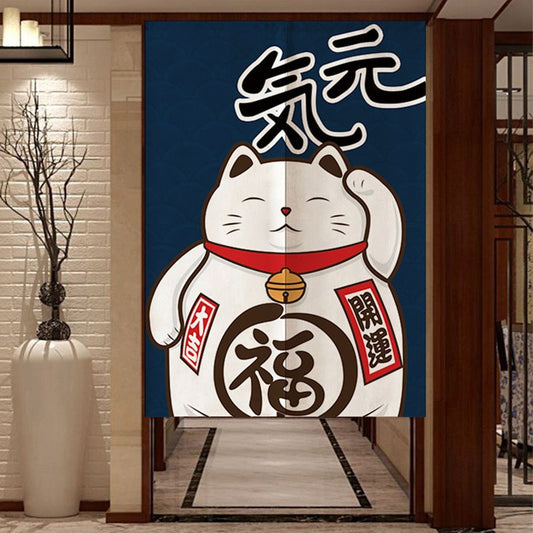
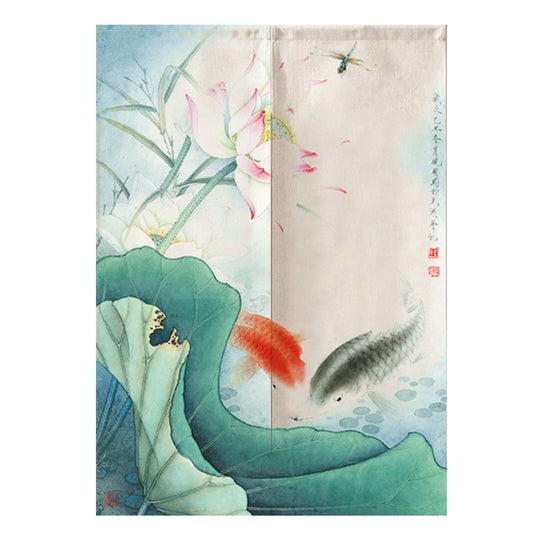
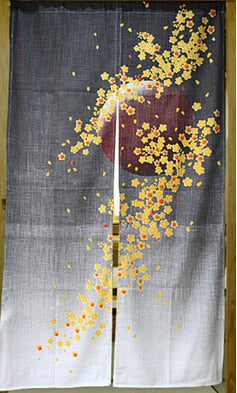
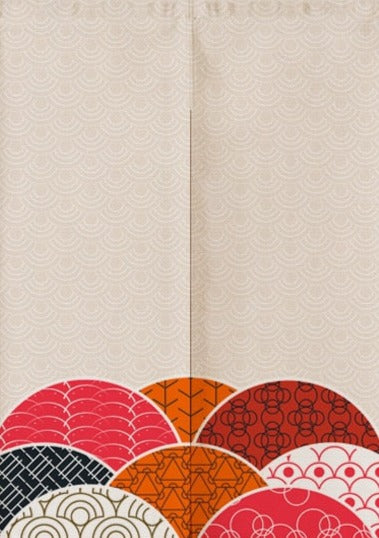
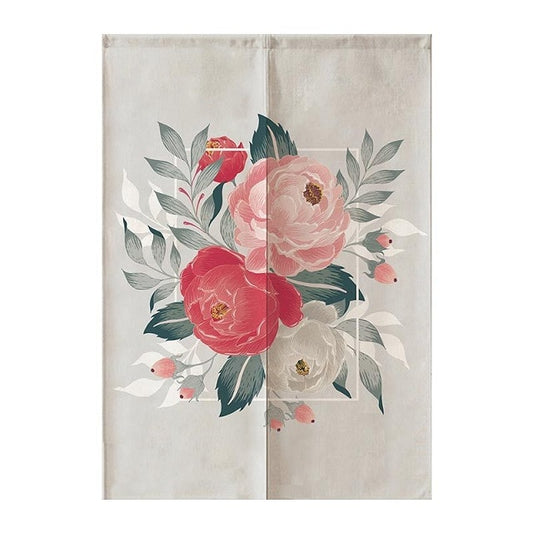
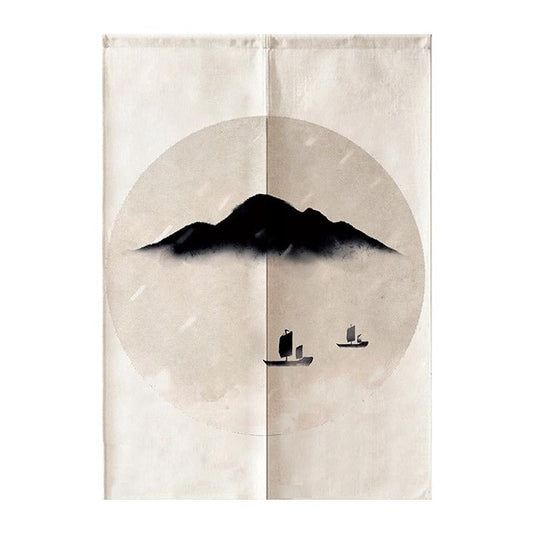
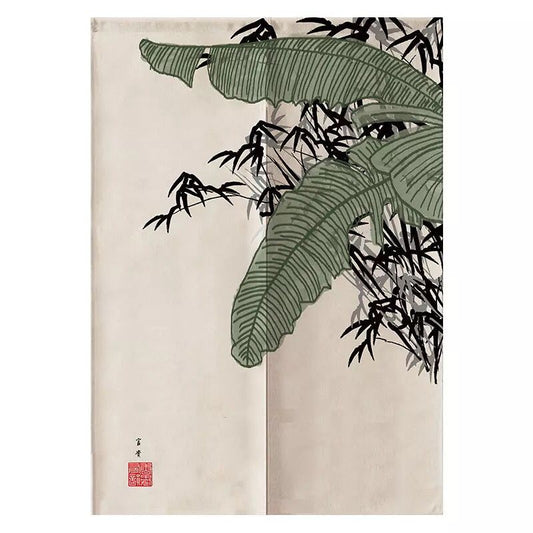
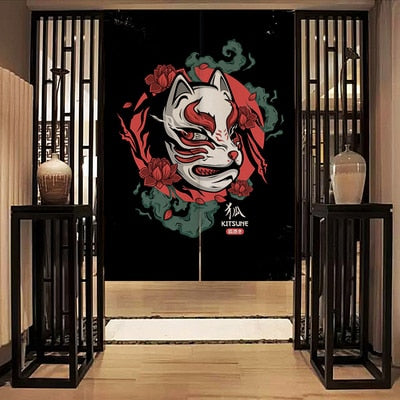
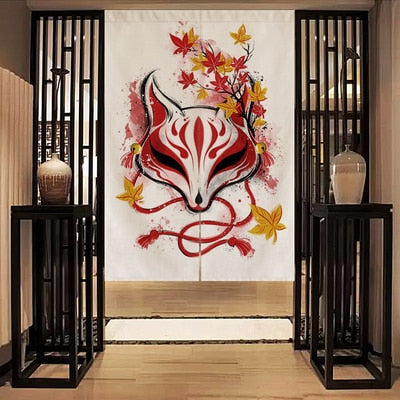
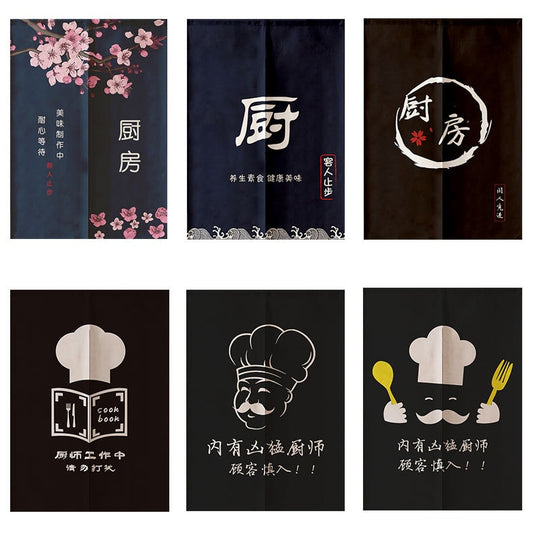
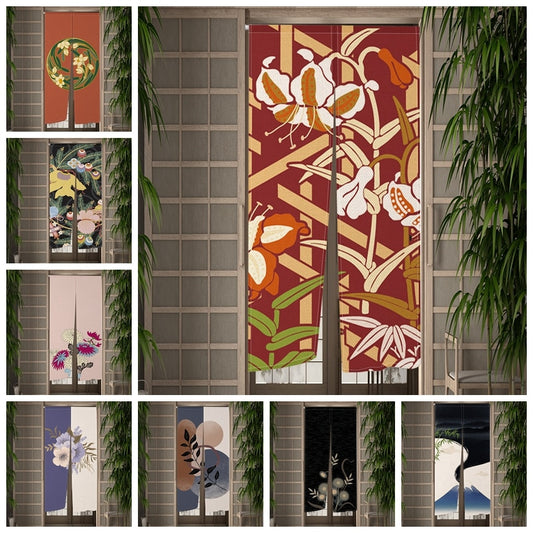
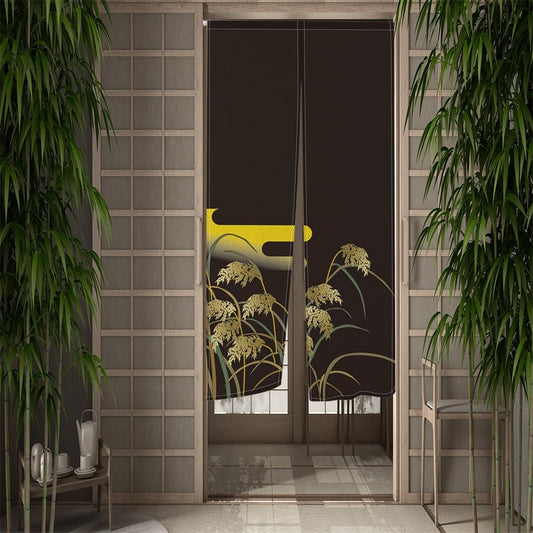
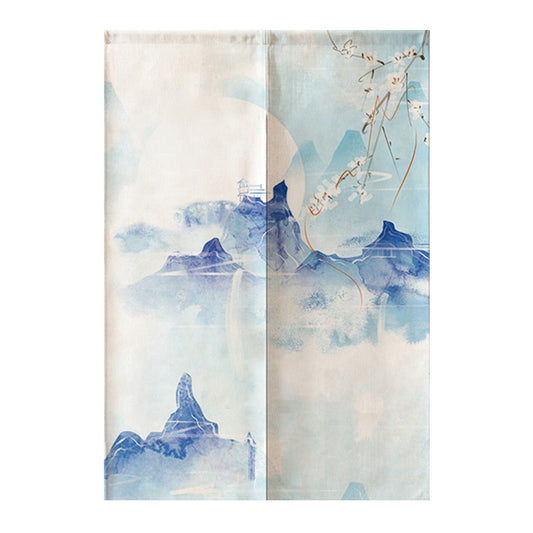
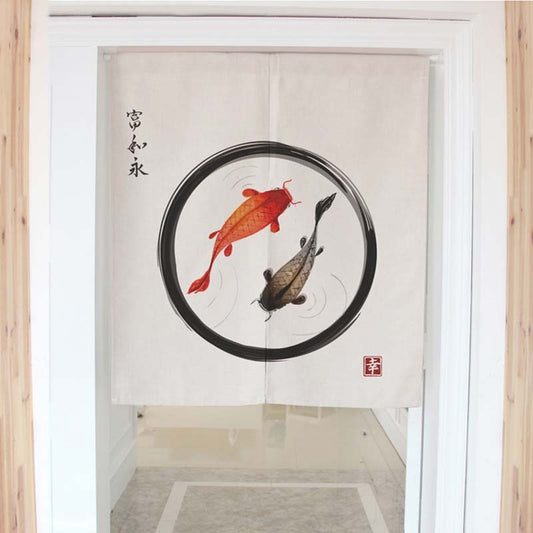
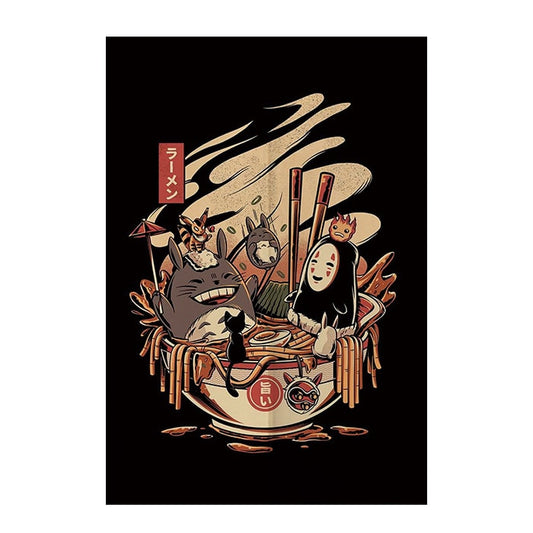
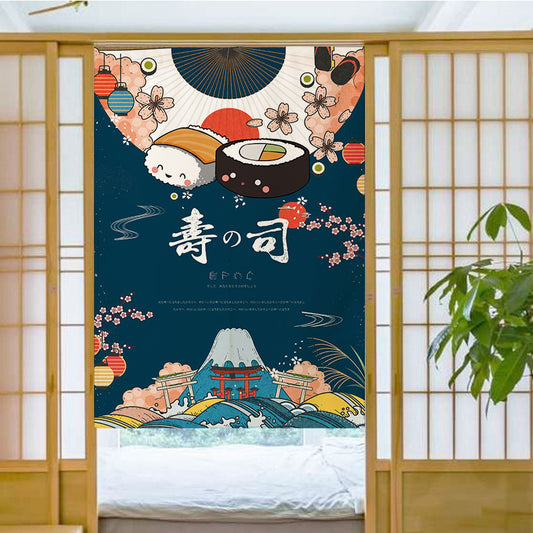
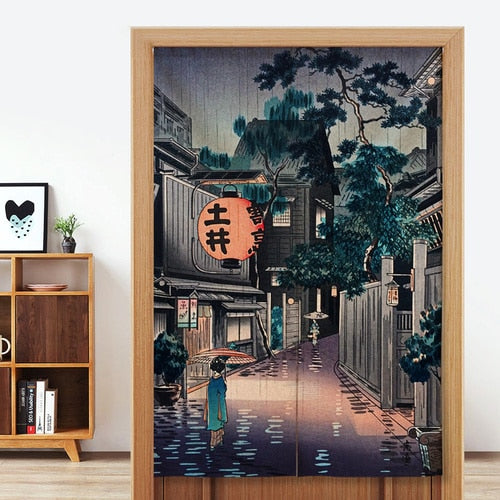
Shop Japanese door curtains and noren-style doorway curtains in cat, Kitsune, koi and dragon, ramen, mountain, nature, floral and ukiyo-e-inspired designs. These fabric doorway panels can be used for kitchens, room transitions, pantry entrances, closets, studios and decorative partitions.
Modern Japanese-style door curtains can use polyester, linen, cotton blends and other fabrics. Do not assume every product is a traditional artisan-made noren, hand-dyed in Japan, blackout rated, soundproof, insulated or supplied with installation hardware unless the individual listing documents it.
Jump to: what is noren · styles · how to choose · measuring · materials · installation · privacy and light · where to use · care · FAQs
What Is a Japanese Noren?
Noren are hanging cloth curtains used at entrances and openings in Japan. They are especially recognizable at shops, restaurants and bars, where they can display names, logos or decorative designs.
Noren can also help create visual separation, shade an entrance and mark the transition between spaces. Modern household noren-style products expand this idea into decorative room dividers and doorway curtains.
The products in this collection are modern printed doorway curtains inspired by that format. Do not assume traditional dyeing, handmade production or Japanese manufacture unless a product specifically verifies it.
Japanese Door Curtain Styles
| Style |
Good for |
| Cat and playful prints |
Bedrooms, kitchens and casual interiors |
| Nature and mountain designs |
Calmer room transitions and minimalist décor |
| Kitsune, koi, dragon and ukiyo-e-inspired prints |
Stronger Japanese-inspired visual themes |
| Ramen and food-themed curtains |
Kitchens, pantry entries and restaurant-style décor |
| Modern screen-style curtains |
Contemporary interiors and simple room dividers |
How to Choose a Japanese Door Curtain
-
Measure the opening first. Width and height matter more than the room name in the product title.
-
Check whether the curtain is split. Split panels are easier to walk through than one continuous sheet.
-
Check the fabric. Polyester, linen, cotton blends and other materials differ in drape, opacity and care.
-
Confirm the hanging method. Rod pockets, tension rods, hooks and rails are not interchangeable.
-
Check what is included. A curtain rod or mounting hardware may be sold separately.
-
Think about privacy. Decorative fabric does not automatically provide full visual blocking.
-
Check the print from both sides if that matters. Some printed curtains may have a stronger design on one face than the other.
How to Measure for a Noren-Style Curtain
Measure the clear width and height of the doorway or opening where the curtain will hang. Then decide whether you want the fabric to cover most of the opening or leave more space around the edges.
Width
A curtain that is narrower than the opening leaves more of the sides exposed. A wider curtain may gather or require a different hanging setup.
Height
Shorter noren-style curtains provide visual separation while leaving the lower doorway open. Longer curtains create more coverage but can affect how easily people pass through.
Measure first: compare the exact product dimensions with the doorway rather than relying on photos or labels such as “kitchen curtain.”
Japanese Door Curtain Materials
The assortment can include polyester, linen, polyester-linen, polyester-cotton and products described simply as cloth. Each fabric changes the way the curtain hangs, filters light and responds to washing.
Do not assume a linen-looking texture is pure linen, and do not assume cotton content unless the listing states it. If fiber composition matters, use the individual product specification.
Japanese Door Curtain Installation
Installation varies by curtain. Common options include tension rods, curtain rods, hooks or rails, but the required hardware depends on the product construction and doorway.
- Measure the rod pocket or hanging loops if shown.
- Check whether mounting hardware is included.
- Choose a rod that supports the curtain width without sagging.
- Make sure the fabric does not interfere with door handles or hinges.
- Avoid hanging long panels where they can become a trip hazard.
For rented spaces, a tension rod may be useful when compatible with the doorway, but do not assume every curtain or opening supports that installation.
Noren vs Shoji vs Fusuma
Noren, shoji and fusuma are different architectural or decorative elements.
-
Noren are hanging cloth curtains.
-
Shoji are framed translucent screens traditionally associated with paper-covered lattice construction.
-
Fusuma are opaque sliding interior panels used to divide rooms.
The products in this collection are fabric doorway curtains. They are not replacement shoji or fusuma panels.
Privacy, Light and Room Dividing
A Japanese door curtain can provide visual separation, but the amount of privacy depends on fabric thickness, color, print, width, lighting and how much of the doorway is covered.
Do not treat these curtains as guaranteed blackout products, security barriers, acoustic panels or thermal insulation unless the exact product has supporting specifications.
For More Privacy
- Choose a denser or darker fabric when available.
- Use a curtain wide enough to reduce side gaps.
- Consider room lighting because backlighting can make thin fabric more transparent.
- Use a longer panel if lower-body coverage matters.
Where to Use Japanese Door Curtains
Kitchen and Pantry
Food, ramen and playful prints can work well for pantry doors, kitchen transitions or decorative openings away from direct heat and flame.
Bedroom or Closet
A curtain can soften the look of an open closet or provide light visual separation between adjoining areas.
Hallway or Studio
Nature, mountain or abstract prints can mark a transition without installing a solid door.
Japanese-Inspired Décor
Pair door curtains with Japanese Mats, Japanese Vases or Japanese Lanterns when the styles work together. These are modern décor combinations, not automatically historically matched interiors.
Are These Traditional Japanese Noren?
Some designs use the recognizable split-panel noren format, while others are modern printed doorway curtains. Do not assume hand-dyeing, artisan production, traditional fabric or Japanese manufacture unless the specific product documents it.
What Affects Japanese Door Curtain Prices?
Use the live product card for current pricing because prices and variants can change. Differences can reflect fabric, dimensions, print, number of panels, finishing, packaging and selected design.
Japanese Door Curtain Care
- Follow the product-specific care label or instructions.
- Do not assume polyester, linen and cotton blends can all use the same wash cycle.
- Avoid bleach and harsh chemicals unless permitted by the fabric care guidance.
- Remove rods, hooks or detachable hardware before washing when appropriate.
- Dry the curtain fully before rehanging.
- Iron or steam only at a temperature suitable for the actual fiber.
- Keep kitchen curtains away from open flames and hot cooking surfaces.
Japanese Door Curtain FAQs
What is a Japanese door curtain called?
The best-known Japanese hanging doorway curtain is the noren. Modern products may be described as noren-style when they use a similar fabric-panel format.
Are noren the same as shoji?
No. Noren are hanging cloth curtains, while shoji are framed translucent sliding screens.
How do I choose the right size?
Measure the opening’s width and height, then compare those measurements with the exact curtain dimensions and the amount of coverage you want.
Do Japanese door curtains provide full privacy?
Not necessarily. Privacy depends on fabric opacity, size, print and lighting conditions.
Is a curtain rod included?
Do not assume so. Check the exact product listing for rods, hooks, rails or other included hardware.
Are these curtains made in Japan?
Do not assume Japanese manufacture or artisan production from the collection title. Check the product page for origin information.
Shop Japanese Door Curtains
Compare curtains by width, height, split-panel design, fabric, opacity, hanging method, included hardware and intended room. Measure the doorway before ordering and use the exact product page as the final source for dimensions and material.