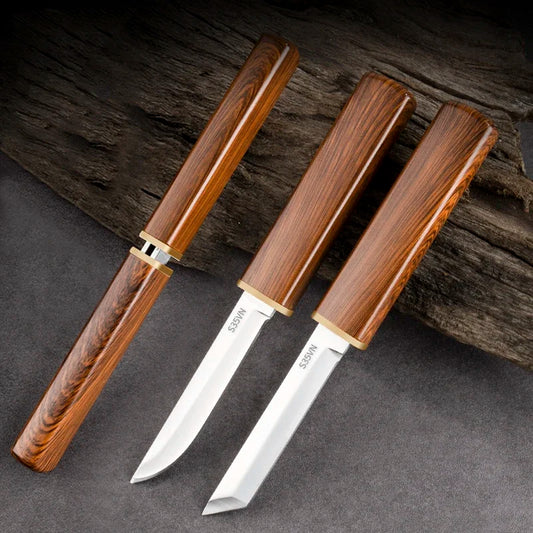
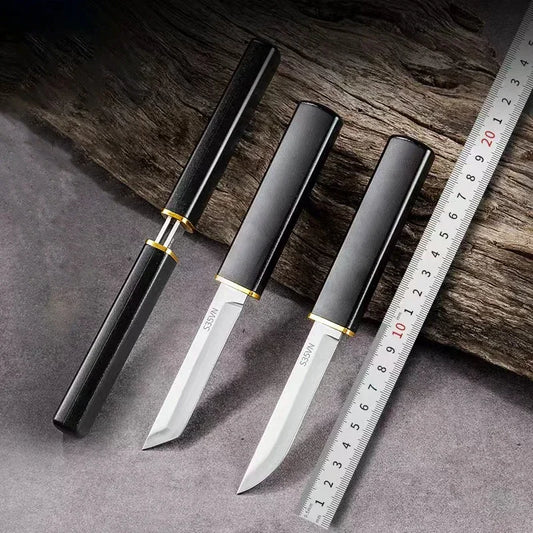
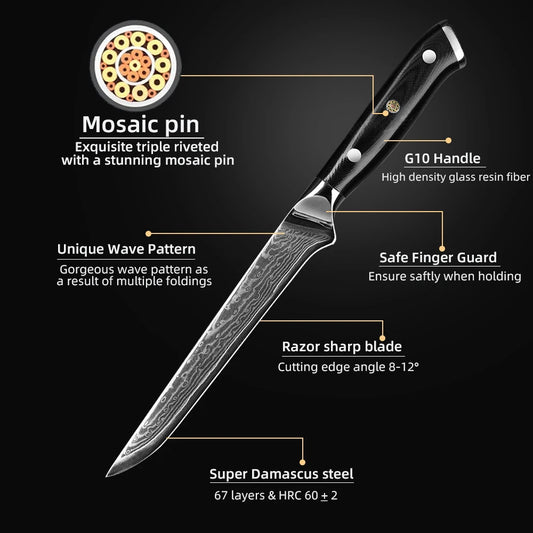
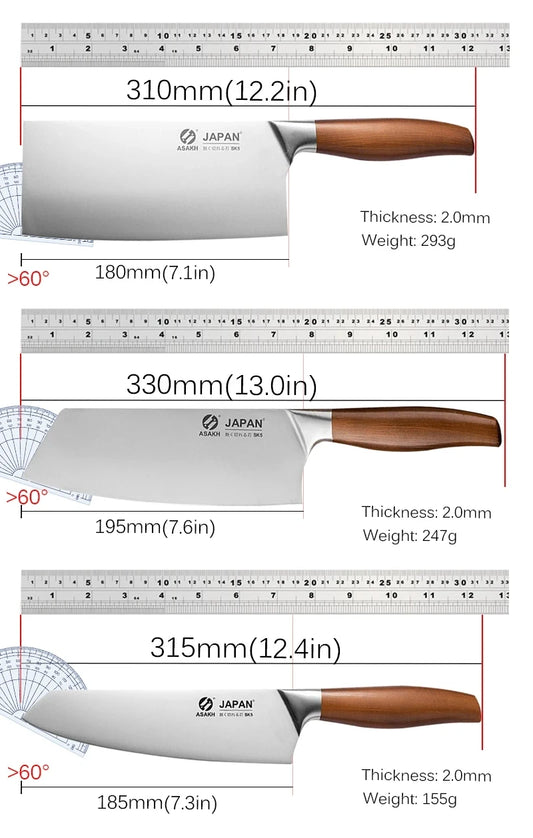
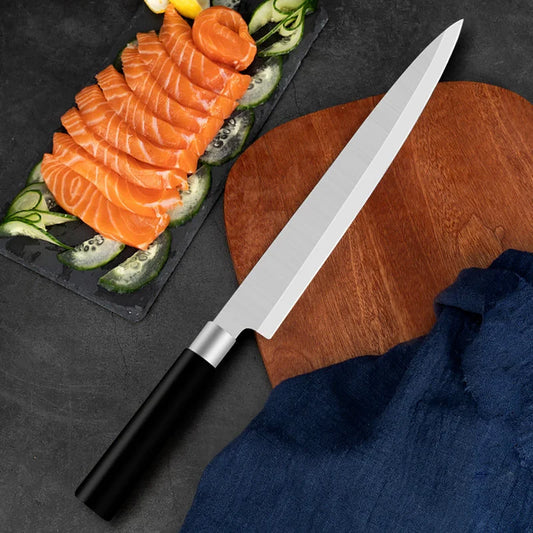
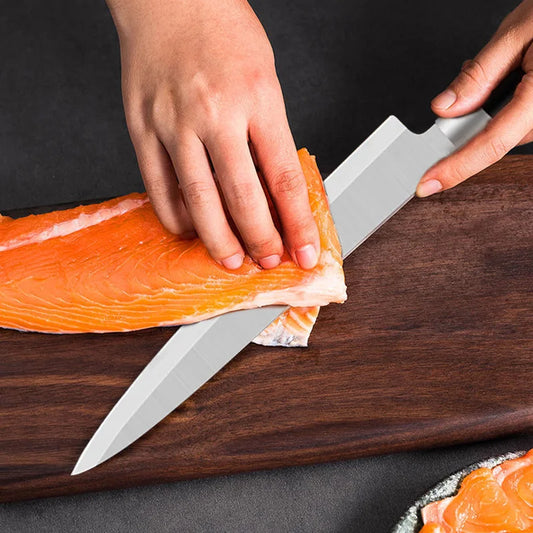
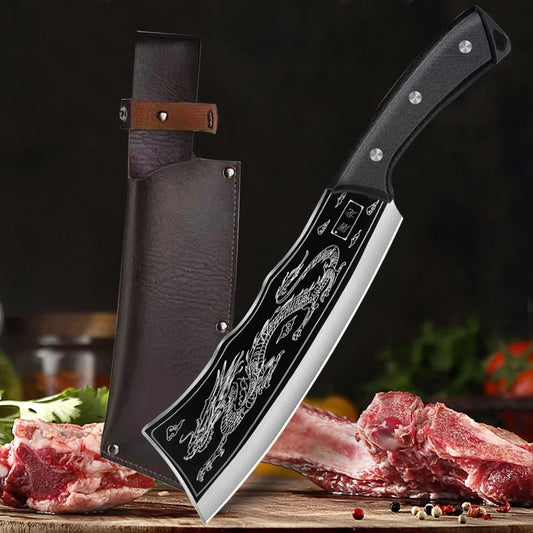
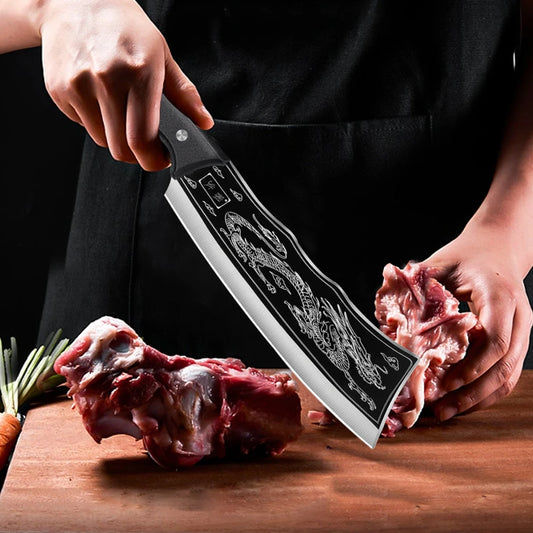
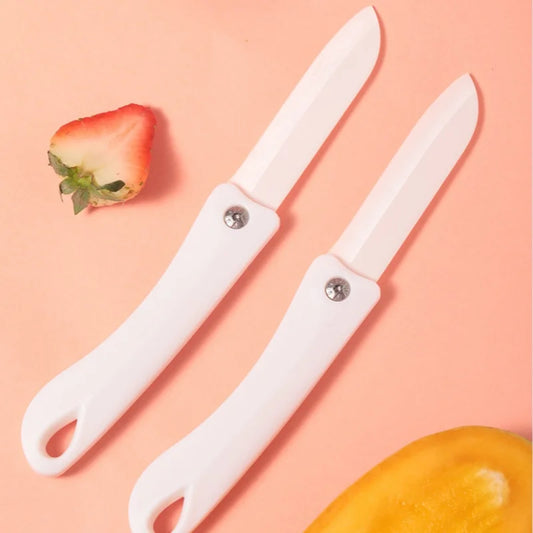
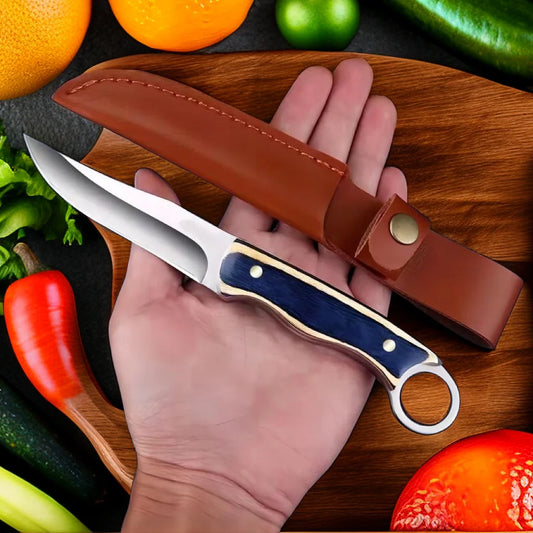
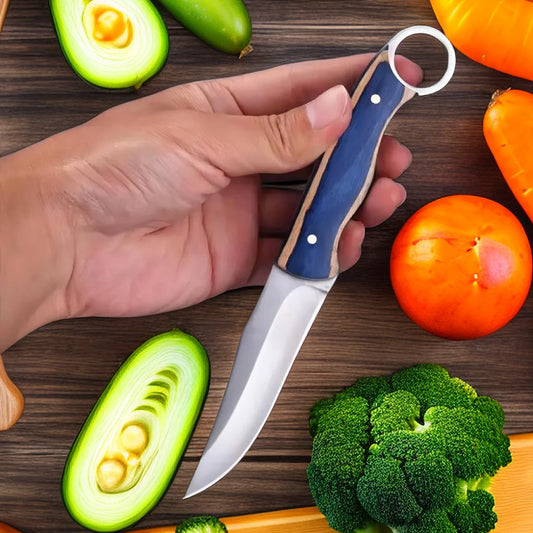
Shop Japanese knives and Japanese-style kitchen knives for slicing, chopping, trimming, boning and general food preparation. The current collection includes chef-style knives, boning knives, cleavers, utility or sushi-style knives, stainless-steel designs, a ceramic folding knife and other modern kitchen blades.
Do not assume every product is made in Japan, forged by a Japanese bladesmith, high-carbon steel, Damascus steel, single-bevel, professional-grade or suitable for the same cutting task. Blade material, edge geometry, thickness, hardness, handle construction and intended use vary by product.
Jump to: knife types · how to choose · blade materials · single vs double bevel · cutting boards · sharpening · care · safety · FAQs
Japanese Kitchen Knife Types in This Collection
| Knife type |
Best way to evaluate it |
| Chef-style knife |
Blade length, balance, profile and general slicing/chopping comfort |
| Boning knife |
Blade shape, stiffness, tip control and intended trimming work |
| Cleaver-style knife |
Blade thickness, weight and whether it is a vegetable-style slicer or heavier butcher design |
| Utility or sushi-style knife |
Blade length, edge type and whether the profile suits fine slicing |
| Ceramic or specialty knife |
Material-specific limitations, brittleness, storage and sharpening method |
How to Choose a Japanese Kitchen Knife
-
Start with the food-prep task. A general chef knife, boning knife and cleaver are designed around different motions.
-
Check blade length. Longer blades provide more cutting length but need more board space and control.
-
Check blade thickness. Thin slicers and thicker heavy-duty blades behave differently.
-
Check the edge. Single-bevel and double-bevel knives require different technique and sharpening.
-
Check the blade material. Stainless steel, carbon steel and ceramic have different corrosion, toughness and maintenance characteristics.
-
Check the handle. Shape, material and balance affect comfort and control.
-
Confirm intended use. Do not use a thin slicing knife for bones or frozen food unless the manufacturer specifically allows it.
Japanese Knife Blade Materials
Stainless Steel
Stainless-steel kitchen knives generally resist corrosion better than simple carbon steels, but stainless does not mean rust-proof. Wash and dry the blade promptly after use, especially after acidic or salty foods.
Carbon Steel
Carbon steel can take a keen edge, but it usually requires more attention to drying and surface care. This collection should not be assumed to use carbon steel unless the exact listing states it.
Ceramic
Ceramic blades can hold a fine edge but are more brittle than steel. They should not be twisted, pried with, used on bones or used on very hard surfaces. Sharpening also requires a method suitable for ceramic.
Material tip: choose based on the maintenance you are willing to do, not on marketing words alone. A well-maintained suitable knife is more useful than a premium-sounding blade used for the wrong task.
Single-Bevel vs Double-Bevel Japanese Knives
Traditional specialist Japanese knives such as some yanagiba and deba designs may use a single-bevel edge, but many Japanese kitchen knives, including santoku and gyuto styles, are commonly made with double-bevel edges.
So it is incorrect to say Japanese knives are generally single-bevel. Check the exact blade before sharpening. A single-bevel knife should not be sharpened as if both sides have symmetrical angles.
Japanese Knife Profiles and Familiar Names
Common Japanese knife categories include gyuto for general chef-knife work, santoku for versatile home-kitchen cutting, nakiri for vegetables, deba for fish butchery, and yanagiba for long slicing cuts associated with sashimi preparation.
However, the live collection should not imply that every product belongs to one of those traditional categories. Use the actual blade profile and product specifications rather than assigning a classical Japanese knife name based only on appearance.
Best Cutting Surfaces for Kitchen Knives
Use a cutting board intended for knife work. Wood and suitable plastic boards are generally kinder to edges than hard surfaces.
- Avoid cutting directly on glass, stone, ceramic plates or metal counters.
- Use a board large enough to keep the knife and food stable.
- Keep the board from sliding by using a suitable non-slip base or damp towel underneath when appropriate.
- Use separate or properly sanitized boards when food-safety practices require it.
Sharpening Japanese Kitchen Knives
Sharpening method depends on blade material, edge geometry and manufacturer guidance. Whetstones are commonly used for many steel Japanese knives, but the correct grit progression and angle depend on the specific blade.
Honing rods do not replace sharpening, and some very hard or thin blades can be damaged by aggressive honing. Ceramic knives need a ceramic-compatible sharpening method. If you are unsure of the bevel or blade material, identify it before sharpening.
Are Japanese Knives Safer Because They Are Sharp?
A sharp kitchen knife can require less force than a dull one, but sharpness does not make a knife inherently safe. Any knife can cause serious injury. Good technique, a stable board, controlled cutting and correct storage matter more than marketing claims.
Japanese Knife Cleaning and Care
- Hand wash when dishwasher safety is not specifically documented.
- Dry the blade immediately after washing.
- Do not leave knives soaking in a sink.
- Avoid abrasive cleaners on polished, coated or patterned blades.
- Do not use a thin blade to twist, pry or cut bones unless it is designed for that task.
- Store knives so the edge does not contact loose metal utensils.
- Inspect handles, blade joints and edges for damage before use.
Kitchen Knife Safety
- Cut on a stable surface with your free hand positioned away from the blade path.
- Keep knives out of reach of children.
- Never try to catch a falling knife.
- Carry a knife with the point down and blade facing away from your body when moving carefully through the kitchen.
- Do not leave knives hidden under soapy water or other dishes in a sink.
- Use a sheath, block, rack or other appropriate storage system that protects the edge and users.
- Use each knife only for food-preparation tasks it is designed to perform.
Are These Knives Made in Japan?
Do not assume Japanese manufacture, forged construction, artisan production or traditional bladesmith provenance from the collection title. Check the individual product listing for origin and manufacturing details.
What Affects Japanese Knife Prices?
Use the live product cards for current pricing because prices and variants can change. Differences can reflect blade material, length, construction, handle, finish, included pieces and packaging.
Japanese Knives FAQs
Are all Japanese knives single-bevel?
No. Some specialist traditional knives are single-bevel, while many common Japanese chef knives are double-bevel. Check the exact blade.
Are all Japanese knives carbon steel?
No. Japanese and Japanese-style knives can use stainless steel, carbon steel, laminated steels, ceramic and other materials.
Can I put a Japanese knife in the dishwasher?
Do not assume dishwasher safety. Hand washing and prompt drying are safer defaults when the product instructions are unclear.
What cutting board should I use?
Use a board intended for knife work, such as suitable wood or plastic. Avoid glass, stone and ceramic cutting surfaces because they can damage edges quickly.
Can every Japanese knife cut bones?
No. Thin slicing and chef knives can chip or bend if used for bones. Only use a knife for bones when the product is specifically designed for that work.
Are these knives made in Japan?
Do not assume Japanese manufacture from the collection title. Check the exact product page for origin details.
Shop Japanese Kitchen Knives
Compare knives by intended food-prep task, blade length, material, thickness, bevel, handle, maintenance and sharpening requirements. For sushi-shaping tools rather than blades, browse Japanese Bento & Sushi Accessories.


 Sale
Sale