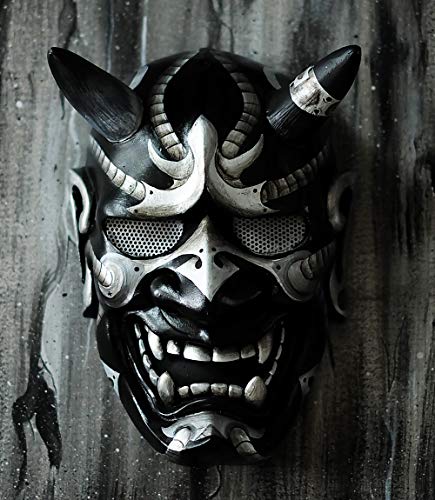
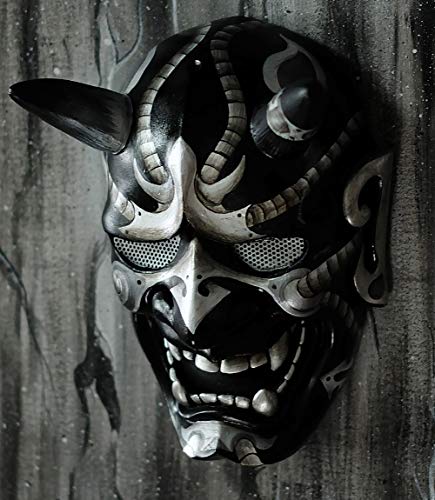
Choosing a samurai mask comes down to material, coverage, fit, and the look you want. This collection includes flexible full-face latex masks and rigid fiberglass theatrical masks for cosplay, costumes, photography, and display. Use this guide to compare the current designs, understand the material and price tradeoffs, and separate modern samurai-inspired masks from historical Japanese face armor.
Jump to: compare masks · latex vs fiberglass · fit and visibility · historical forms · meaning and symbolism · FAQs
Compare Samurai Masks
The product cards on this page show current pricing and availability. The table below focuses on the differences that are more useful when choosing a mask.
Material, size, and best use for the five masks in this collection.
| Mask |
Material and size |
Best for |
| Japanese Samurai Mask |
Latex · approx. 25 × 18 cm / 9.8 × 7.1 in |
Warrior-inspired cosplay, costumes, and photography |
| Samurai Devil Mask |
Latex · approx. 25 × 18 cm / 9.8 × 7.1 in |
Dark fantasy, horror, Halloween, and dramatic character looks |
| Golden Samurai Mask |
Latex · approx. 25 × 18 cm / 9.8 × 7.1 in |
Statement costumes, photography, and decorative display |
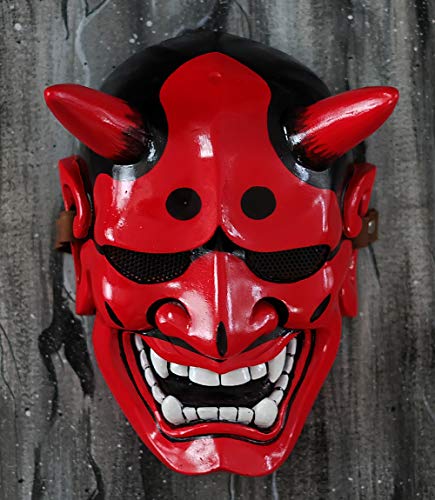
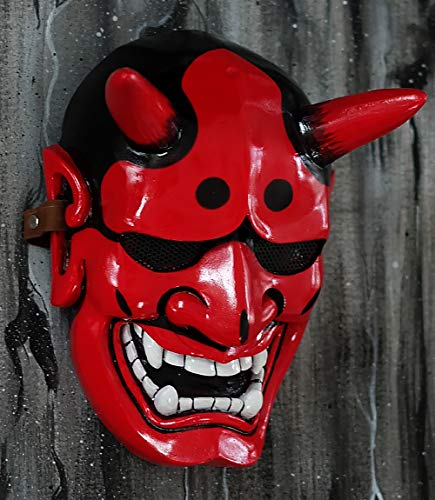
| Red Kabuki Mask - Fiberglass |
Fiberglass · approx. 16.5 × 25.4 × 8.9 cm / 6.5 × 10 × 3.5 in · adjustable strap |
Rigid red theatrical styling, photography, and display |
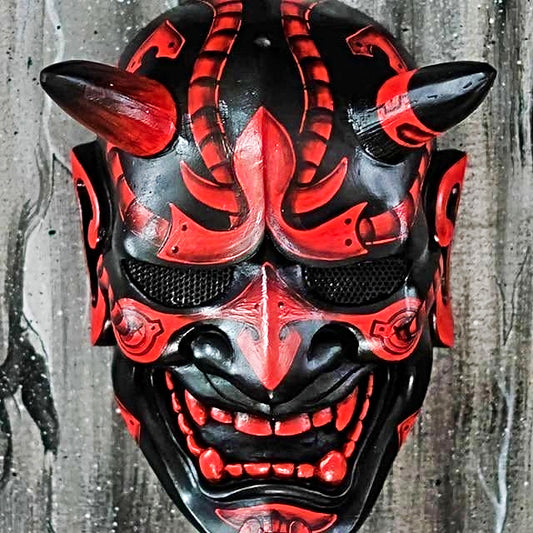
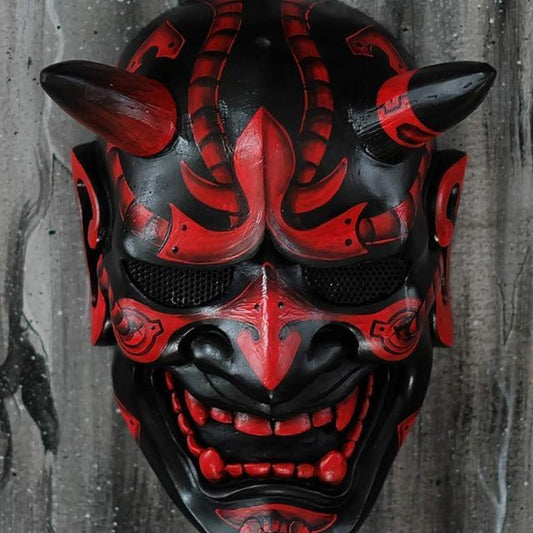
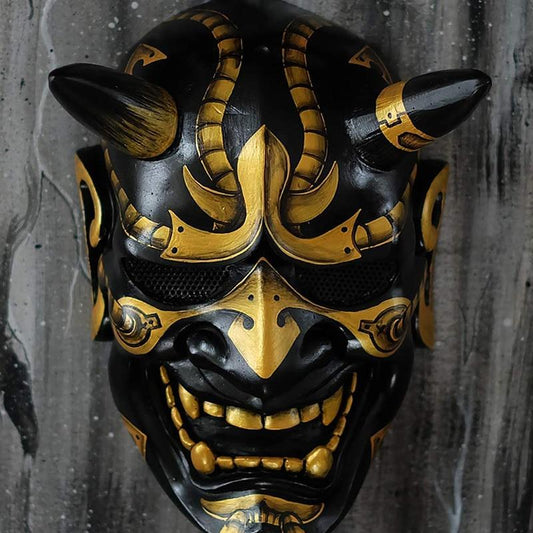
| Black Kabuki Demon Mask - Fiberglass |
Fiberglass · approx. 16.5 × 25.4 × 10.2 cm / 6.5 × 10 × 4 in · adjustable strap |
Rigid dark theatrical styling, photography, and display |
Latex vs Fiberglass Samurai Masks
Latex is the flexible, lower-priced tier in this collection. The three latex designs are full-face masks and are easier to pack than a rigid shell. They make sense when cosplay, Halloween, or costume wear is the main goal and you want the mask to create most of the facial transformation.
Fiberglass is the rigid, premium tier. The two fiberglass designs keep a fixed sculpt and include adjustable straps in their current product specifications. They are a better fit when display shape, photography, and a harder-shell theatrical appearance matter more than flexibility.
Use the product cards and individual product pages for live prices, discounts, and availability because those can change. A higher price does not make a mask protective equipment, and a rigid fiberglass shell should not be treated as certified eye, face, airsoft, paintball, motorcycle, tactical, or industrial protection unless a specific product is independently tested and documented for that purpose.
Fit, Coverage, and Visibility
The three latex masks in this collection are listed at approximately 25 × 18 cm (9.8 × 7.1 in). The fiberglass masks provide three-dimensional exterior measurements and adjustable straps, but outside dimensions alone cannot tell you how a mask will fit every face.
-
Eye position matters: check how the openings line up with your eyes before wearing a mask for an event or extended photo session.
-
Full-face coverage changes awareness: it can feel warmer and can reduce peripheral vision compared with an open or half-face design.
-
Costume layers affect fit: wigs, hoods, glasses, collars, and helmet-style props can change how a mask sits.
-
Test before long wear: try normal head movement at home and remove the mask whenever restricted vision, heat, or discomfort creates a safety problem.
Looking specifically for a half-face samurai mask? Historical terms such as menpō and hanbō are useful when researching lower-face armor. The current latex masks in this collection are full-face costume designs, so do not assume that every product labeled “samurai mask” online has the same coverage.
Historical Samurai Face Armor: Sōmen, Menpō, Hanbō, and Happuri
“Samurai mask” is a useful modern shopping phrase, but historical Japanese armor used more specific forms. Terminology can vary across surviving armor and reference works, so these names are best treated as practical historical categories rather than a rigid four-box system.
Four historical face-armor terms commonly encountered when researching samurai masks.
| Form |
Typical coverage |
Simple distinction |
| Sōmen |
Full face |
A full-face armor form. |
| Menpō |
Nose and lower face below the eyes |
The half-mask form most shoppers associate with samurai face armor. |
| Hanbō |
Lower jaw, chin, and lower cheeks |
A lower-face form that does not cover the nose. |
| Happuri |
Upper face, especially forehead and cheeks |
An upper-face form used as part of an armor system. |
Historical face armor was primarily functional: it defended parts of the face and could help secure the helmet. Surviving examples also show deliberately fierce modeled expressions. Modern latex and fiberglass masks can borrow from that visual language, but the products in this collection are modern costume, photography, and decorative pieces, not antique armor or museum-grade reproductions.
What Does a Samurai Mask Represent?
There is no single historical meaning shared by every samurai face mask. Function came first: face defense, helmet stability, and integration with the rest of the armor. Fierce brows, wrinkles, mustaches, open mouths, and aggressive expressions could also make the wearer appear more intimidating.
In modern cosplay, art, tattoos, and decor, samurai-mask imagery is often used more broadly to communicate warrior identity, discipline, strength, intensity, or intimidation. Those are modern interpretive associations rather than a universal historical code. That distinction matters if you are buying for historical accuracy rather than fantasy styling.
Samurai-Inspired, Oni, Hannya, Kitsune, and Kabuki-Inspired Masks
These categories overlap visually in modern costume design, but they are not interchangeable historical terms. Oni masks draw from supernatural beings in Japanese folklore. Hannya masks come from a different theatrical tradition and visual vocabulary. Kitsune masks use fox imagery. For the broadest selection, browse the Japanese mask collection.
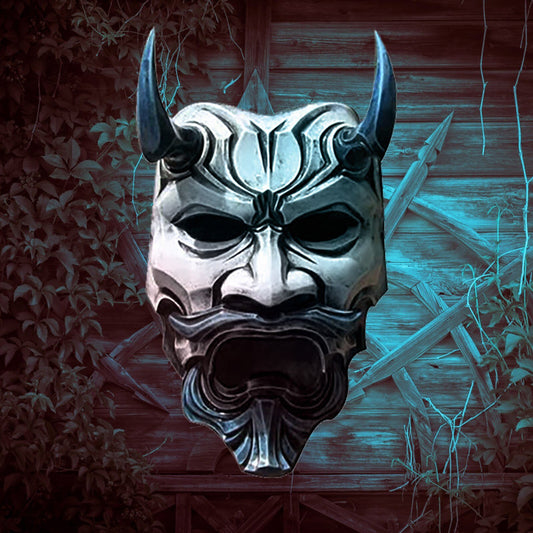
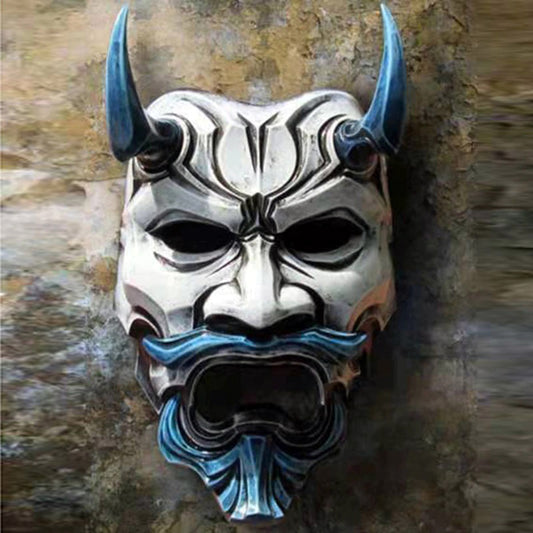
Two products on this page use “Kabuki” in their product names. They are included here as modern theatrical Japanese-mask-inspired designs that shoppers may pair with warrior or fantasy looks. Their names should not be read as a historical classification of samurai armor.
Care and Storage
-
Latex: keep it cool, dry, and out of prolonged direct sunlight. Do not store it folded or crushed under other objects because long-term compression can deform the face.
-
Fiberglass: protect the rigid shell from falls and hard impacts, and leave enough space around raised details during storage.
-
After wear: allow moisture to dry before storage. Wipe surfaces gently and avoid strong solvents, abrasive brushes, or aggressive cleaners around painted areas.
Frequently Asked Questions
What is a samurai mask?
Today, “samurai mask” is a broad shopping term for Japanese warrior-inspired face masks. Historical samurai face armor had more specific forms and names, including menpō, sōmen, hanbō, and happuri.
What is the difference between menpō and sōmen?
Menpō commonly refers to armor covering the nose and lower face below the eyes, while sōmen refers to a full-face form.
What does a samurai mask symbolize?
Historical masks were primarily functional armor rather than objects with one universal symbolic meaning. Modern samurai-mask imagery can suggest warrior identity, discipline, strength, or intimidation depending on the context.
Should I choose latex or fiberglass?
Choose latex when flexibility, full-face costume wear, and easier packing matter most. Choose fiberglass when you prefer a rigid sculpt and fixed display shape. Check the individual product specifications before buying.
Will a samurai mask fit over glasses?
That depends on your frame width, face shape, and the mask's interior clearance. Exterior dimensions are not enough to guarantee glasses compatibility, so do not assume a full-face mask will fit comfortably over eyewear.
Are samurai masks and oni masks the same?
No. Historical samurai masks relate to armor, while oni masks represent or draw from oni in Japanese folklore. Modern fantasy designs can combine visual influences, but the categories are not historically identical.
Are these authentic historical masks or protective armor?
No. The products in this collection are modern costume, cosplay, photography, and decorative items. They are not presented as antique samurai armor, museum-grade reproductions, or certified protective equipment.
Shop Samurai Masks
Compare the five current designs by material, size, finish, and intended use, then open the product that best matches your costume or display plan. Return to the samurai mask products.

 Sale
Sale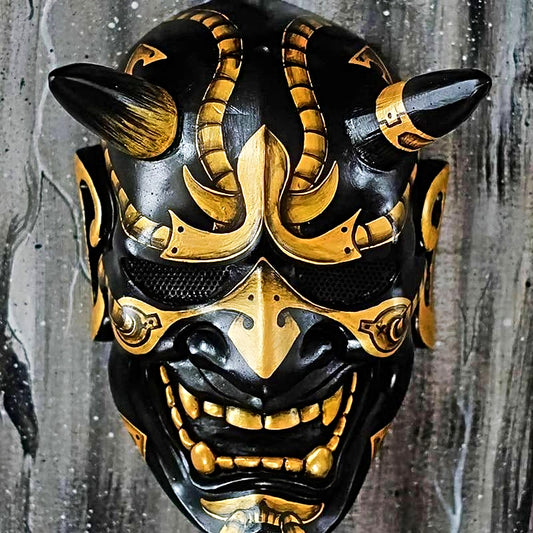
 Sale
Sale