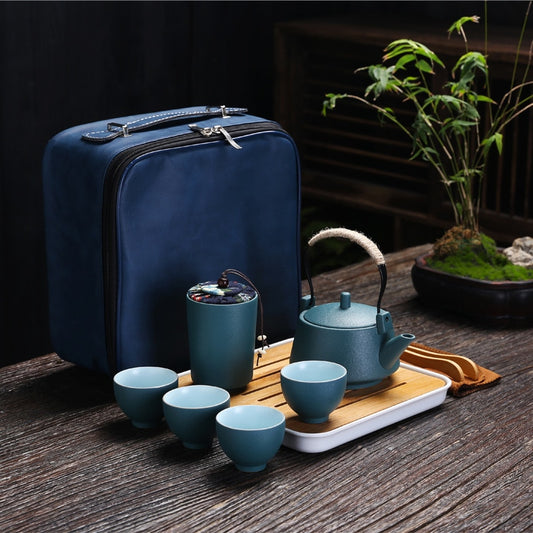
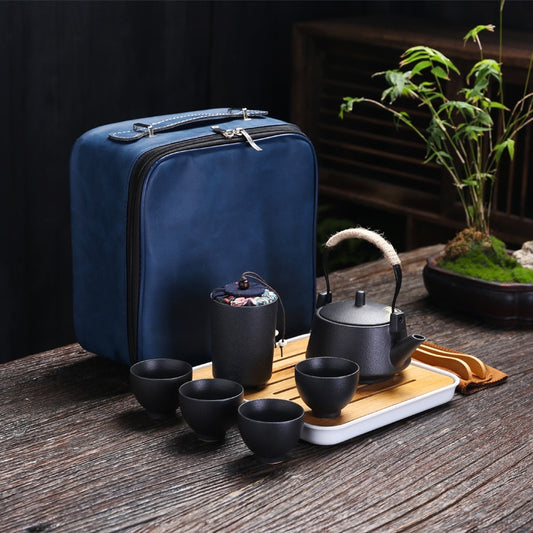
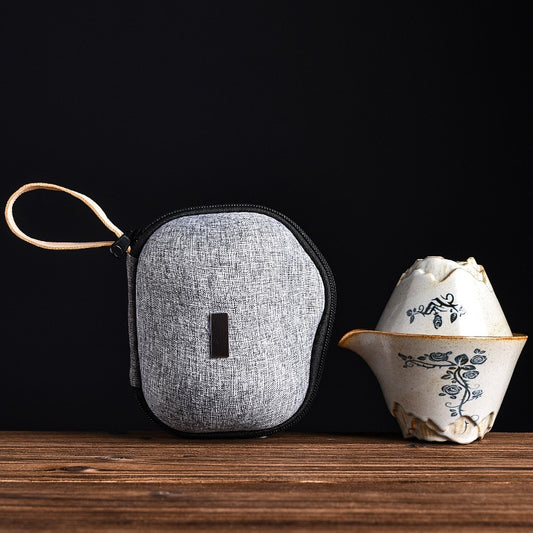
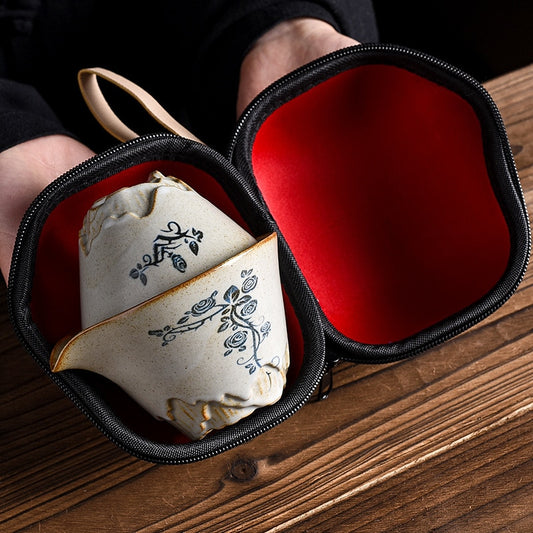
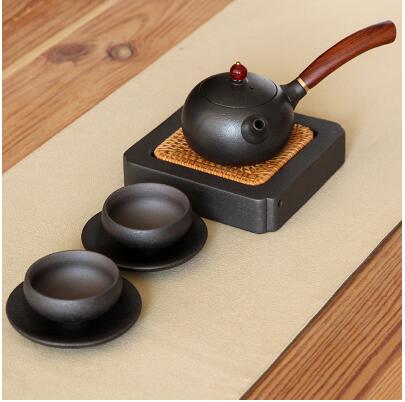
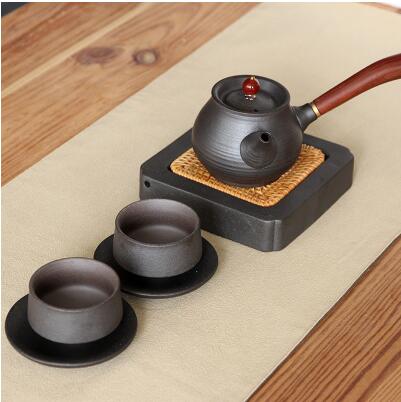
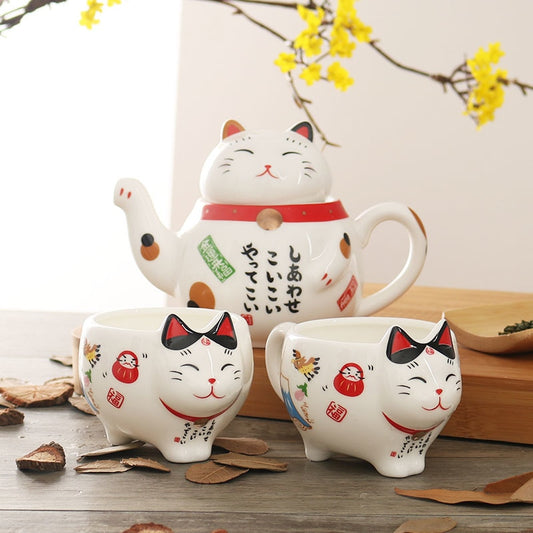
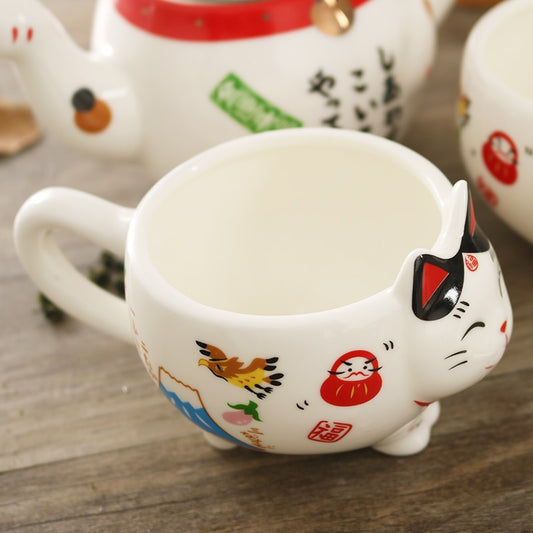
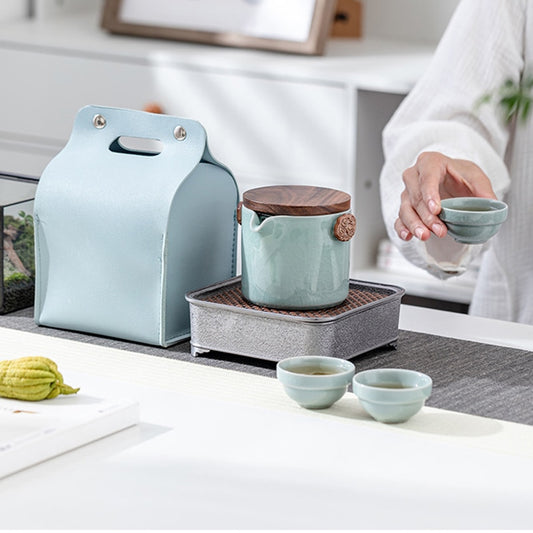
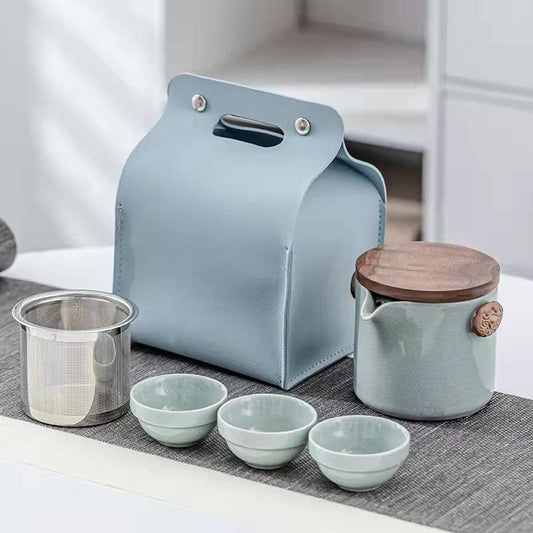
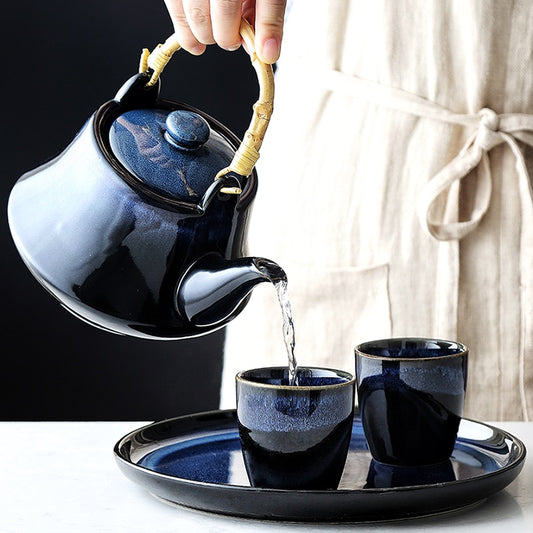
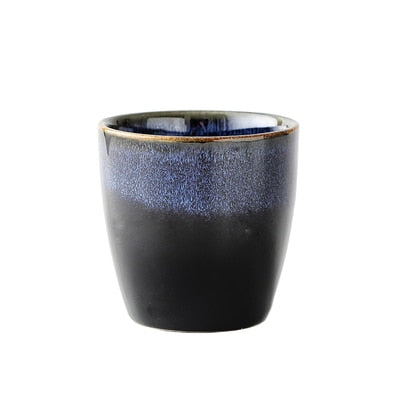
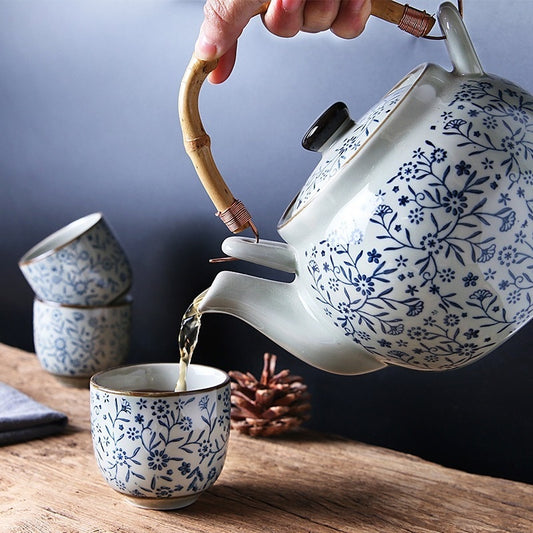
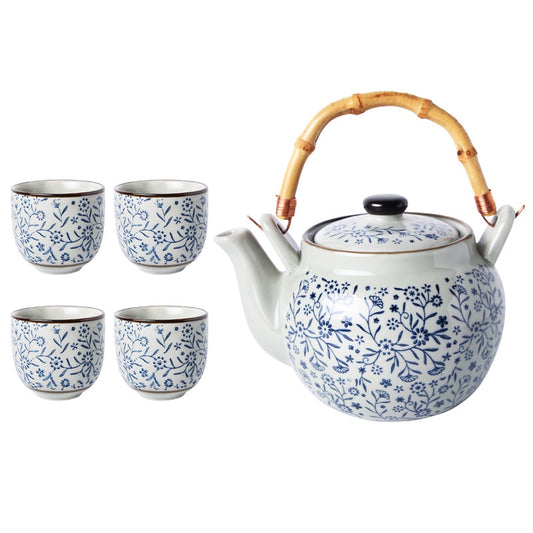
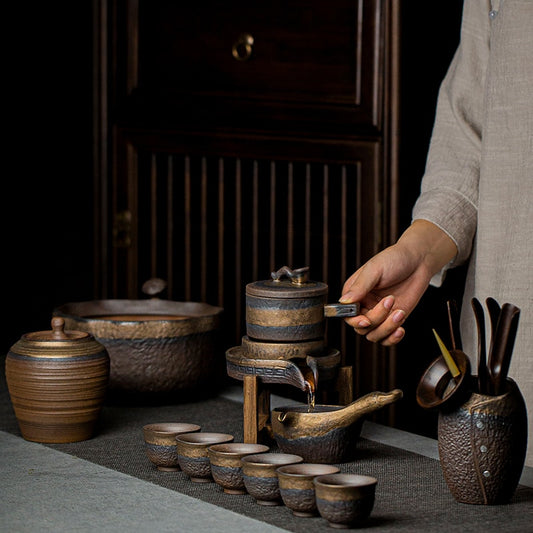
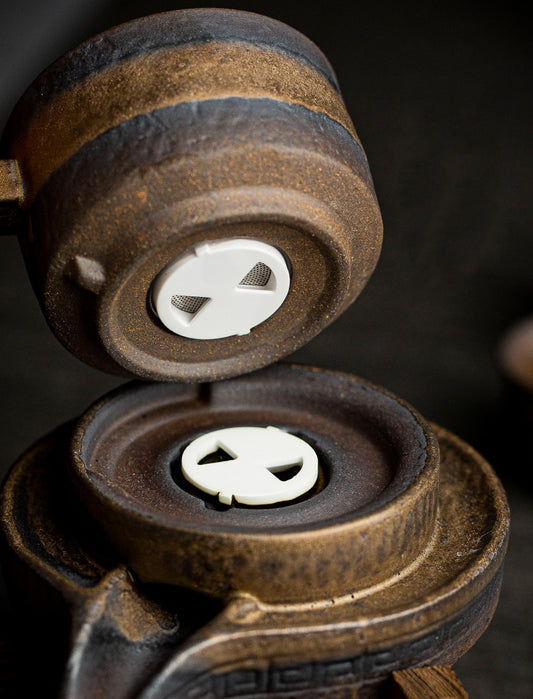
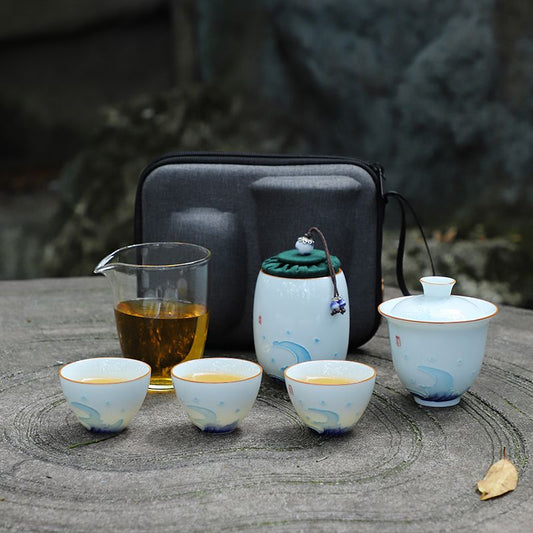
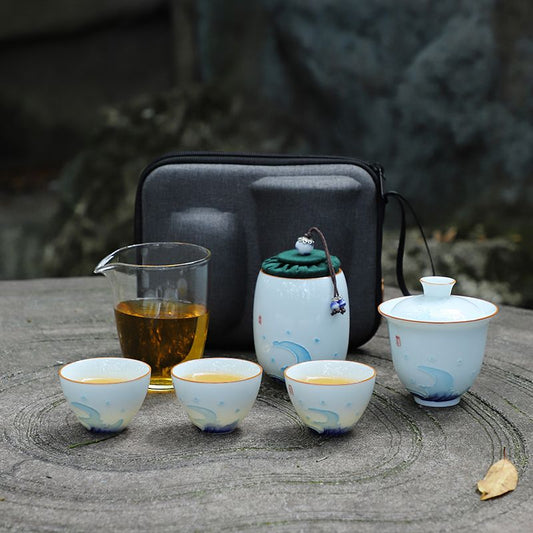
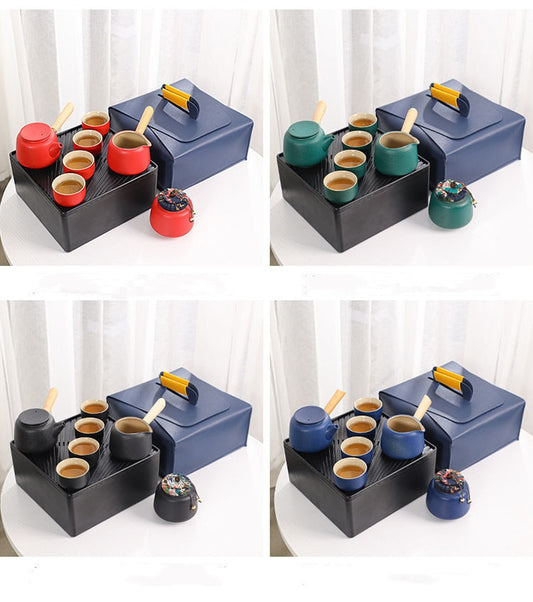
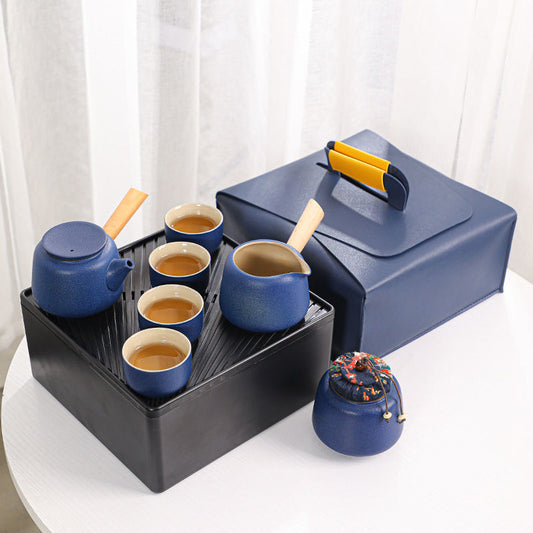
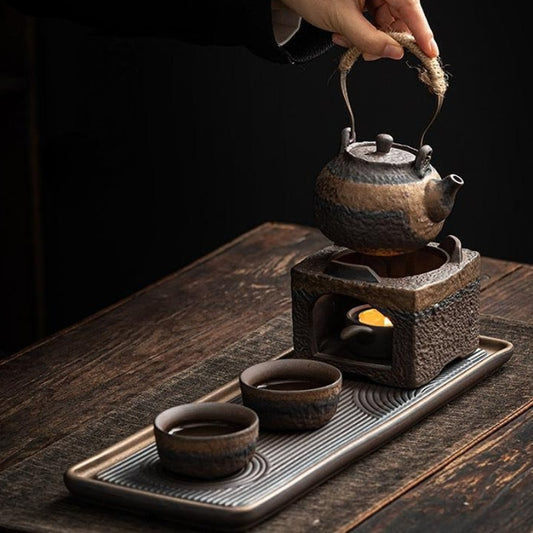
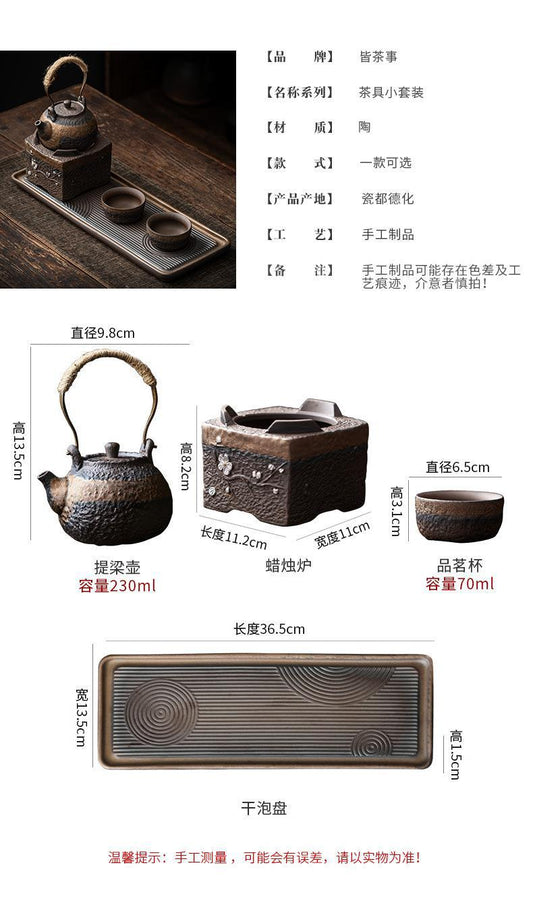
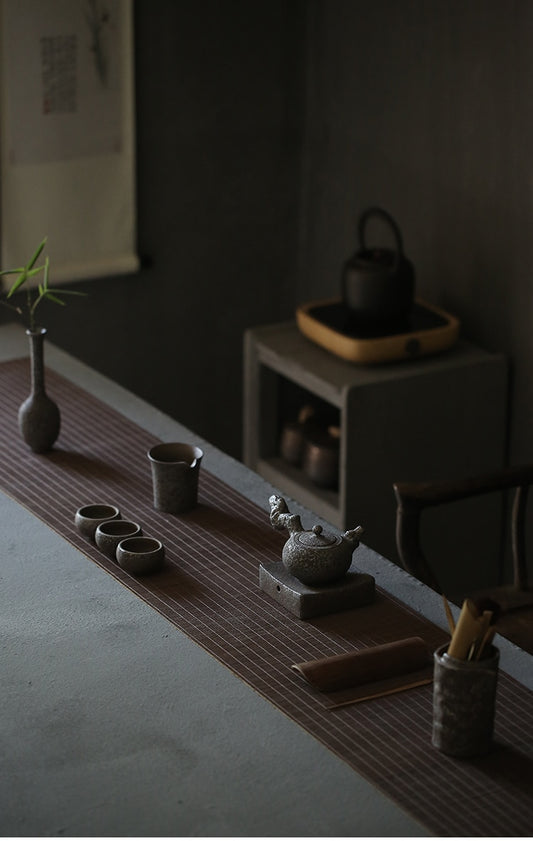
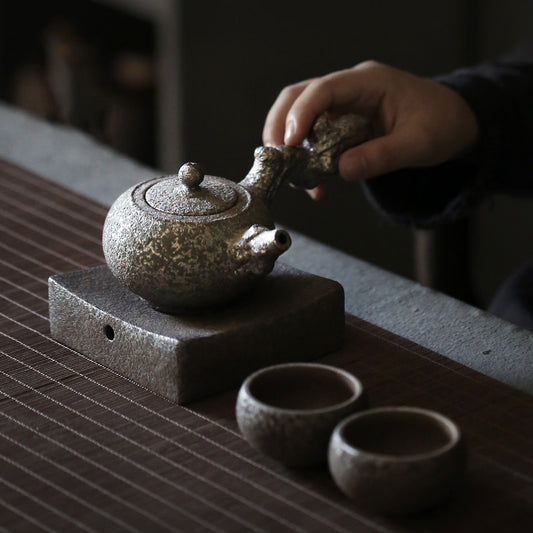
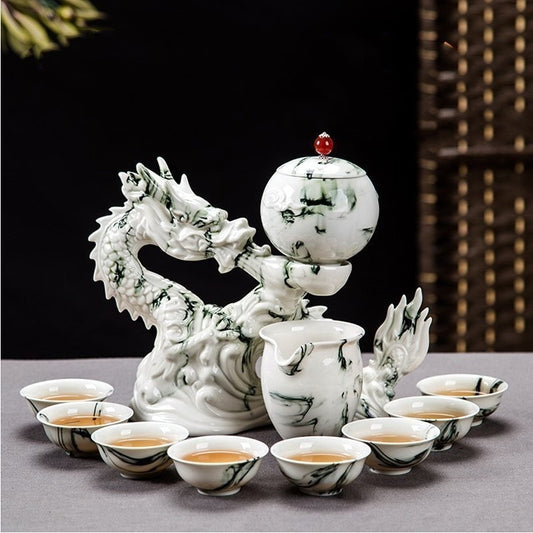
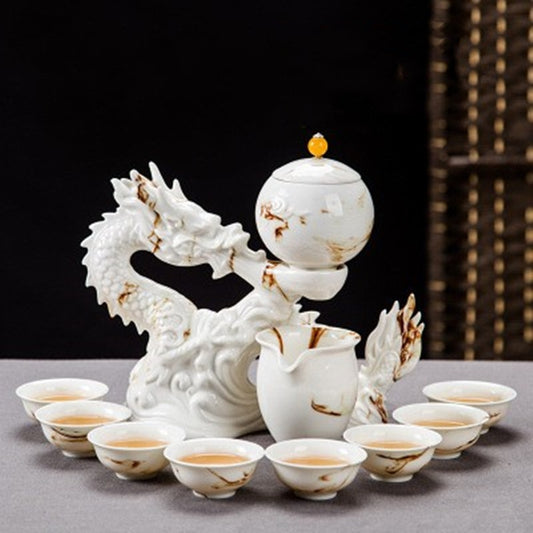
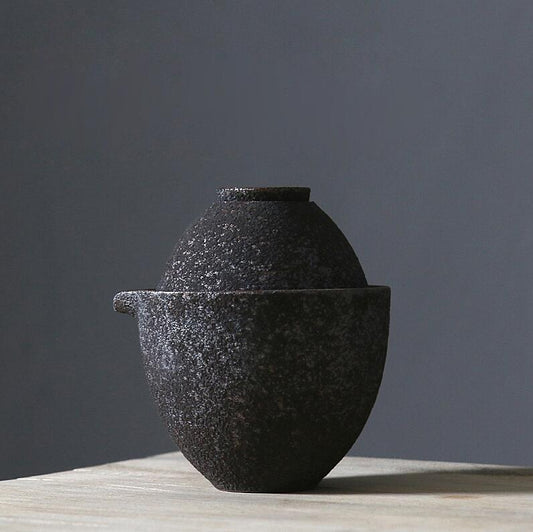
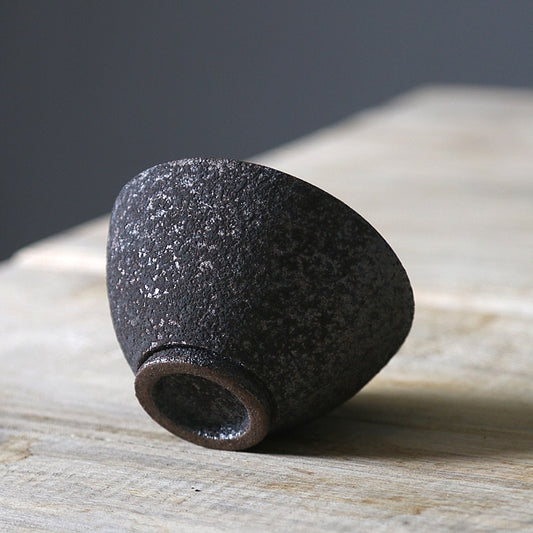
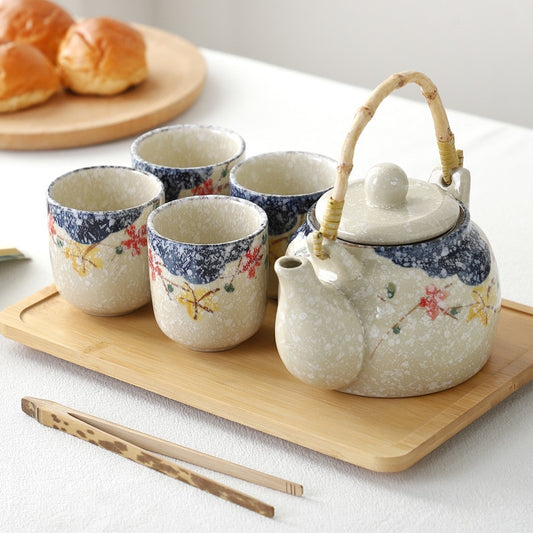
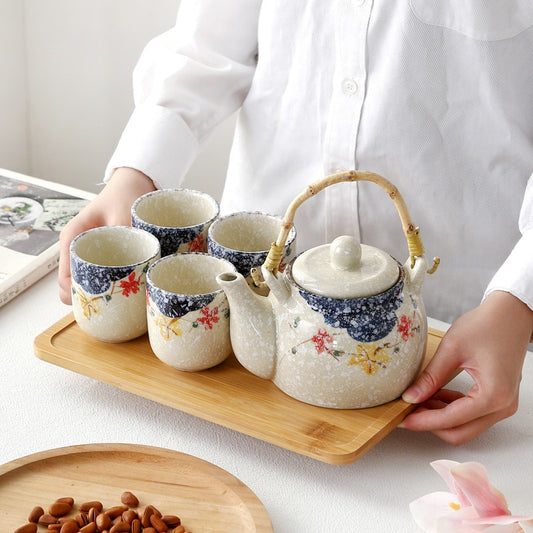
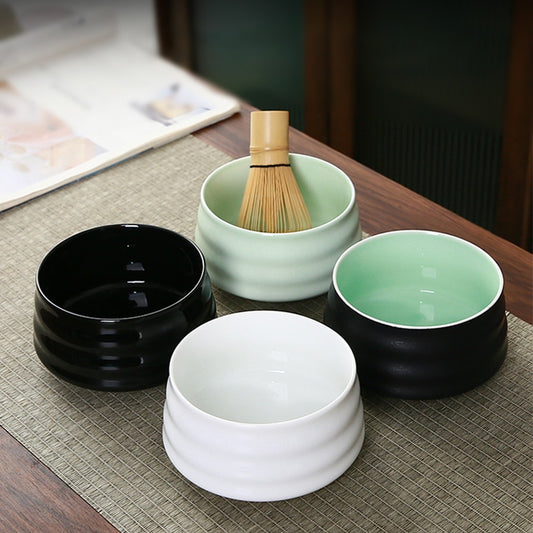
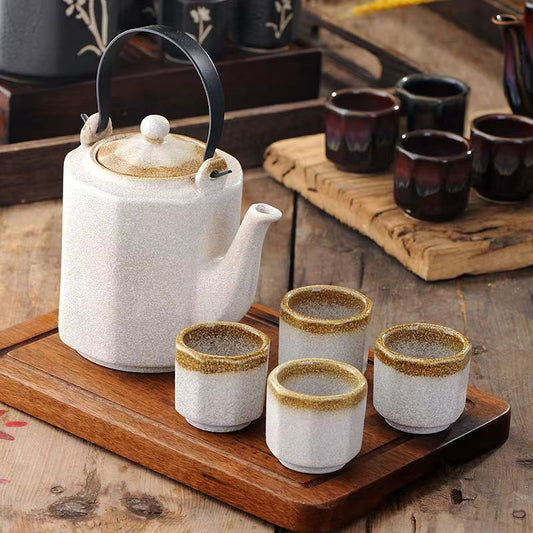
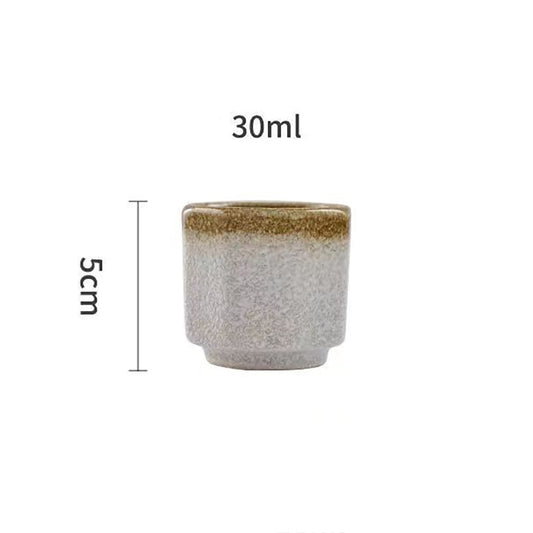
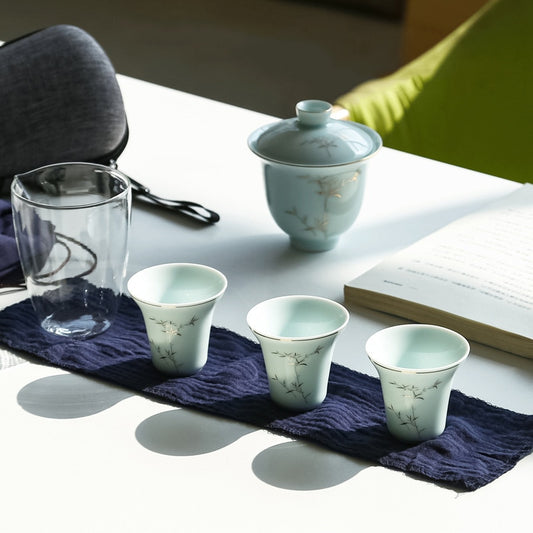
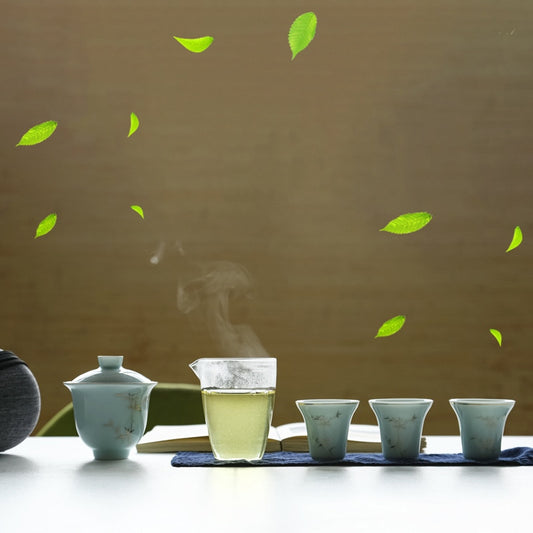
Shop Japanese tea sets and Japanese-inspired teaware in ceramic, pottery, porcelain, travel and matcha-focused styles. The collection includes compact travel sets, teapot-and-cup combinations, larger coordinated sets and matcha tools, so the best choice depends on the tea you prepare, how many people you serve and how portable you need the set to be.
Not every product in this broad collection belongs to the same tea tradition. Japanese matcha preparation, loose-leaf sencha brewing and Chinese gaiwan or gongfu-style teaware use different tools and terminology. Do not assume every set is a Japanese kyusu set, handmade in Japan, artisan pottery or suitable for the same brewing method unless the individual listing supports it.
Jump to: set types · how to choose · matcha sets · loose-leaf tea · materials · capacity · travel sets · care · FAQs
Japanese Tea Set Types
| Tea set type |
What to compare |
| Teapot and cup set |
Pot capacity, number of cups, infuser or strainer design and pouring comfort |
| Travel tea set |
Packed size, protective case, nested pieces and breakability |
| Matcha set |
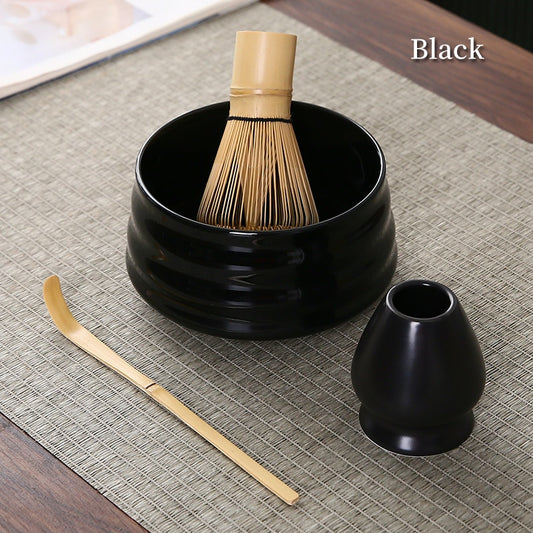
Tea bowl, bamboo whisk, scoop and what is actually included |
| Large coordinated set |
Number of cups, tray, serving capacity, storage and table space |
| Gaiwan or gongfu-labeled set |
Exact vessel format and cultural terminology rather than treating it as a Japanese kyusu by default |
How to Choose a Japanese Tea Set
-
Start with the tea. Powdered matcha and loose-leaf green tea require different tools.
-
Count the drinkers. A compact two-cup set and a large multi-cup set serve different needs.
-
Check pot capacity. Smaller pots suit repeated small pours, while larger pots are easier for casual group service.
-
Check what is included. Photos may show trays, scoops or accessories that are not included in every variant.
-
Check the material. Ceramic, porcelain, pottery and bamboo components have different care requirements.
-
Check the strainer. Loose-leaf tea needs a brewing vessel that handles the leaf size you use.
-
Choose travel sets for portability. Do not assume a large decorative set will pack safely for travel.
Japanese Matcha Tea Sets
Japanese tea ceremony, often referred to as chanoyu or sado, centers on preparing powdered matcha. A traditional matcha setup uses specialist utensils such as a chawan tea bowl and a bamboo chasen whisk.
A matcha set is therefore different from a standard teapot set. If matcha is your goal, check whether the product includes a whisk, bowl and any other tools you need rather than choosing a teapot because it looks traditional.
Bamboo Chasen
A chasen is used to disperse matcha powder into hot water. Keep the whisk clean and allow it to dry with its tines open and ventilated. Do not leave bamboo soaking in water.
Chawan
A chawan is a tea bowl used for preparing and drinking matcha. Bowl width, depth and shape affect whisking space and handling.
Tea Sets for Sencha and Other Loose-Leaf Tea
Loose-leaf Japanese green teas such as sencha are brewed differently from matcha. Instead of whisking powder in a bowl, the leaves steep in a teapot or other brewing vessel and the liquor is poured into cups.
Kyusu is a Japanese term for a teapot commonly associated with loose-leaf tea. Kyusu designs can vary, including side-handle and other forms. A product should only be described as a kyusu when its design or listing actually supports that identification.
When brewing loose leaves, compare the internal strainer, opening and pot capacity. Very fine tea leaves can behave differently from larger rolled leaves, so a strainer that works for one tea may not be ideal for another.
Gaiwan and Gongfu-Style Sets Are Different
A gaiwan and gongfu tea terminology come from Chinese tea traditions. Some products in this broad store collection use those names, but they should not be relabeled as traditional Japanese kyusu teaware simply because they appear on a Japanese-themed store.
This distinction helps shoppers choose the vessel they actually want and prevents cultural terms from being mixed together inaccurately.
Japanese Tea Set Materials
Ceramic and Pottery
Ceramic and pottery are common in teaware and can vary substantially in glaze, porosity, thickness and heat retention. Do not assume every ceramic product is stoneware or a named Japanese pottery tradition.
Porcelain
Porcelain teaware often has a smoother, less porous body than many earthenware products, but product titles and specifications can use material terms inconsistently. Use the detailed specification when material matters.
Bamboo
Bamboo appears mainly in matcha tools such as whisks and scoops. Bamboo components should be kept dry between uses and are not automatically dishwasher-safe.
Tea Pot Capacity and Number of Cups
Do not judge serving size from product photos alone. Check the pot’s listed milliliters and the cup capacity for the exact variant.
A small teapot can be appropriate for concentrated, repeated pours, while a larger set is more convenient for casual group serving. The number of included cups also matters if the set is intended for guests.
Buying tip: confirm both pot capacity and number of cups. A multi-piece set may include lids, trays or accessories that increase the piece count without increasing the number of drinkers it serves.
Japanese Travel Tea Sets
Travel tea sets prioritize compact packing. Cups may nest inside the pot or fit into a dedicated carrying case. Before buying, check the packed dimensions and whether a protective bag or case is included.
Ceramic and porcelain remain breakable even in a travel format, so pack them securely and avoid relying on a decorative pouch as impact protection unless it is designed for that purpose.
Tea Water Temperature and Brewing
Different teas benefit from different brewing temperatures and steep times. Delicate Japanese green teas are often prepared with cooler water than black tea, while matcha is whisked rather than steeped like whole leaves.
Because optimal temperature varies by tea grade and personal preference, follow the tea producer’s brewing guidance rather than assuming one temperature for every Japanese tea.
Are These Authentic Japanese Tea Sets?
This collection contains modern commercial teaware. Do not assume Japanese manufacture, named-kiln provenance, handmade pottery, traditional lacquerwork or artisan production unless the exact listing documents those details.
Visual style alone cannot establish origin. Terms such as “Japanese-style,” “traditional,” “stoneware” or “kiln glaze” in a product title should be checked against the actual specifications.
What Affects Japanese Tea Set Prices?
Use the live product cards for current pricing because prices and variants can change. Differences can reflect material, number of pieces, pot capacity, cups, trays, travel cases, bamboo tools, glaze and decorative complexity.
Japanese Tea Set Cleaning and Care
- Follow the exact product’s care instructions.
- Do not assume every ceramic or porcelain set is dishwasher- or microwave-safe.
- Avoid sudden temperature changes that may stress some ceramic materials.
- Rinse tea residue promptly and allow pieces to dry fully before enclosed storage.
- Keep bamboo whisks and scoops dry and ventilated after use.
- Avoid abrasive cleaners on glaze, painted decoration and metallic finishes.
- Check removable strainers and narrow spouts for trapped tea leaves.
Japanese Tea Sets FAQs
What is included in a Japanese tea set?
It varies. Sets can include a teapot and cups, a tray, travel case or matcha tools. Check the exact variant for included pieces.
What tea set should I use for matcha?
Choose a matcha-focused set with a tea bowl and bamboo chasen whisk rather than a standard loose-leaf teapot set.
What is a kyusu?
Kyusu is a Japanese term for a teapot commonly used for brewing loose-leaf tea such as sencha. Not every teapot in this collection is a kyusu.
Is a gaiwan a Japanese teapot?
No. Gaiwan terminology belongs to Chinese tea culture. Gaiwan-labeled products should not be presented as traditional Japanese kyusu.
Are Japanese tea sets microwave-safe?
Do not assume so. Check the exact material, decoration and manufacturer instructions.
Are these tea sets made in Japan?
Do not assume Japanese manufacture or artisan provenance from the collection title. Check the individual listing.
Shop Japanese Tea Sets
Compare tea sets by tea type, pot capacity, number of cups, material, strainer design, included accessories, portability and care requirements. For tableware, you can also browse Japanese Chopsticks.