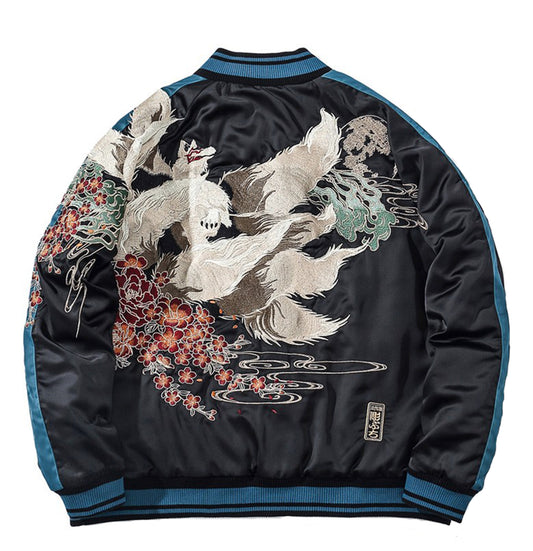
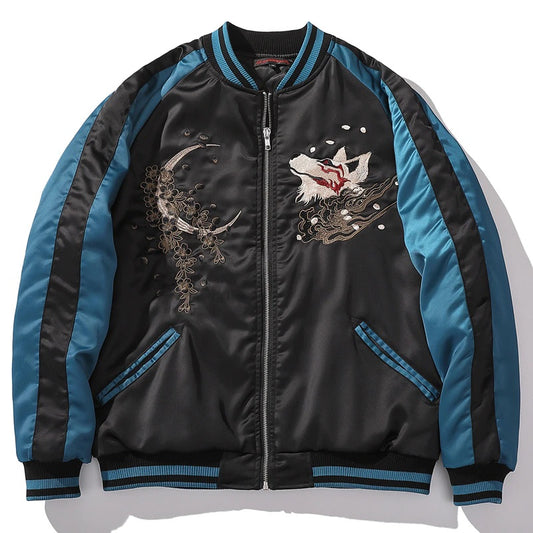
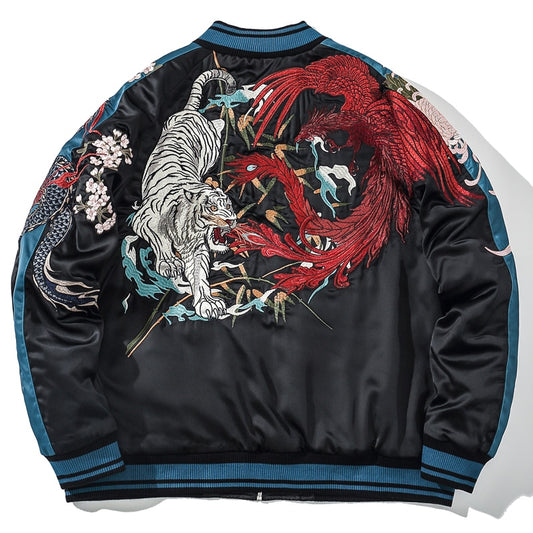
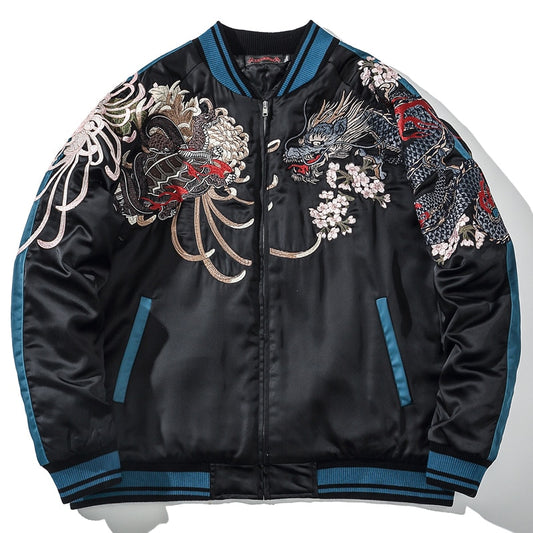
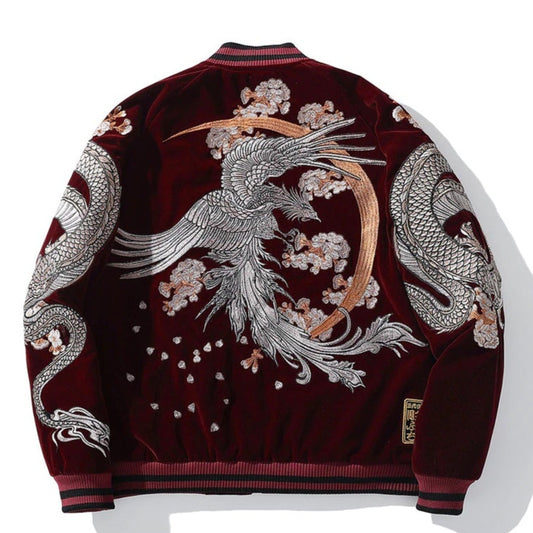
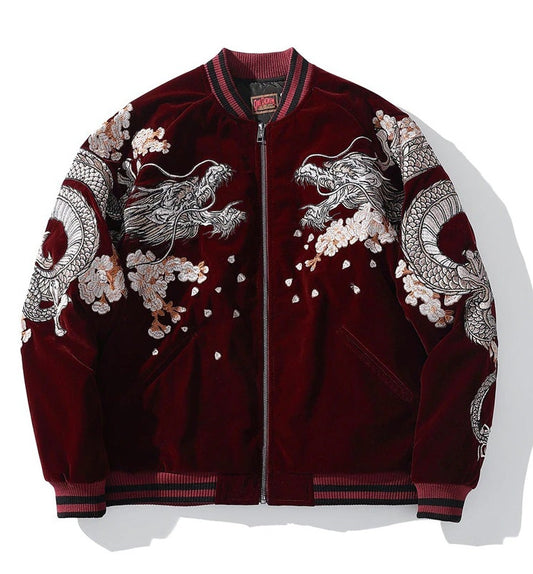
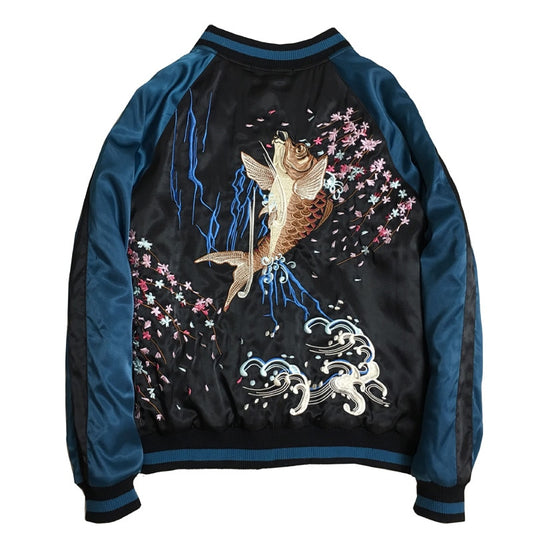
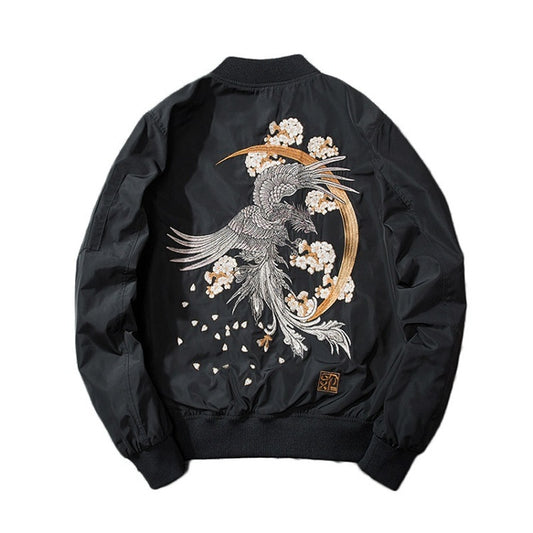
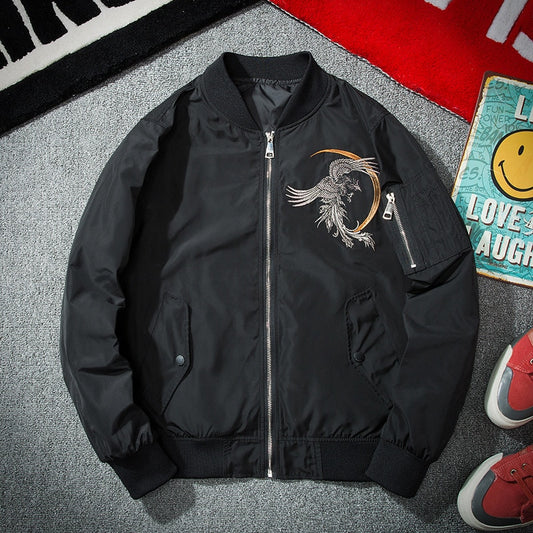
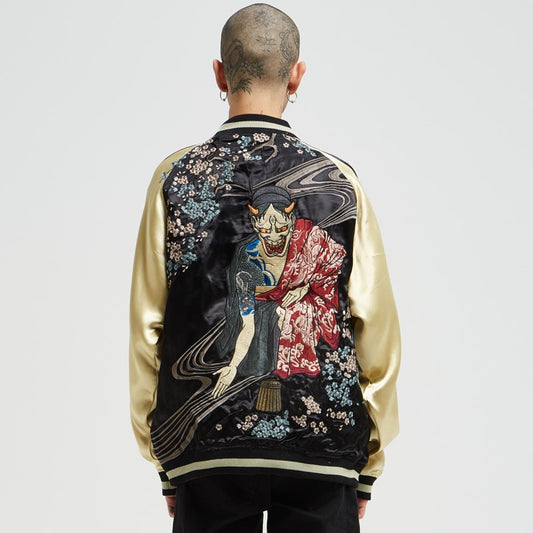
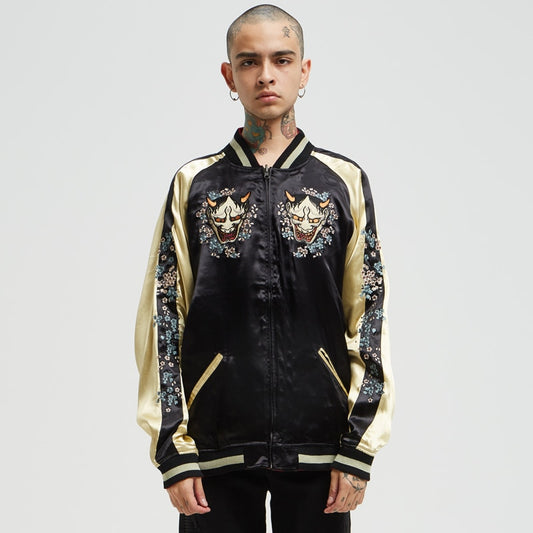
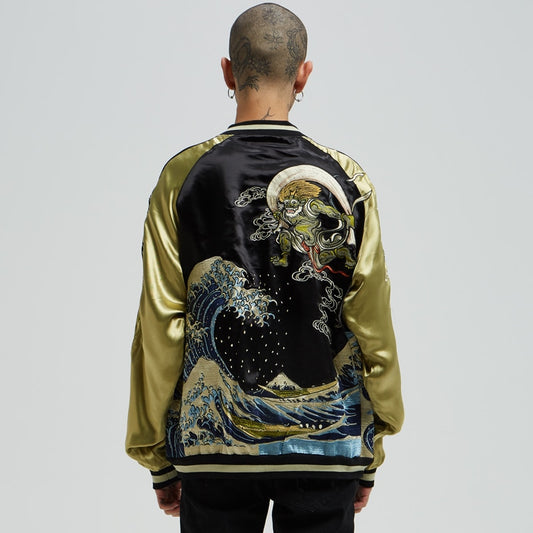
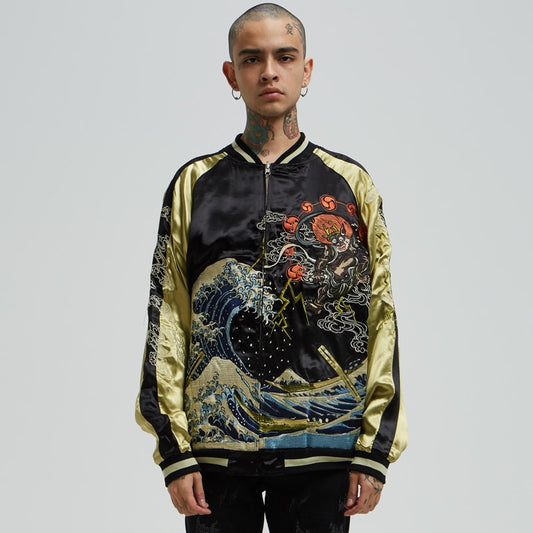
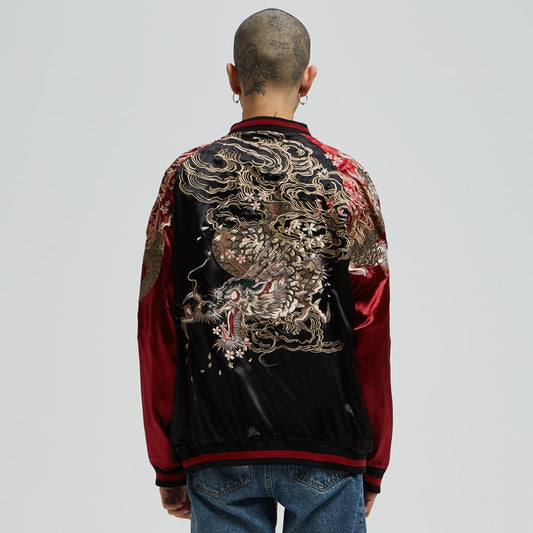
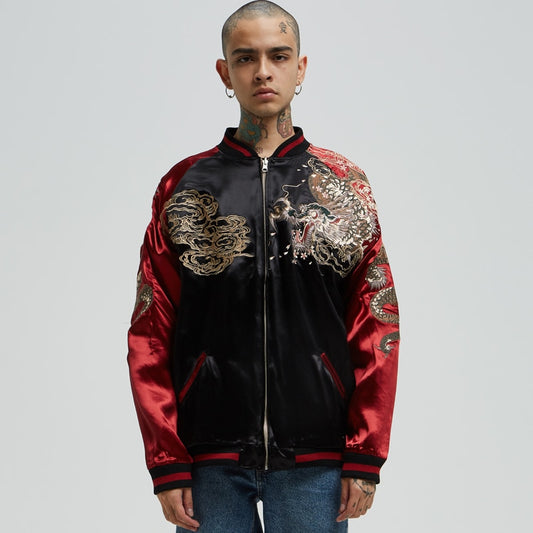
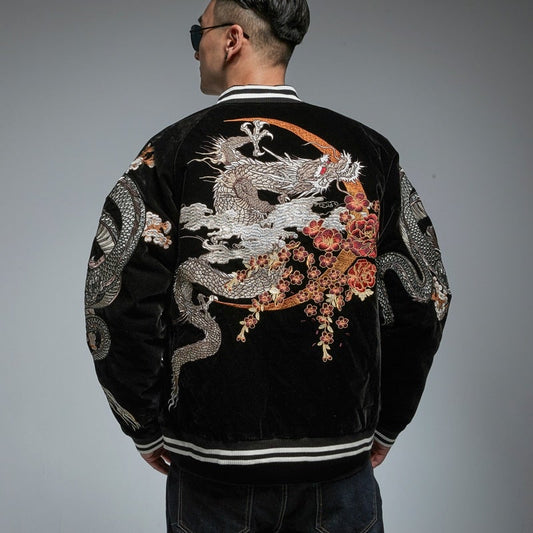
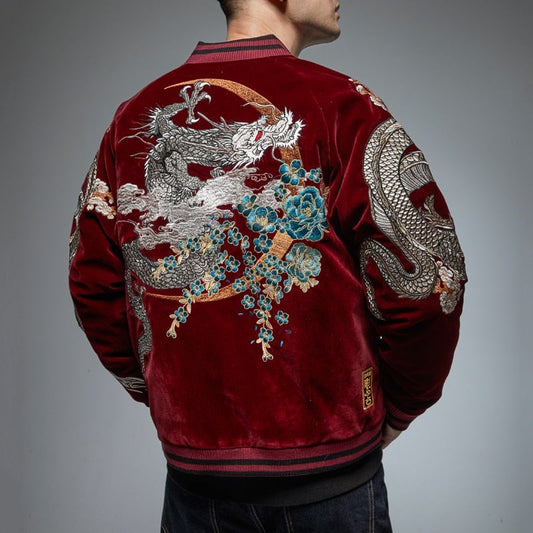
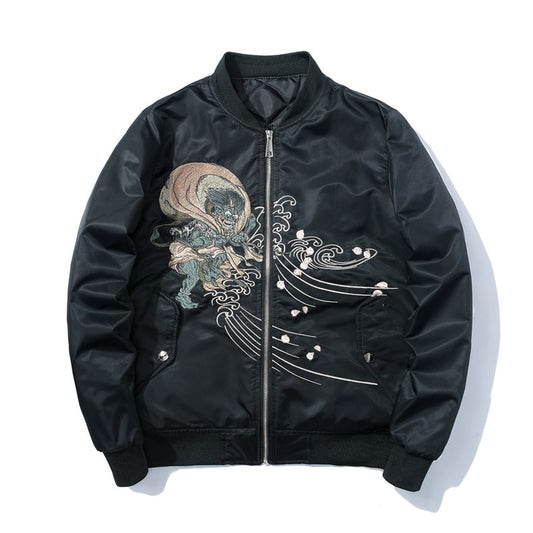
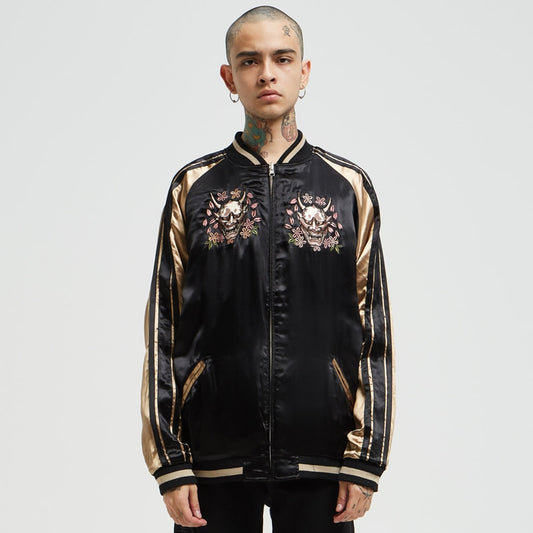
Shop Japanese Sukajan jackets in tiger, dragon, phoenix, wolf, Oni, Hannya, wave and other souvenir-jacket-inspired designs. This collection focuses on modern Sukajan and Sukajan-inspired jackets with bold Japanese motifs, short bomber-style silhouettes and statement graphics.
Historical context: Sukajan are associated with postwar Yokosuka and the Japanese souvenir-jacket tradition. Historical examples became known for decorative embroidery made for U.S. servicemen stationed in Yokosuka. Modern commercial jackets should not automatically be described as vintage, made in Japan, hand-embroidered or satin unless the exact product listing documents those details.
For related outerwear, compare Japanese Bomber Jackets, Haori Jackets and Hanten Jackets.
Jump to: what it is · designs · how to choose · materials · fit · Sukajan vs bomber · care · FAQs
What Is a Sukajan Jacket?
A Sukajan is a Japanese souvenir-jacket style associated with Yokosuka. The category developed in the postwar period and became recognizable for short jacket silhouettes, contrast details and decorative motifs such as dragons, tigers, eagles and Japanese landscape or floral imagery.
The name is commonly understood as a shortened form of “Yokosuka jumper.” In modern fashion, the term is also used for new jackets inspired by that souvenir-jacket tradition. A modern Sukajan-inspired jacket is not automatically an original postwar garment, a Japanese-made jacket or a hand-embroidered vintage piece.
Japanese Sukajan Designs
| Motif |
What it brings to the jacket |
| Tiger and white tiger |
Bold animal-focused artwork and classic souvenir-jacket energy |
| Dragon |
Strong back or chest graphics with a dramatic Japanese-inspired look |
| Phoenix |
Large decorative artwork with a more ornate visual direction |
| Oni and Hannya |
Japanese mask-inspired imagery with a darker statement look |
| Wave |
Japanese-art-inspired patterning and a more graphic landscape feel |
| Wolf, fish and floral |
Alternatives to the more common tiger and dragon direction |
Motifs can carry different meanings in different artistic contexts, so avoid treating one symbol as having a single universal interpretation.
How to Choose a Sukajan Jacket
-
Start with the motif. Tiger, dragon, phoenix, Oni, Hannya and wave designs create very different outfits.
-
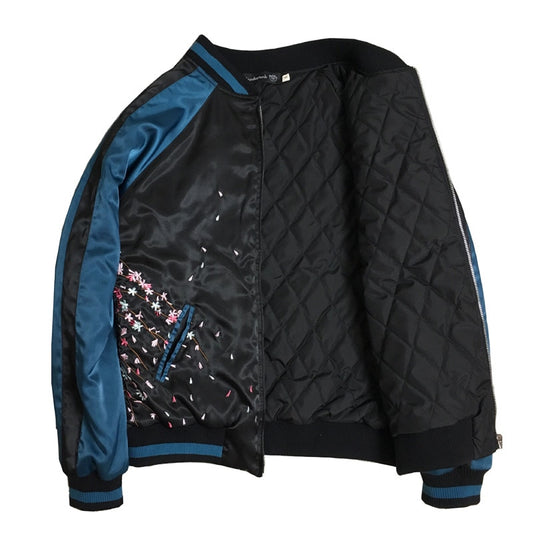
Check whether the jacket is reversible. Some Sukajan are designed for two-sided wear, while others are not.
-
Verify the exact material. Do not assume every Sukajan uses silk, satin, rayon or polyester.
-
Use garment measurements. Chest, shoulders, sleeves and jacket length are more useful than the size label alone.
-
Check the lining and padding. These details affect warmth, structure and comfort.
-
Inspect the decoration method. Printed, embroidered-looking and genuinely embroidered surfaces should not be treated as identical.
Sukajan Materials and Construction
Modern Sukajan can use different fabrics and finishes. Products in this collection may use synthetic fabrics, rayon-like materials, smooth finishes, blends and reversible constructions. The exact fiber content belongs on the individual product page.
If you specifically want a satin Sukajan, check the product description rather than judging from a glossy photograph. Satin describes a weave or finish and should not be assumed from appearance alone.
If you specifically want embroidery, verify that the listing says so. Historical Sukajan are strongly associated with embroidery, but modern retail products can use different decorative methods.
Sukajan Sizing and Fit
There is no single collection-wide Sukajan fit. Different jackets can use different size ranges and garment proportions.
- Compare chest width with a jacket you already own.
- Check shoulder width if you prefer a relaxed or fitted silhouette.
- Compare sleeve length, especially on ribbed-cuff styles.
- Check total jacket length because Sukajan often sit shorter than longer outerwear.
- Allow room for a T-shirt, knit or hoodie underneath if you plan to layer.
Fit tip: use the exact size chart and measurements on the product page instead of automatically sizing up or down because the jacket is described as Japanese.
Sukajan vs Japanese Bomber Jacket
Sukajan and bomber jackets can share a short zip-front silhouette, but they are not exact synonyms. Sukajan refers more specifically to the Yokosuka souvenir-jacket tradition and its decorative visual language, while Japanese Bomber Jackets is a broader shopping category that can include general graphic bombers as well.
If you want souvenir-jacket styling and Japanese motifs to be the central feature, stay with this Sukajan collection. If you mainly want a bomber silhouette regardless of historical reference, the broader bomber collection is a better comparison.
How to Style a Sukajan Jacket
Simple Streetwear
Pair a bold tiger, dragon, Oni or Hannya jacket with a plain T-shirt, dark jeans or relaxed trousers. Keeping the base simple lets the jacket remain the main visual element.
Japanese-Inspired Layering
For a stronger Japanese streetwear direction, combine a Sukajan with Japanese Pants or a simple hoodie. Avoid stacking too many competing graphics in one outfit.
Alternative Japanese Outerwear
If you want a different silhouette, compare Haori Jackets and Hanten Jackets. They are separate garment categories and should not be treated as interchangeable names for Sukajan.
Are These Sukajan Jackets Vintage or Made in Japan?
Do not assume vintage age, Japanese manufacture, handmade production or historical provenance from the collection name. Those claims should only be made when the exact product listing documents them.
What Affects Sukajan Prices?
Use the live product card for current pricing because prices, variants and promotions can change. Differences can reflect material, lining, reversible construction, decorative surface, size and current promotion. Price alone does not prove Japanese origin, embroidery method or historical authenticity.
Sukajan Care and Storage
Care should follow the exact garment label or product instructions because fabrics, linings and decorative finishes vary.
- Check the fiber content before washing, dry cleaning or machine drying.
- Use extra care with reversible jackets and decorative surfaces.
- Avoid aggressive scrubbing over prints or embroidery.
- Use high heat cautiously unless the care label permits it.
- Store the jacket clean and dry with enough space to avoid crushing decorative details.
Japanese Sukajan FAQs
What is a Sukajan jacket?
A Sukajan is a Japanese souvenir-jacket style associated with postwar Yokosuka and known for short jacket silhouettes and bold decorative motifs.
Is a Sukajan the same as a bomber jacket?
Not exactly. They can share a similar silhouette, but Sukajan refers more specifically to the Yokosuka souvenir-jacket tradition.
Are Sukajan jackets embroidered?
Historical Sukajan are strongly associated with embroidery, but modern products vary. Check the exact listing before assuming the decoration is embroidered.
Are Sukajan jackets reversible?
Some are. Confirm reversible construction on the exact product or selected variant rather than assuming it applies to every Sukajan.
How should a Sukajan fit?
Fit varies by jacket. Compare chest, shoulders, sleeves and total length using the product-specific size chart.
Are these Sukajan jackets made in Japan?
Do not assume that from the collection name. Check the exact product listing for origin information.
How should I clean a Sukajan jacket?
Follow the exact garment care instructions because fabrics, linings and decorative surfaces differ across the collection.
Shop Japanese Sukajan
Compare jackets by motif, material, fit, reversible construction, decorative surface and intended use. For a broader bomber category, browse Japanese Bomber Jackets.

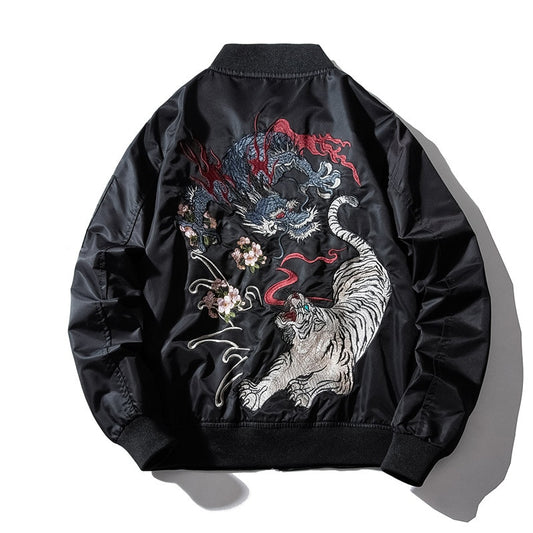
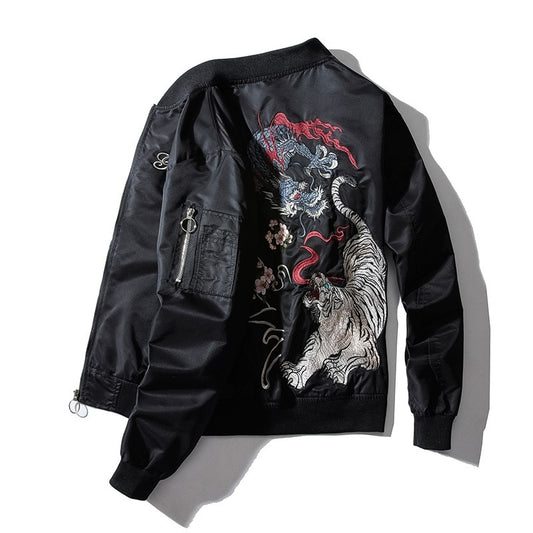 Sale
Sale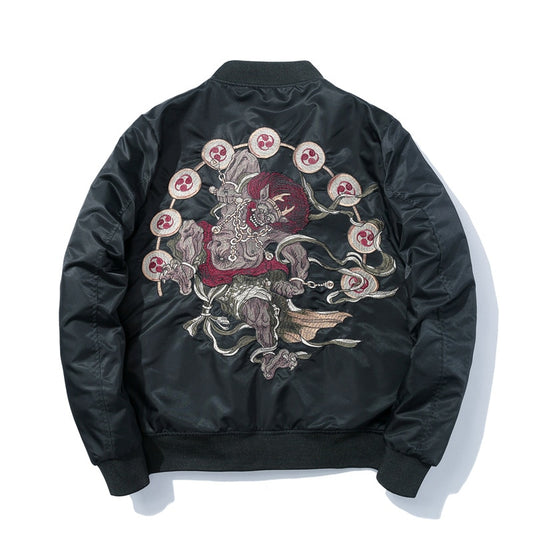
 Sale
Sale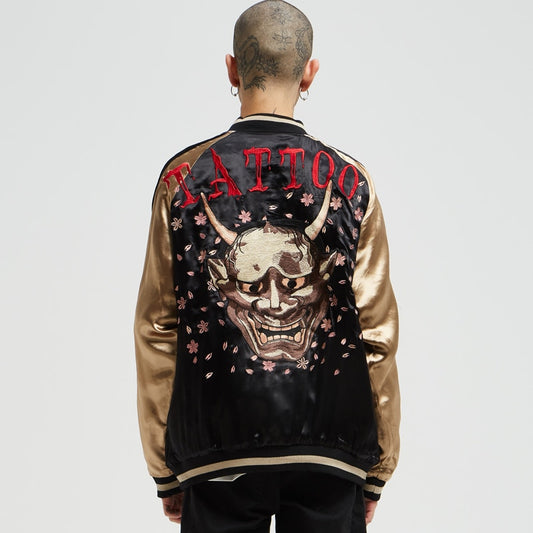
 Sale
Sale