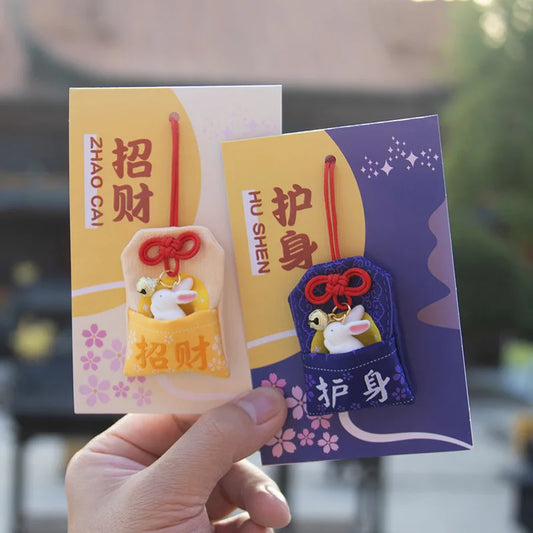
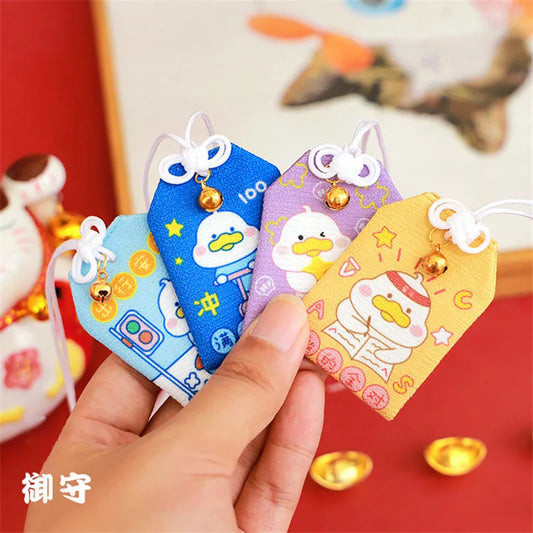
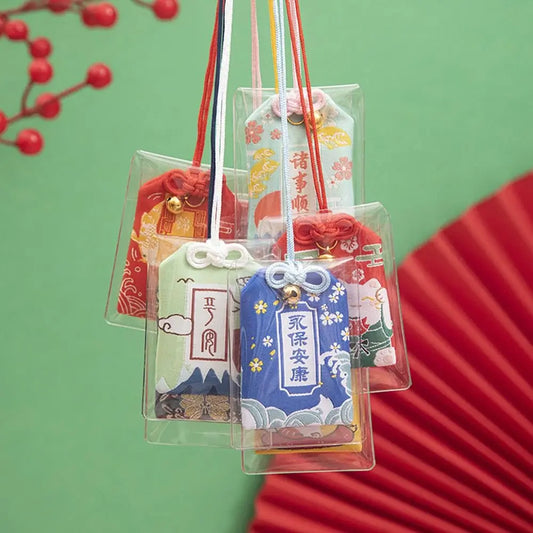
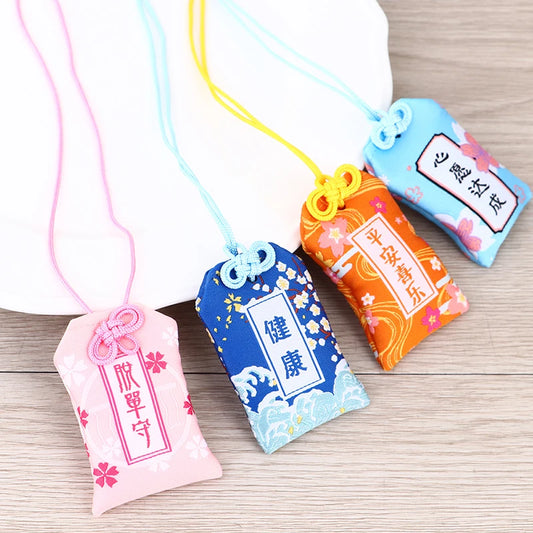
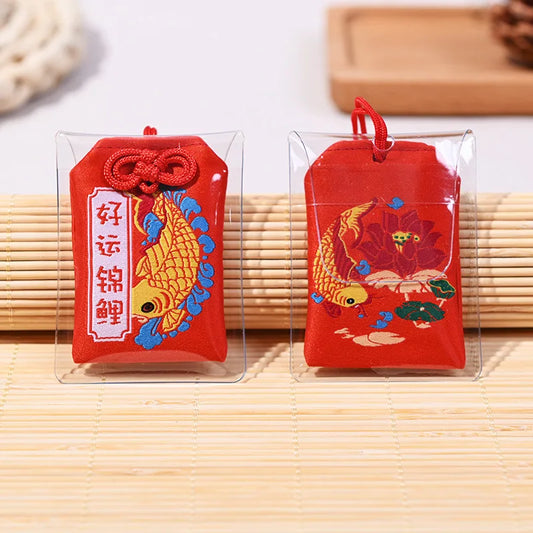
Shop Japanese Omamori-style charms and small Japanese-inspired lucky-charm accessories in cloth, fabric, brocade, plastic and mixed-material designs. The collection includes cat, rabbit, Maneki Neko, prayer, wish and illustrated themes intended for bags, keys, desks, gifts and decorative use.
Traditional omamori are amulets associated with Japanese Shinto shrines and Buddhist temples. The products in this collection should be treated as modern Omamori-style retail accessories unless a specific listing documents shrine or temple provenance. Do not assume a charm is blessed, shrine-issued, temple-issued, handmade in Japan or spiritually consecrated from its appearance alone.
Jump to: what is Omamori · styles · how to choose · themes and meanings · materials · how to carry · authenticity · care · FAQs
What Is an Omamori?
Omamori are Japanese amulets commonly offered at Shinto shrines and Buddhist temples. Traditional examples are often small decorative pouches associated with a particular prayer, wish or form of protection.
Common themes can include general good fortune, study, safe travel, health, family safety or success. The exact purpose and design depend on the shrine or temple that issues the amulet.
That religious and cultural context is different from a commercial pouch or charm made in a similar visual style. This collection therefore avoids presenting retail accessories as authentic shrine amulets unless that origin is specifically documented.
Omamori-Style Charm Designs
| Style |
What to compare |
| Cloth pouch-style charm |
Fabric, print, stitching, cord and attachment method |
| Brocade-style charm |
Woven pattern, texture, lanyard and finishing |
| Plastic or mixed-material charm |
Weight, surface finish, scratch resistance and attachment hardware |
| Animal or character design |
Artwork, licensing status, size, material and intended decorative use |
How to Choose a Japanese Omamori-Style Charm
-
Choose the design first. Cat, rabbit, Maneki Neko, prayer and wish motifs create very different visual styles.
-
Check the material. Cloth, brocade, plastic and mixed materials feel and wear differently.
-
Check the attachment. Some designs use cords, loops or keychain-style hardware.
-
Check the actual dimensions. These are small accessories, but exact sizes vary.
-
Check both sides of the design. Some products include different wording, symbols or artwork on the front and back.
-
Do not buy based on an unverified blessing claim. If shrine provenance matters, look for the issuing shrine or temple to be named and documented.
Omamori Themes and Meanings
Traditional omamori can be associated with particular intentions, but commercial designs often use words such as good luck, study, safe travel, love, money, health, victory or exam success simply as themes.
Those words should not be interpreted as guarantees. A “traffic safety” design is not safety equipment. A “health” charm is not medical treatment. A “money” or “success” design does not guarantee financial or academic results.
Choose the theme because it has personal meaning, matches the intended gift or appeals visually, while keeping the distinction between symbolism and outcome clear.
Omamori-Style Charm Materials
The collection does not use one universal construction. Modern charms can use cloth, synthetic fabric, brocade-style woven material, plastic or mixed components.
Do not assume silk, handmade stitching, natural fibers or Japanese manufacture unless the exact listing verifies those details. Material matters for appearance, weight, cleaning and how well the charm handles everyday contact with keys or bags.
How to Carry or Display an Omamori-Style Charm
Small Omamori-style accessories can be attached to backpacks, handbags, key rings, pouches or other personal items when the included cord or hardware supports that use.
- Keep the attachment away from moving machinery or places where it can snag.
- Do not overload a delicate fabric loop with heavy keys.
- Keep soft fabric charms reasonably dry.
- For a decorative display, avoid prolonged direct sunlight if the print may fade.
For related lucky-cat designs, browse Japanese Lucky Cat, Maneki Neko.
Are These Authentic Shrine-Issued Omamori?
This collection does not make a blanket claim that its products are issued or blessed by Japanese shrines or temples. Unless an individual product page identifies the issuing institution and provides credible provenance, treat the item as an Omamori-inspired charm or accessory.
If you specifically want a religious omamori from a named shrine or temple, provenance is more important than visual similarity.
Are These Omamori Made in Japan?
Do not assume Japanese manufacture, artisan production or shrine origin from the collection title. Check each product page for country of origin and manufacturing information.
What Affects Omamori-Style Charm Prices?
Use the live product card for current pricing because prices and variants can change. Differences can reflect material, construction, attachment hardware, print complexity, packaging and selected design.
Omamori-Style Charm Care
- Keep cloth, fabric and brocade-style pieces reasonably dry.
- Remove dust gently with a soft dry cloth or brush.
- Avoid bleach and harsh cleaners on printed or woven surfaces.
- Wipe plastic pieces gently rather than using abrasive cleaners.
- Store cords without tight knots that can permanently crease them.
- Do not machine wash unless the specific product says it is washable.
If you own an actual shrine- or temple-issued omamori, follow the guidance of the institution that issued it rather than applying generic retail-accessory care advice.
Japanese Omamori Charm FAQs
What is an Omamori?
Omamori are Japanese amulets commonly associated with Shinto shrines and Buddhist temples and offered for particular wishes or forms of protection.
Are these authentic shrine-issued Omamori?
Do not assume that. Unless a product documents a named shrine or temple and its provenance, treat it as an Omamori-style retail accessory.
What materials are Omamori-style charms made from?
Materials vary and can include cloth, fabric, brocade-style woven material, plastic and mixed components.
Do good-luck or protection charms guarantee results?
No. Luck, health, travel, study, money and similar wording should be treated as symbolic themes, not guaranteed outcomes.
Can I attach one to a bag or keys?
Many small charm designs can be carried this way when their cord, loop or hardware is suitable. Check the exact product.
Are these Omamori made in Japan?
Do not assume Japanese manufacture from the collection name. Check the exact product listing for origin information.
Shop Japanese Omamori-Style Charms
Compare charms by design, material, dimensions, attachment style, wording and documented provenance. If the item is intended as a meaningful gift, choose a theme that fits the recipient without treating the symbolism as a guaranteed result.