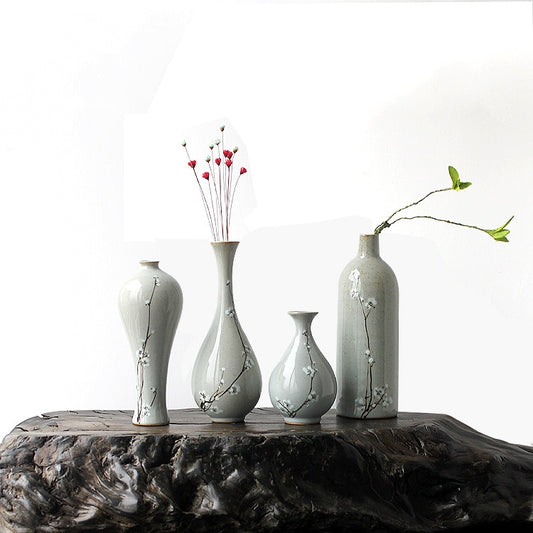
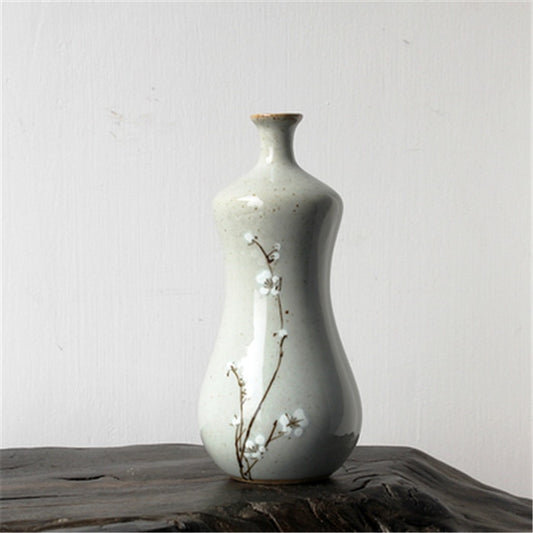
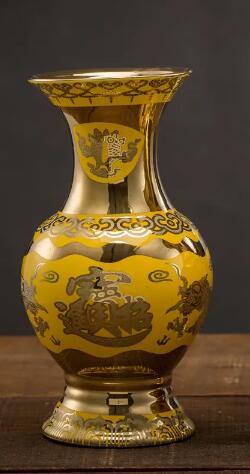
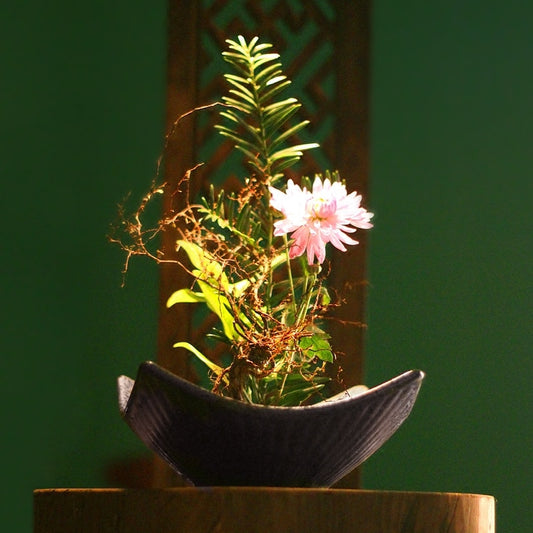
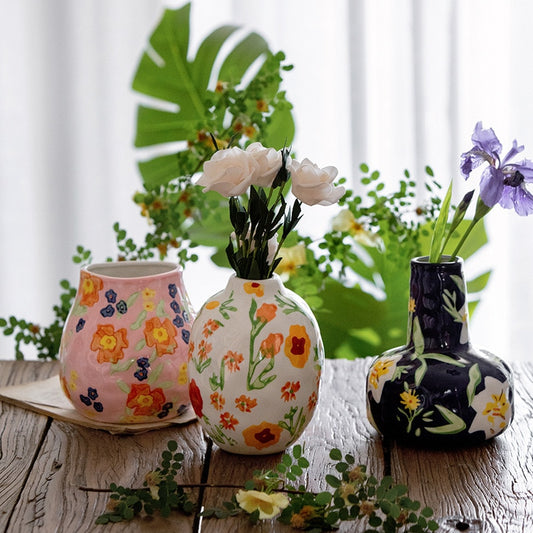
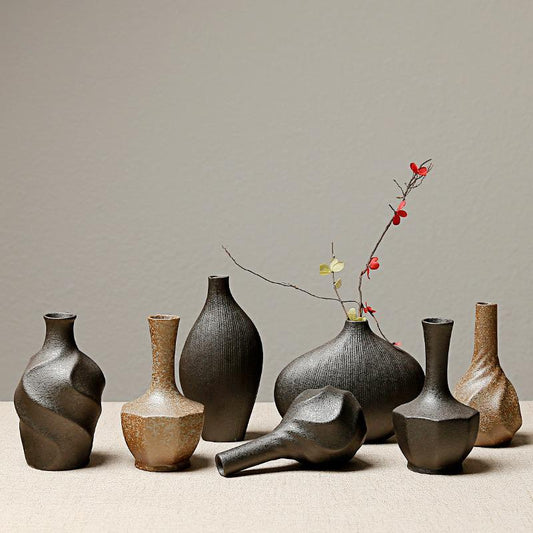
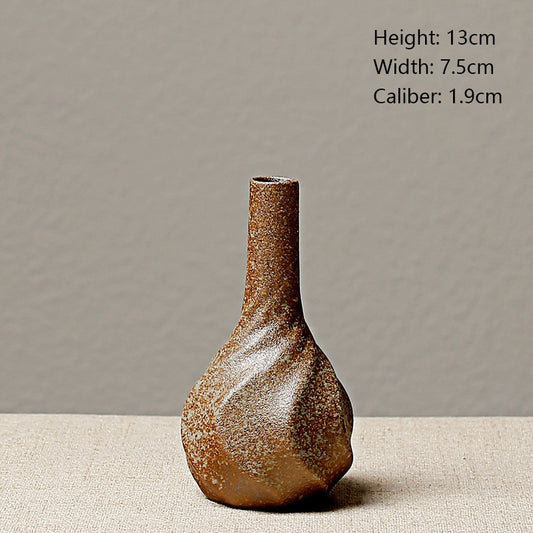
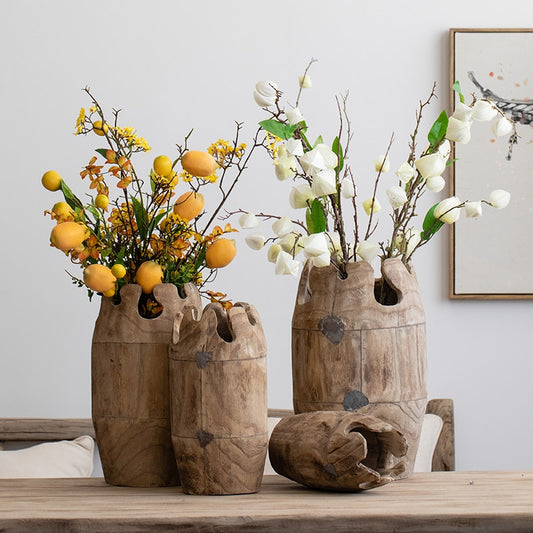
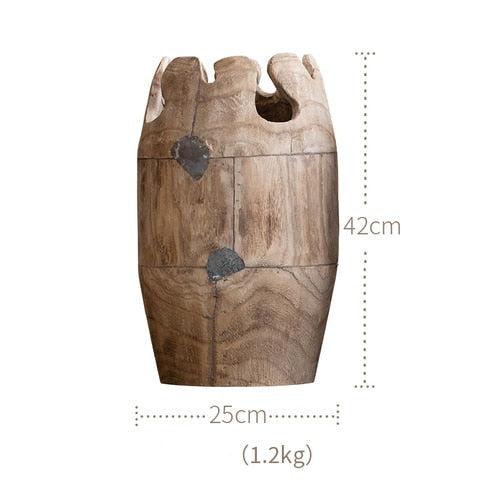
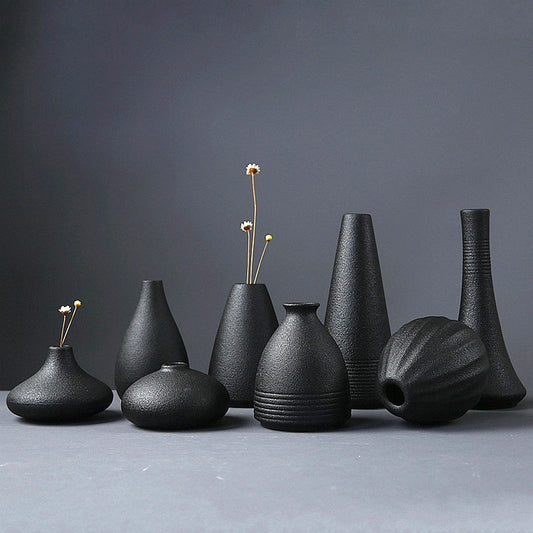
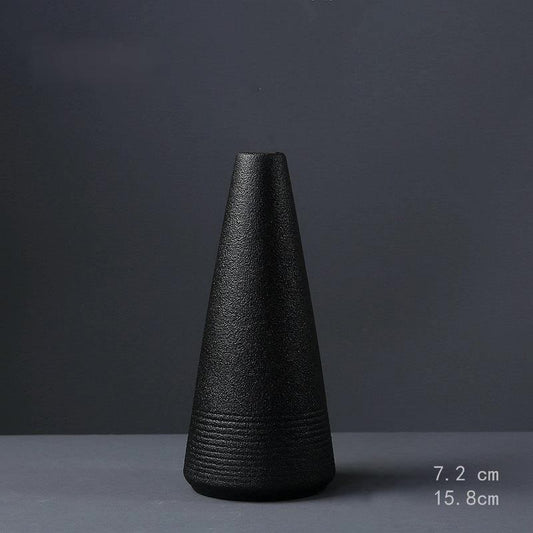
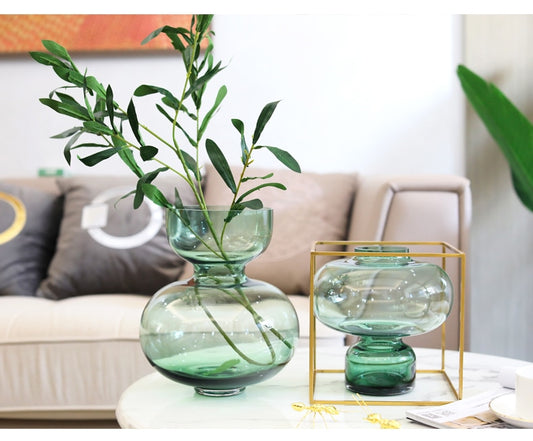
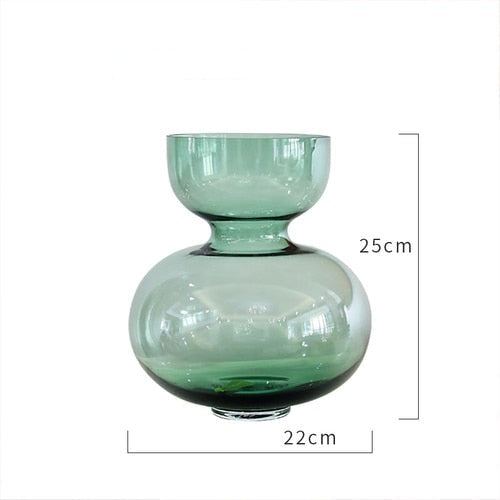
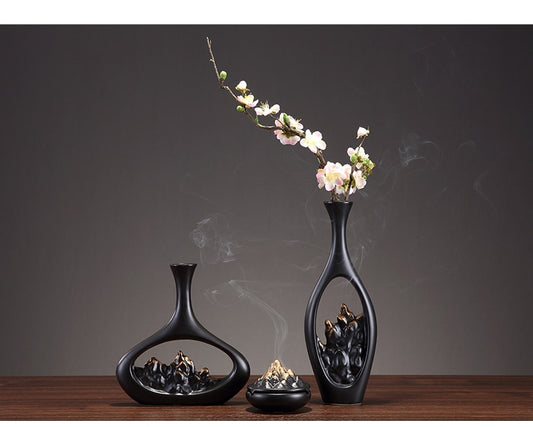
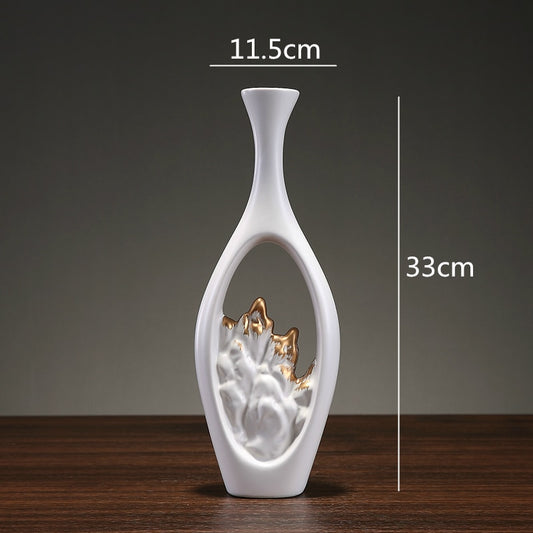
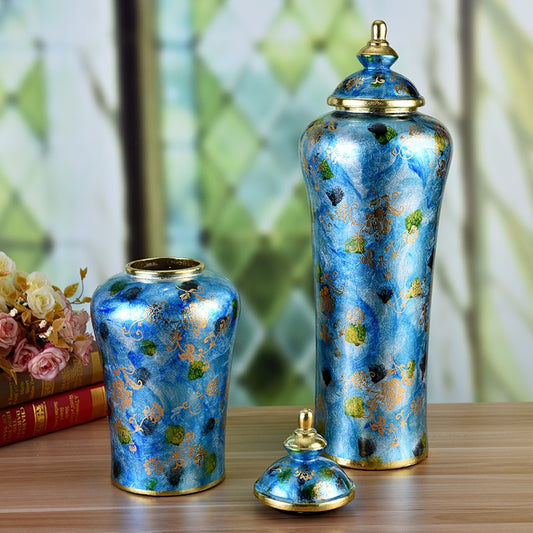
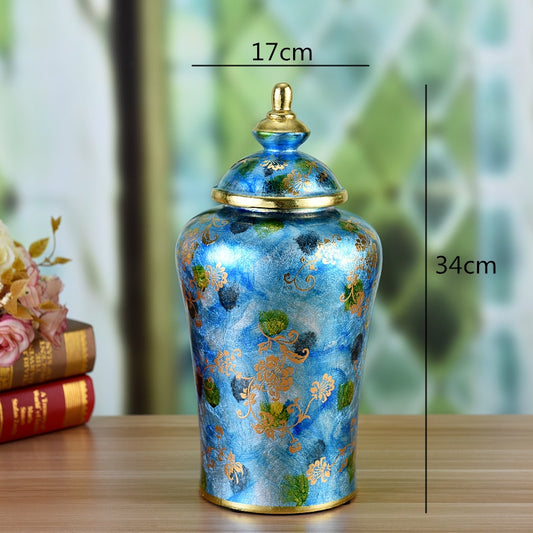
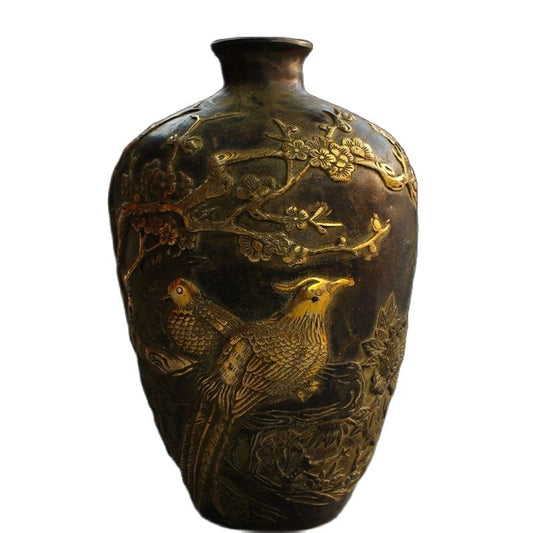
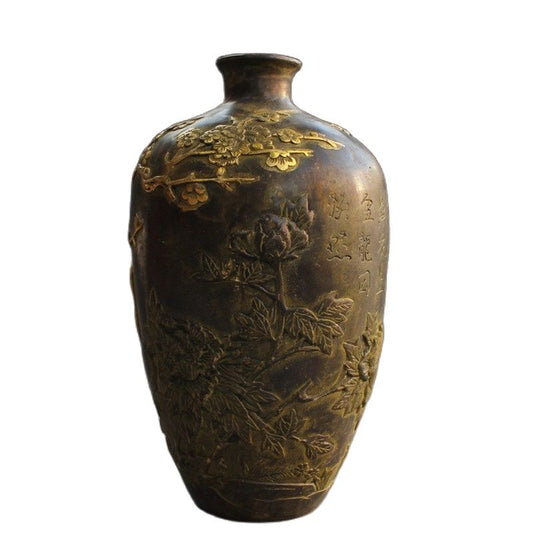
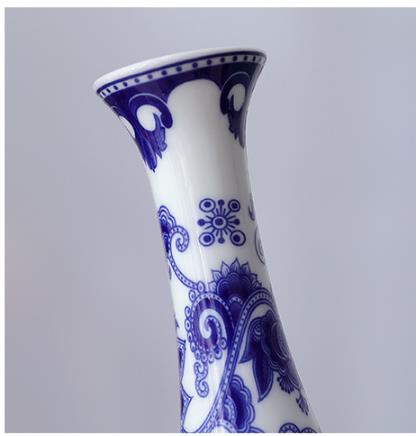
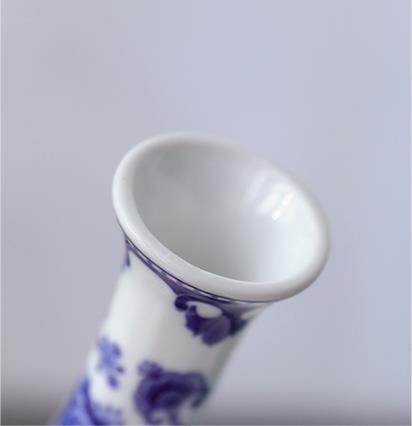
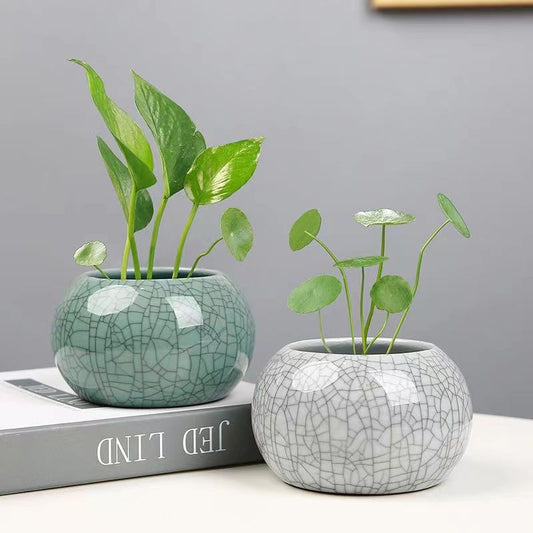
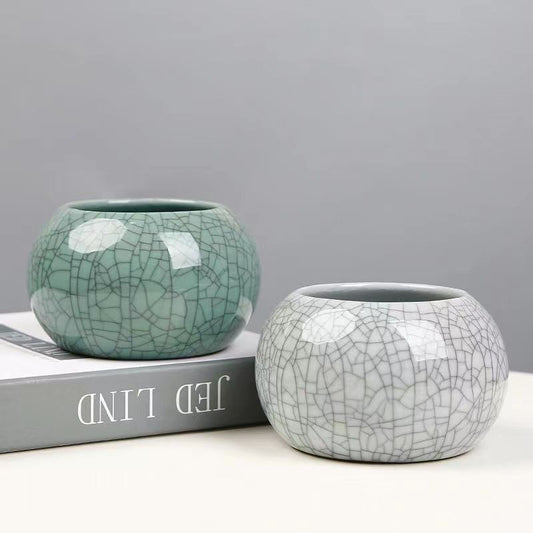
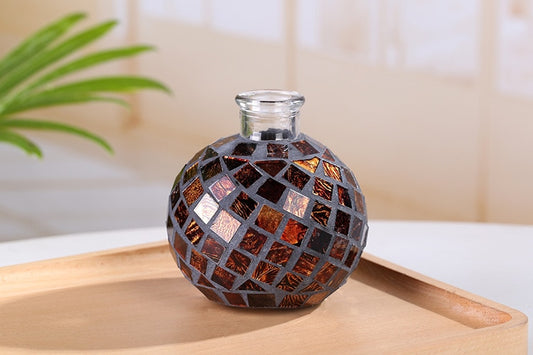
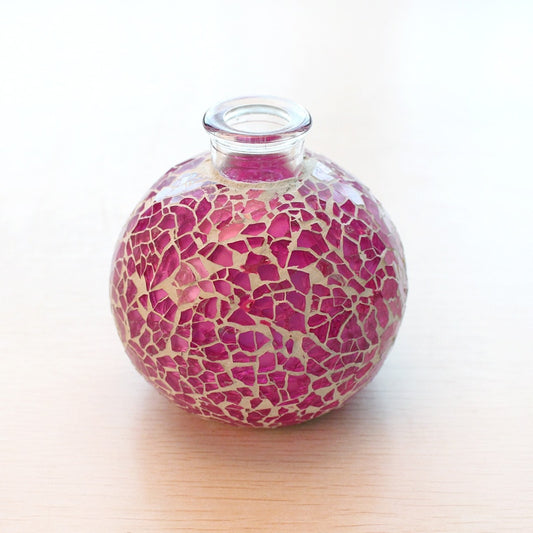
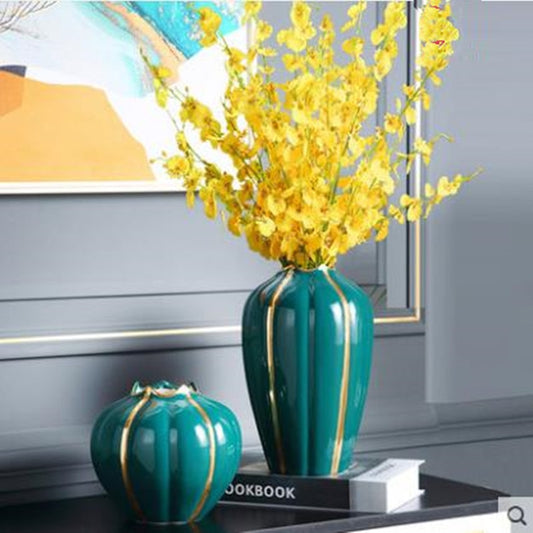
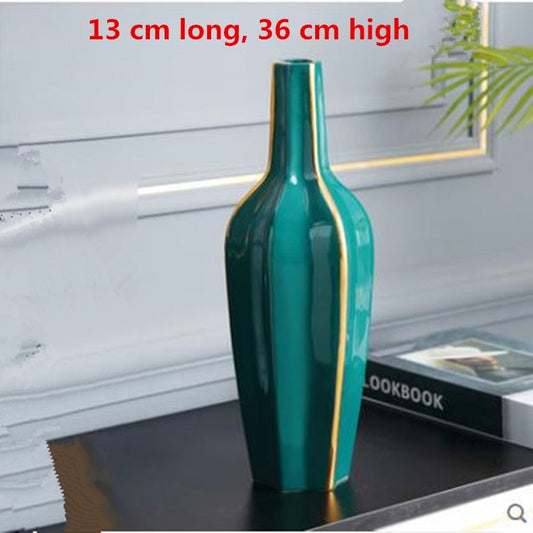
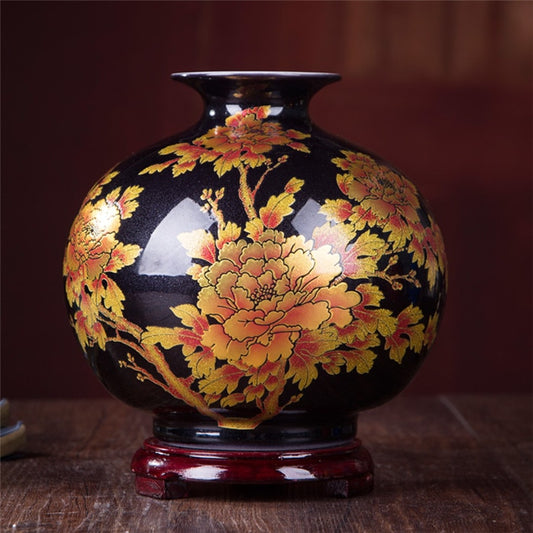
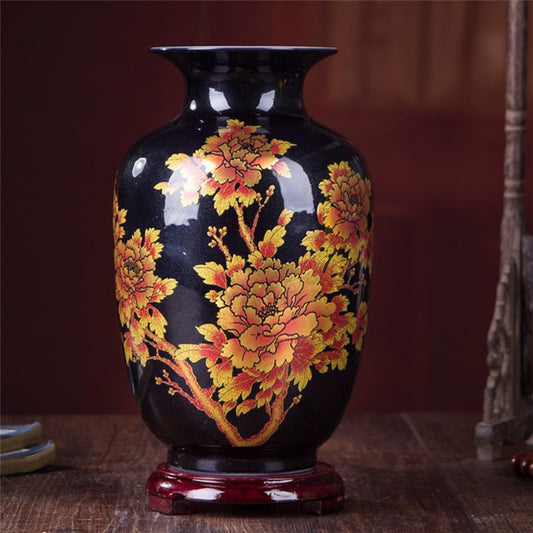
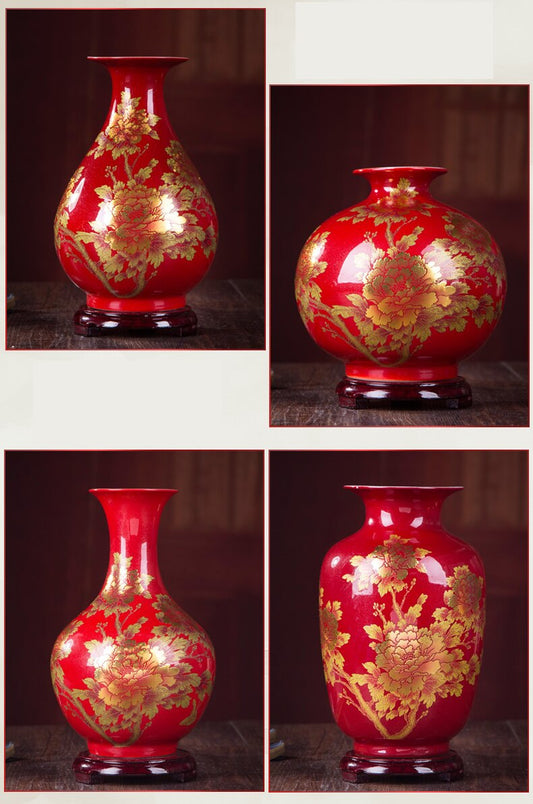
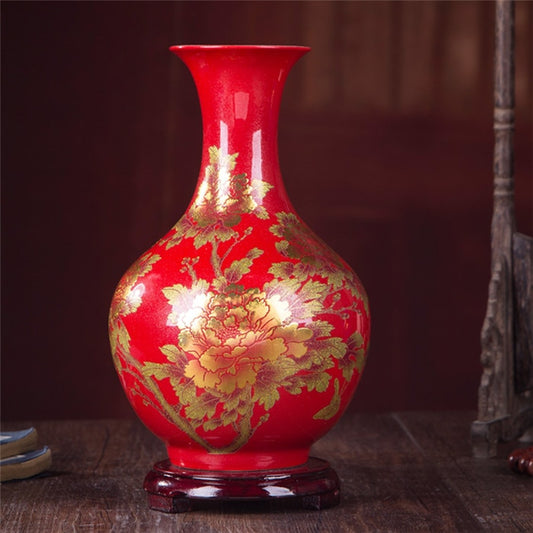
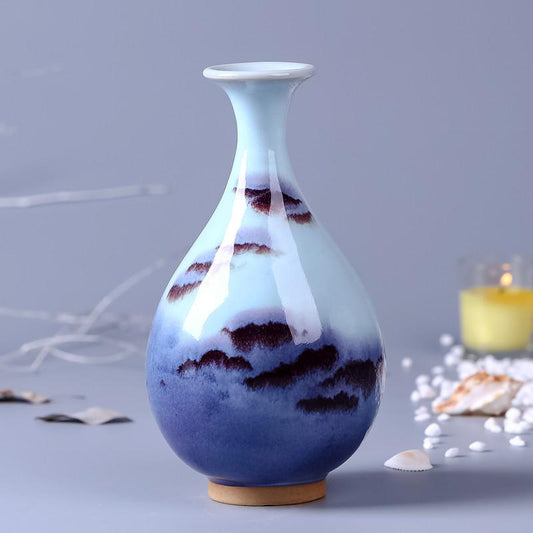
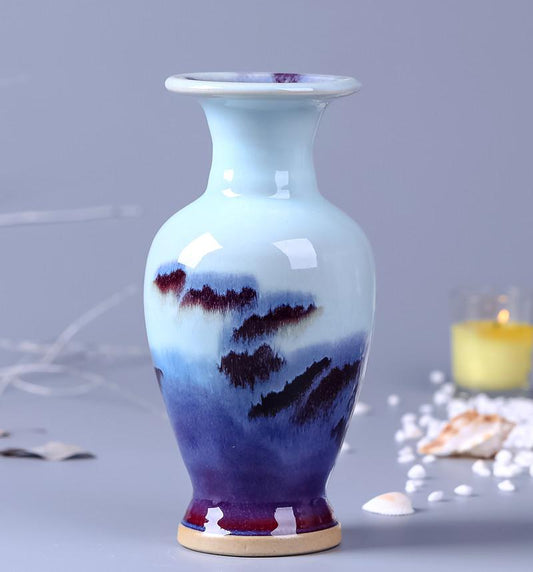
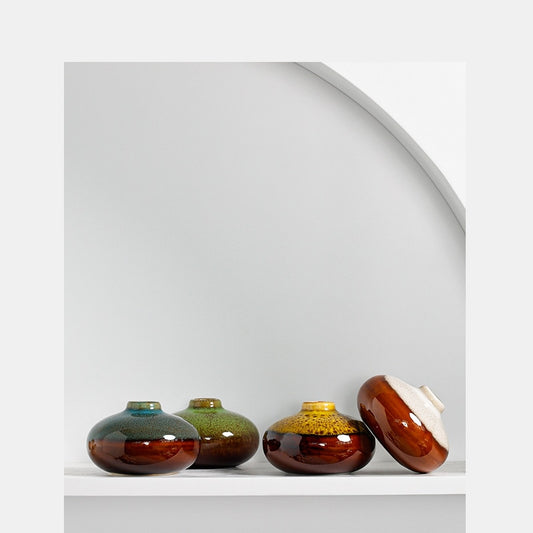
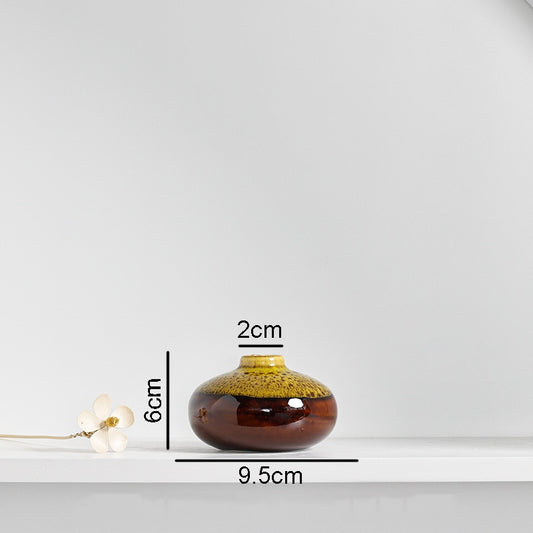
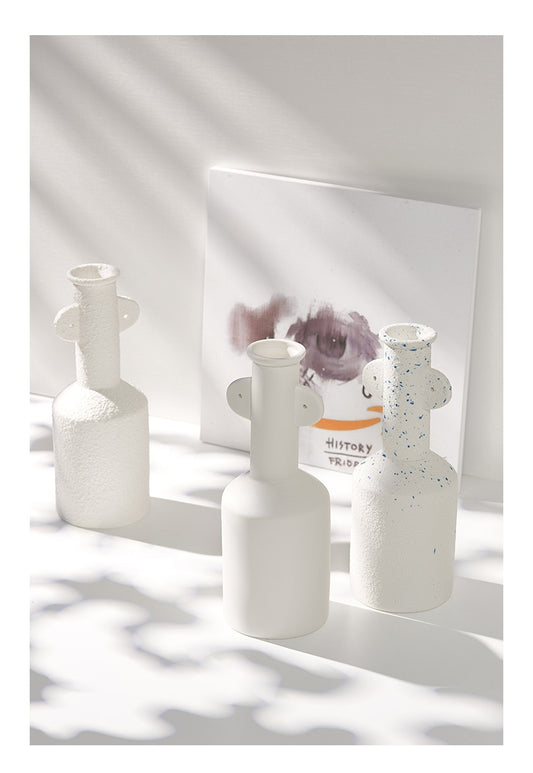
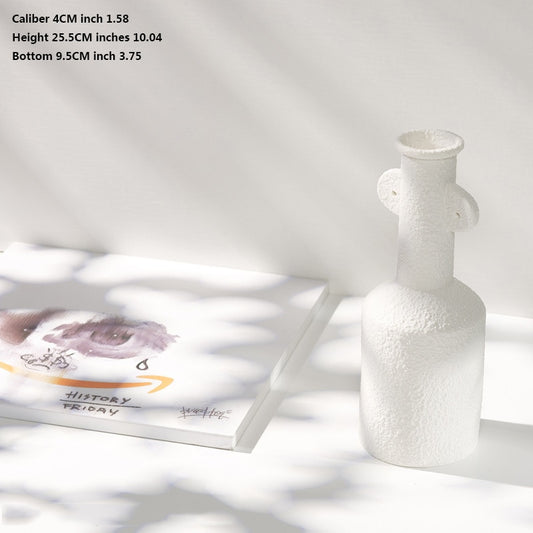
Shop Japanese vases and Japanese-inspired decorative vases in ceramic, porcelain-style, glass, wood, bronze-look and modern art designs. The collection includes pieces for flowers, branches, hydroponic displays, shelves, tables and standalone décor, with a wide range of shapes and proportions.
This is a modern retail collection, not an authenticated antiques catalog. Do not assume a vase is antique, vintage, Satsuma, Imari, Kutani, Kakiemon, cloisonné, handmade in Japan, one-of-a-kind or traditionally produced unless the individual listing provides evidence for that specific claim.
Jump to: types · how to choose · materials · flowers and branches · water use · size and proportion · display · authenticity · care · FAQs
Japanese Vase Styles in This Collection
| Vase style |
What to compare |
| Ceramic vase |
Glaze, opening size, weight, water suitability and base stability |
| Porcelain-style vase |
Actual material, decoration, wall thickness and handling |
| Glass or crystal-style vase |
Transparency, thickness, weight, opening and cleaning access |
| Wooden or wood-style vase |
Whether it is watertight, lined, intended for dried flowers or decorative only |
| Modern sculptural vase |
Shape, center of gravity, usable opening and whether it is functional or primarily decorative |
How to Choose a Japanese Vase
-
Choose the use first. Fresh flowers, dried arrangements, branches, hydroponic plants and standalone décor need different vase shapes.
-
Check the opening. A narrow neck supports a few stems, while a wider opening works better for fuller arrangements.
-
Check the height and base width. Tall branches need a stable vase with enough weight and footprint.
-
Verify the material. Ceramic, glass, wood and metal-like finishes require different handling.
-
Check whether it holds water. Never assume a decorative vase is watertight simply because it has a vessel shape.
-
Inspect the interior. An unglazed, lined, coated or difficult-to-access interior changes cleaning and water use.
-
Measure the intended shelf or table. Close-up product photography can make scale difficult to judge.
Japanese Vase Materials
The live assortment uses multiple material descriptions. Ceramic is common, while some products are described as glass, porcelain, wood, stoneware or bronze-style pieces.
Product titles should not be treated as laboratory verification. If material matters for weight, breakability, water contact or value, use the detailed product specification rather than appearance alone.
A metallic finish does not necessarily mean solid bronze, and a porcelain-style appearance should not automatically be treated as a named Japanese porcelain tradition.
Vases for Flowers, Branches and Ikebana-Inspired Arrangements
Japanese flower arrangement traditions such as ikebana place strong emphasis on line, space, proportion and the relationship between the container and plant material. A vase can be useful for an ikebana-inspired arrangement without being a traditional or specialist ikebana vessel.
Narrow-Neck Vases
Useful for a small number of stems, tall flowers or branches because the opening naturally keeps material closer together.
Wide-Mouth and Bowl Forms
Better suited to lower, wider compositions when the vase is stable and the opening provides enough working room.
Heavy Base Vases
Useful for longer branches or top-heavy arrangements, but always test stability before placing them near edges.
If you plan to use floral frogs, internal supports or other arrangement hardware, check that the interior shape and opening provide enough room.
Can These Japanese Vases Hold Water?
Water suitability should be verified on the individual product page. Glazed ceramic and glass are often used with water, but this does not mean every decorative vase is watertight.
- Check for drainage holes, unsealed interiors or decorative-only construction.
- For wooden or porous pieces, verify whether a liner is required.
- Test a new vase on a protected surface before long-term use with water.
- Use a coaster or protective pad on moisture-sensitive furniture.
- Do not leave standing water against an unknown metal finish if corrosion is possible.
Vase Size and Proportion
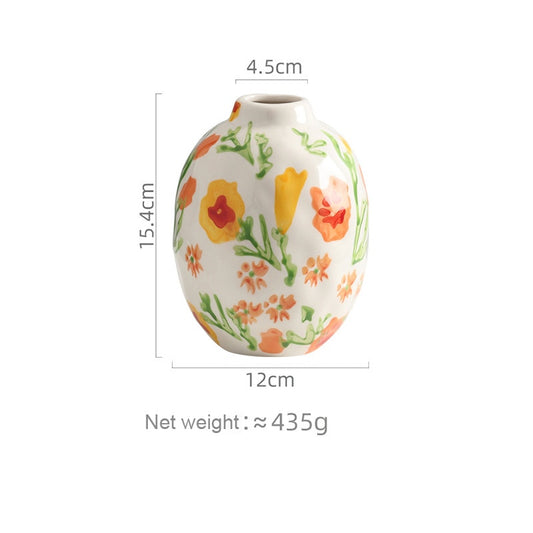
Choose vase dimensions in relation to both the arrangement and the furniture beneath it. A vase that looks balanced on a dining table may feel too large on a narrow shelf.
| Use |
What matters most |
| Single stems |
Narrow opening and appropriate height |
| Full bouquet |
Opening width, water volume and stable base |
| Long branches |
Weight, height and center of gravity |
| Standalone décor |
Shape, finish, viewing angle and room scale |
How to Style Japanese Vases at Home
Dining or Coffee Table
Choose a vase low enough not to block conversation if it stays on the table during meals or gatherings.
Console or Sideboard
A taller vase or sculptural silhouette can work well when there is enough wall space behind it.
Bookshelf
Use compact pieces and check both shelf depth and overhead clearance before ordering.
Japanese-Inspired Décor Group
Pair a vase with Japanese Wall Art Décor, Japanese Lanterns or Japanese Figurines without implying that modern decorative items form a historically authentic room set.
Antique, Vintage and Traditional Japanese Vase Claims
Terms such as Satsuma, Imari, Kutani, Kakiemon, cloisonné, antique and vintage identify specific traditions, production histories or age-related claims. They should not be used generically because a vase merely looks Japanese or old-fashioned.
This collection does not make blanket authenticity, age or provenance guarantees. If you are shopping for a collectible or genuine antique, look for documented maker marks, age, origin, material and provenance rather than relying on the collection title.
Are These Japanese Vases Made in Japan?
Do not assume Japanese manufacture, artisan production or traditional workshop origin from the collection name. Check the exact product page for country of origin and manufacturing information.
What Affects Japanese Vase Prices?
Use the live product card for current pricing because prices and variants can change. Differences can reflect material, size, weight, finish, decoration, packaging and manufacturing complexity.
Japanese Vase Care
- Handle ceramic, glass and porcelain-style pieces from the body and base rather than delicate rims.
- Use a soft cloth for routine dusting.
- Avoid abrasive cleaners on painted, glazed, metallic or glossy finishes.
- Empty floral water regularly when the vase is designed for water use.
- Allow the interior to dry fully before storage.
- Do not soak wooden or unknown materials unless the product specifically allows it.
- Place heavy or tall vases on stable surfaces away from edges.
Japanese Vase FAQs
Are these antique Japanese vases?
Do not assume so. This is primarily a modern retail décor collection. Antique or vintage status requires product-specific evidence.
What materials are available?
The assortment includes products described as ceramic, glass, porcelain-style, wood, stoneware and metal or bronze-style designs. Check each listing for the exact material.
Can every vase hold fresh flowers and water?
No. Verify that the exact vase is watertight and suitable for water before using it with fresh flowers.
Can I use these for ikebana?
Some shapes may work for ikebana-inspired arrangements, but the collection does not claim every product is a specialist traditional ikebana vessel.
Are these authentic Satsuma, Imari or Kutani vases?
Do not assume those classifications unless the individual product provides credible documentation supporting the specific tradition or maker.
Are these vases made in Japan?
Do not assume Japanese manufacture from the collection title. Check each product page for origin information.
Shop Japanese Vases
Compare vases by material, height, opening width, base stability, water suitability, finish and intended arrangement. If collectible authenticity matters, prioritize documented provenance over decorative style.