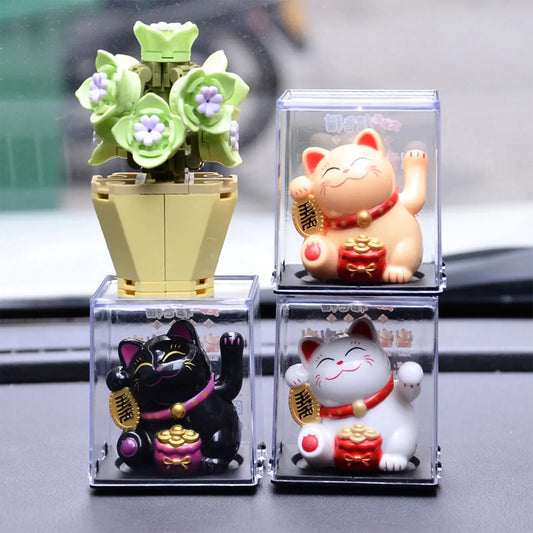
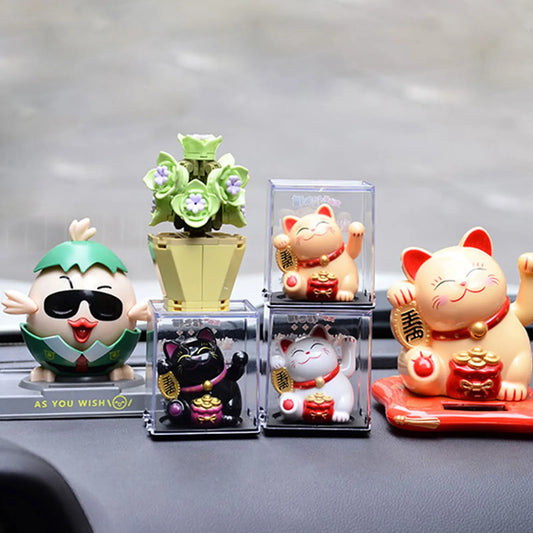
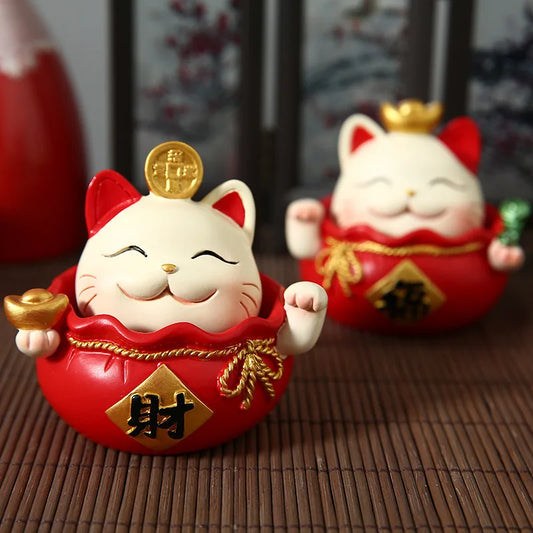
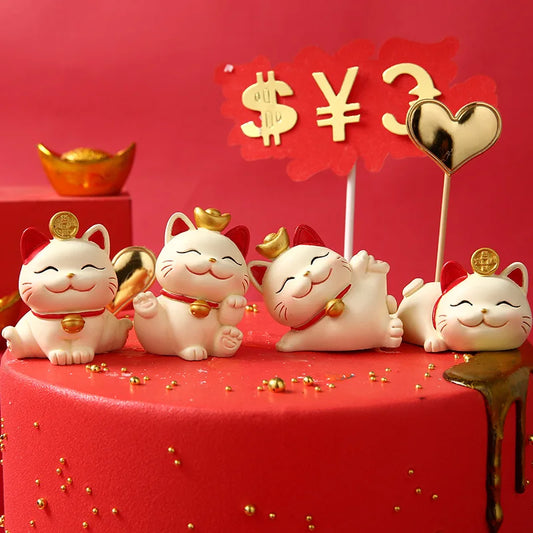
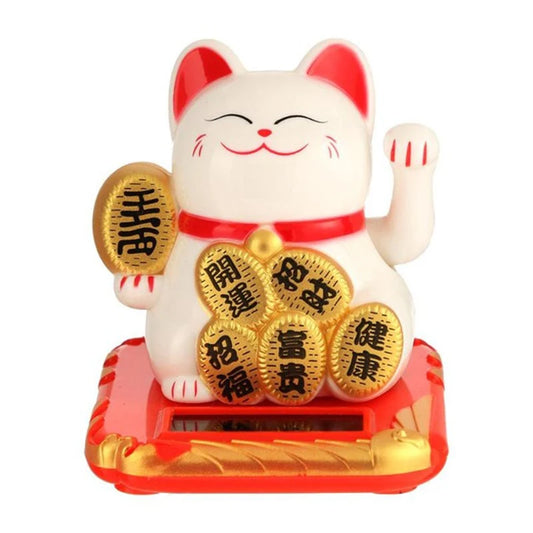
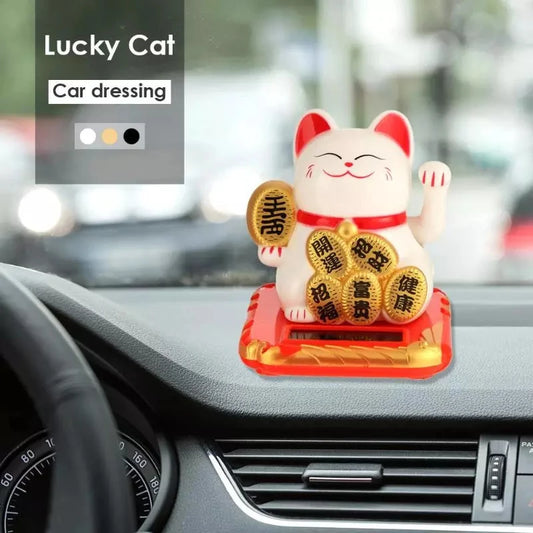
Shop Japanese Lucky Cat and Maneki Neko figurines in waving, compact, gold, red, white and other decorative designs. Maneki Neko, often translated as the “beckoning cat,” is a familiar Japanese talisman associated with welcoming luck, customers and prosperity. Modern figurines come in many colors, poses and materials, so the exact meaning, construction and intended use should be checked product by product.
Do not assume every Lucky Cat is handmade in Japan, ceramic, traditionally produced or assigned one universally accepted symbolic meaning. Modern retailers and makers often use different color and paw-position interpretations.
Jump to: what it is · how to choose · raised paw · colors · materials · placement · care · FAQs
What Is a Maneki Neko?
Maneki Neko is the Japanese beckoning-cat figure commonly seen in shops, restaurants, homes and other spaces. The raised paw looks like a beckoning gesture in Japan and the figure is widely associated with good fortune and welcoming prosperity.
The tradition has many local stories and modern variations. It is more accurate to describe Maneki Neko as a Japanese lucky-cat talisman with evolving popular symbolism than to claim that every pose or color has one fixed historical meaning.
How to Choose a Japanese Lucky Cat
-
Choose the pose first. Some cats raise one paw, some appear to wave mechanically, and others use both paws or hold decorative objects.
-
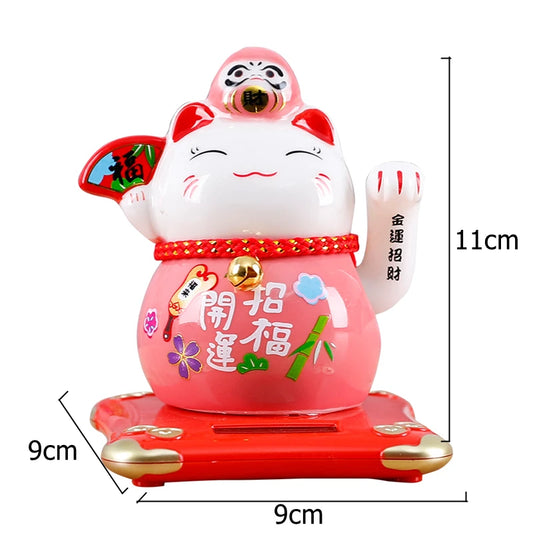
Check the dimensions. Mini figures work well on desks and narrow shelves, while larger pieces need more stable display space.
-
Verify the material. Resin, ceramic, plastic and mixed materials have different weights, finishes and care needs.
-
Check whether the paw moves. A product named “waving” may use a mechanical or battery-powered mechanism, while a static figure may only depict the raised-paw pose.
-
Choose color for your space. Symbolic color charts vary, so appearance and décor compatibility are valid reasons to choose a color.
-
Verify origin separately. Japanese-inspired design does not prove Japanese manufacture.
What Does the Raised Paw Mean?
The raised paw is the defining visual feature of Maneki Neko. In Japanese gesture, the downward-facing paw can resemble beckoning someone closer.
Popular explanations often say one paw attracts people or customers while the other attracts money or good fortune. These interpretations are widespread, but they are not perfectly standardized across every maker, region or period. Treat them as cultural associations rather than guaranteed rules.
If a specific paw meaning matters to you, inspect the exact product and any symbolism provided by its maker.
Maneki Neko Colors and Meanings
Traditional and modern Lucky Cats appear in white, black, red, gold, yellow, pink and many other colors. Retailers commonly associate these colors with ideas such as luck, protection, health, relationships or wealth.
Those modern color systems vary. A gold cat is frequently marketed around prosperity, while white is often connected with general good fortune or purity, but there is no single universal chart that should be applied to every product.
Buying tip: choose the color you actually want to display, then treat any documented maker-specific symbolism as an additional detail rather than the only reason to buy.
Japanese Lucky Cat Materials
Maneki Neko figurines can be made from ceramic, porcelain, resin, plastic and other materials. The live collection includes modern decorative products, so material should be taken from each individual product listing.
A glossy finish does not automatically mean ceramic, and a traditional-looking cat is not automatically handmade. If weight, fragility or finish matters for your display, verify the material before ordering.
Static Lucky Cat vs Waving Maneki Neko
| Type |
What to check |
| Static figurine |
Material, base stability, pose and overall size |
| Moving or waving cat |
Power source, mechanism, moving clearance and whether batteries are included |
| Mini Lucky Cat |
Small-part risk, shelf placement and visibility from normal viewing distance |
Where to Display a Maneki Neko
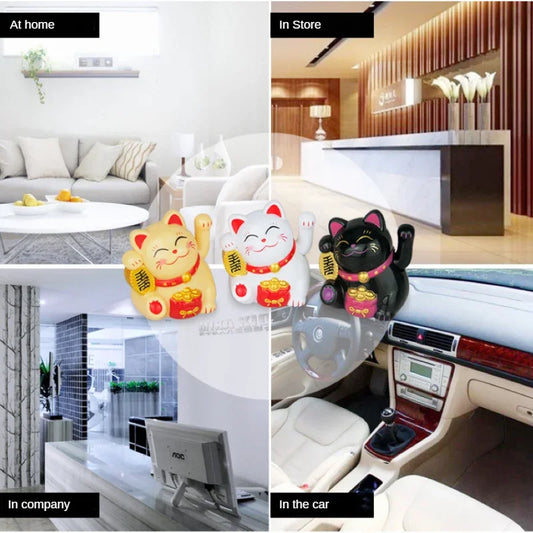
Maneki Neko are often displayed near entrances, counters, desks, shelves and business spaces because of their welcoming association. There is no requirement that every Lucky Cat must face one exact direction or sit at one specific height.
For practical placement:
- Use a stable, level surface.
- Leave enough clearance around a moving paw.
- Keep breakable figures away from shelf edges.
- Avoid prolonged direct sunlight if the finish may fade.
- Keep electrical or battery-powered waving designs away from moisture.
Placement can respect the cultural idea of welcoming while still being driven by safe display and the layout of your room.
Maneki Neko as a Gift
A Lucky Cat can be a thoughtful gift for a new home, business opening, desk, shop or someone who enjoys Japanese décor. If the gift is intended to communicate a particular wish such as prosperity or good luck, include that meaning in the card rather than assuming the recipient knows one specific color or paw convention.
For other Japanese decorative figures, compare Japanese Daruma Dolls, Japanese Kokeshi Dolls and the broader Japanese Figurines collection.
Are These Maneki Neko Made in Japan?
Do not assume Japanese manufacture, handmade production or artisan origin from the collection title. Check the exact product listing for material, origin and manufacturing information.
What Affects Japanese Lucky Cat Prices?
Use the live product card for current pricing because prices and variants can change. Differences can reflect size, material, moving mechanisms, finish, decorative details, packaging and current promotion.
How to Care for a Maneki Neko
- Dust static figurines with a soft dry cloth.
- Avoid abrasive cleaners on painted, plated or glossy finishes.
- Do not immerse battery-powered or mechanical waving cats in water.
- Keep moving paws free from objects that could block the mechanism.
- Store fragile pieces on stable surfaces away from edges.
- Use product-specific care instructions whenever provided.
Japanese Lucky Cat and Maneki Neko FAQs
What is a Maneki Neko?
Maneki Neko is the Japanese beckoning-cat figure widely associated with welcoming luck and prosperity.
What does the raised paw mean?
The raised paw represents a beckoning gesture. Popular interpretations of left and right paws vary by maker and tradition.
What do Lucky Cat colors mean?
Colors are commonly linked with different wishes, but modern color charts are not universal. Check maker-specific symbolism when available.
Where should I place a Maneki Neko?
Entrances, counters, shelves and desks are common choices. Prioritize visibility, stability and enough clearance for moving designs.
Are all Maneki Neko ceramic?
No. Modern Lucky Cats can use ceramic, resin, plastic and other materials. Check the exact product specification.
Are these Lucky Cats made in Japan?
Do not assume Japan-made origin from the collection name. Check the product page for origin information.
Shop Japanese Lucky Cat, Maneki Neko
Compare Lucky Cats by size, material, color, raised-paw pose, moving mechanism, finish and intended display. For more Japanese decorative figures, browse Japanese Figurines.