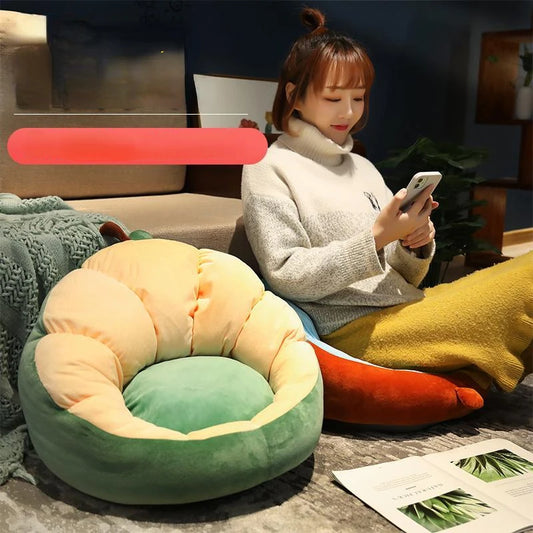
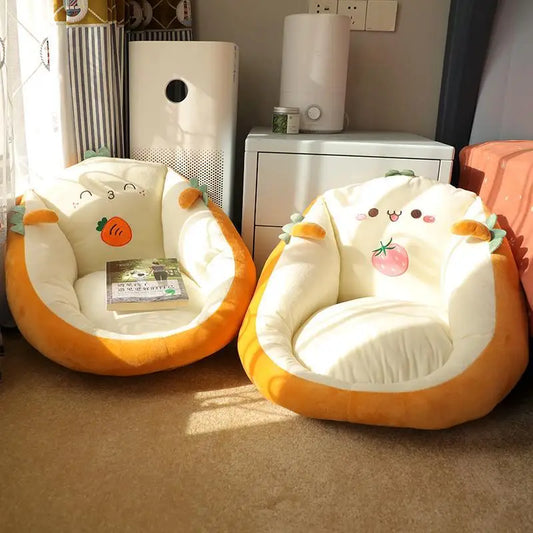
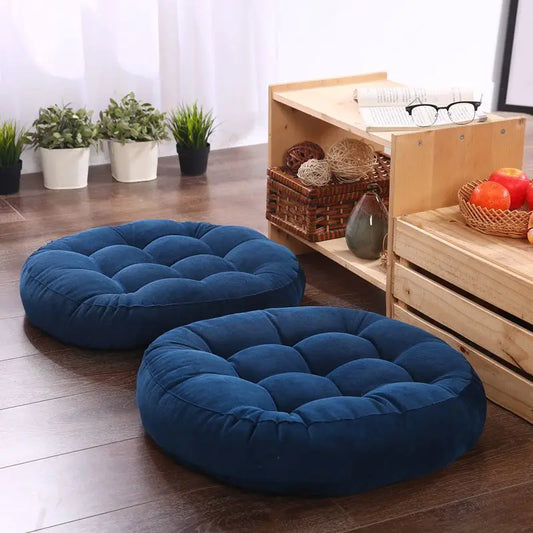
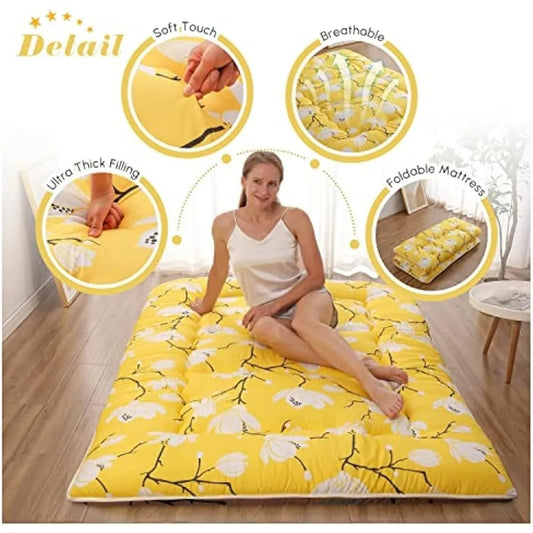
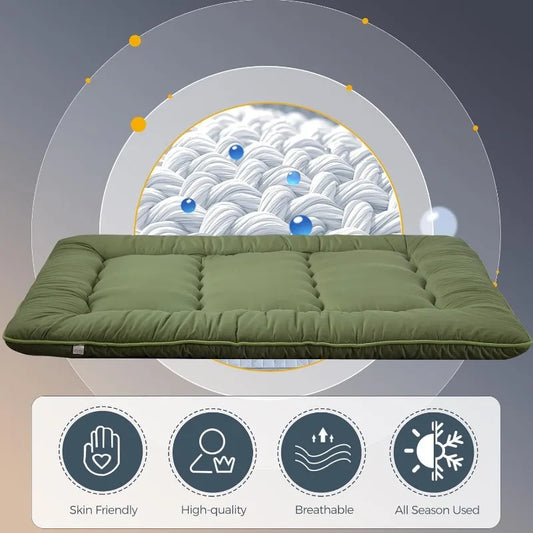
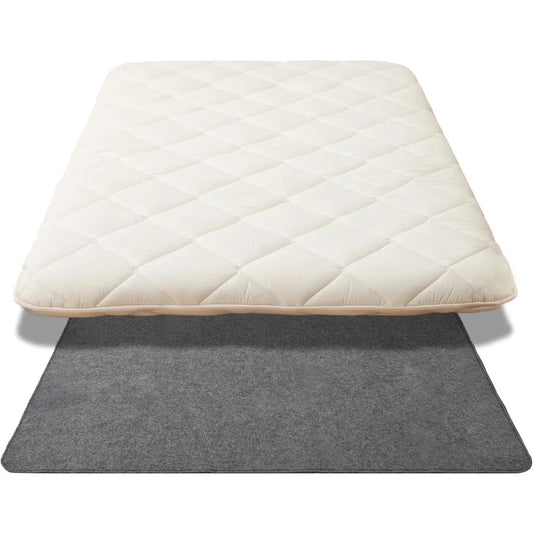
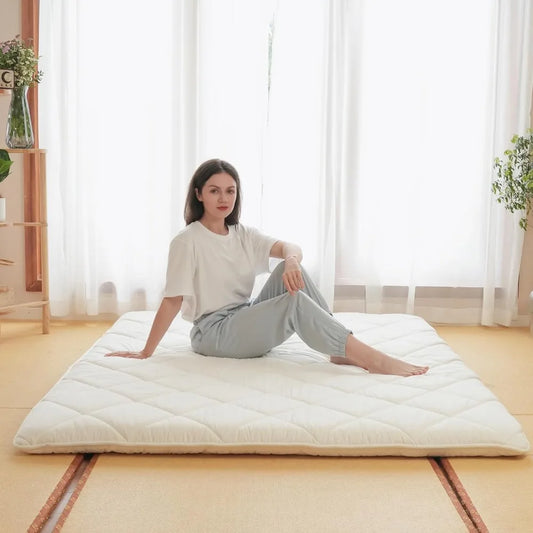
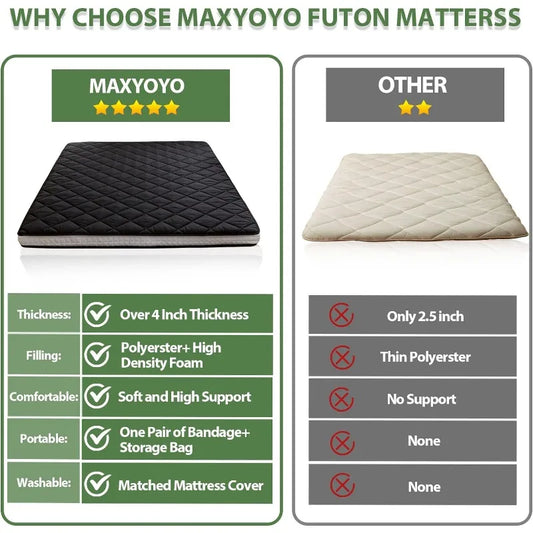
Shop Japanese futon mattresses, floor mattresses, futon-style sleeping pads, floor cushions and compact seating cushions. This collection includes both sleep-oriented products and smaller floor-seating items, so the word “futon” should not be assumed to mean one identical construction across every product.
Traditional Japanese futon bedding is commonly used close to the floor and is strongly associated with tatami rooms. Modern retail products can be thicker, use different fillings, follow Western bed sizes or function more like floor mattresses and cushions. Always check the exact product dimensions, filling, cover material and intended use before ordering.
Jump to: what is a Japanese futon · types · how to choose · size · thickness and firmness · floor and tatami use · airing and moisture · care · FAQs
What Is a Japanese Futon?
In Japan, futon refers to bedding used for sleeping close to the floor. A traditional sleeping setup commonly includes a shikibuton, the mattress-like layer placed underneath the sleeper, and a kakebuton, the quilt or covering placed over the sleeper.
Futon bedding is often associated with tatami rooms because the bedding can be laid out at night and stored away during the day, leaving the room available for other uses.
Modern products sold internationally under the name “Japanese futon” can differ considerably from that traditional setup. Some are thicker floor mattresses, some resemble folding sleeping pads, and others use the term futon for floor cushions or low seating. This collection therefore uses product-level specifications rather than treating every item as a traditional Japanese shikibuton.
Japanese Futon Types in This Collection
| Type |
Best way to evaluate it |
| Floor futon mattress |
Sleeping dimensions, thickness, filling, surface and storage needs |
| Thick floor mattress |
Overall loft, compression, floor feel and whether it can be folded or rolled |
| Futon mat or pad |
Intended use, dimensions, padding and compatibility with the floor surface |
| Floor cushion |
Seat dimensions, thickness, filling and whether it is designed for sitting rather than sleeping |
| Futon-style cushion sofa |
Seating position, back support structure, floor footprint and intended room use |
How to Choose a Japanese Futon
-
Decide whether you need sleeping or seating first. A compact floor cushion is not a substitute for a full sleeping mattress.
-
Measure the available floor area. Compare the exact product length and width with the space where it will be laid out.
-
Check thickness. A thicker product may feel more cushioned but may also be bulkier to store.
-
Check the filling. Cotton, polyester, foam, fiber blends and layered constructions behave differently.
-
Check the cover material. Removable, washable and fixed covers require different care.
-
Check whether it folds or rolls. Storage matters if the room is used for other purposes during the day.
-
Check the intended floor. Tatami, wood, laminate, tile and carpet can affect ventilation, grip and perceived firmness.
Japanese Futon Sizes
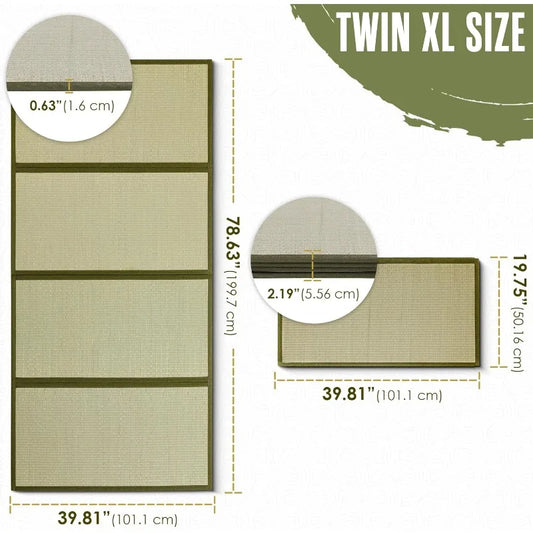
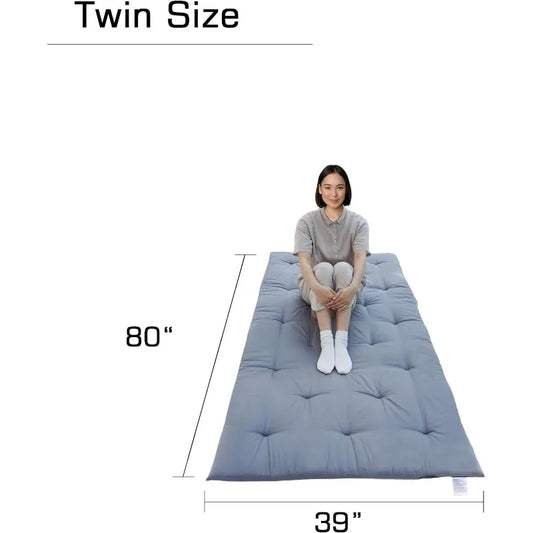
Do not assume that a product labeled twin, full or queen will match the exact dimensions of your existing bed frame or bedding. International futon products may use regional mattress-size labels differently.
Use the listed length, width and thickness as the final reference. This is especially important if you plan to place the futon inside a fixed alcove, between furniture or on a specific tatami or floor-mat area.
Size tip: measure the actual floor space before ordering. Product photography can make a floor mattress appear wider or thicker than it is.
Thickness, Firmness and Floor Feel
A futon used directly on the floor will usually feel different from a mattress placed on a sprung bed base. Thickness alone does not tell you how firm or supportive a product will feel because filling density, layering, body weight and the surface underneath all matter.
Avoid assuming that a firmer or thinner futon will treat back pain, improve posture or provide orthopedic benefits. Those are individual health questions and require more than a collection-wide product claim.
If you already know you dislike sleeping close to a firm floor, look carefully at the product’s thickness and construction rather than choosing based only on the Japanese futon style.
Using a Futon on Tatami, Wood or Other Floors
Tatami
Traditional Japanese sleeping arrangements commonly place futon bedding on tatami. Tatami provides a different surface feel from hard tile or wood and is an important part of the traditional room setup.
For compatible floor coverings, browse the Japanese Mat collection, but check the individual mat carefully because not every Japanese-style mat is traditional tatami or suitable beneath a sleeping futon.
Wood or Laminate
Direct floor use can feel firmer and can trap moisture underneath the bedding. Check the underside and floor regularly and follow the product’s airing guidance.
Tile
Tile can feel colder and harder than tatami or wood. Check whether the product provides enough insulation and cushioning for your intended use.
Carpet
Carpet can soften the feel, but thick carpet may also reduce ventilation underneath a floor mattress. Keep both the futon and floor dry.
Airing a Japanese Futon and Managing Moisture
Floor bedding is close to the surface beneath it, so moisture management matters. Warmth and perspiration can create dampness between the mattress and floor if the bedding remains in one place continuously.
- Allow the sleeping surface and underside to air regularly.
- Do not store a futon while it is damp.
- Inspect the floor beneath it for moisture or condensation.
- Follow the manufacturer’s guidance for sunning, airing or drying because materials react differently to direct sunlight and heat.
- If the futon is designed to fold or roll, store it only after it is dry.
There is no single universal rule that every modern futon should be placed in direct sun for a fixed number of hours. Use the care instructions for the actual filling and cover.
Japanese Futon vs Western Mattress
| Feature |
Japanese-style floor futon |
Typical Western mattress |
| Placement |
Often used close to or directly on the floor |
Usually used on a bed frame or base |
| Storage |
Some designs can fold or roll away |
Usually remains permanently in place |
| Thickness |
Often thinner, but modern versions vary widely |
Typically thicker |
| Room use |
Can free floor space when stored |
Bed occupies a fixed footprint |
Are These Traditional Japanese Futons Made in Japan?
Do not assume Japanese manufacture, traditional cotton filling, handmade construction or artisan production from the collection name. The collection includes modern futon-style mattresses and cushions, and origin should be checked product by product.
What Affects Japanese Futon Prices?
Use the live product cards for current pricing because prices and variants can change. Differences can reflect dimensions, filling, thickness, cover material, construction, whether the product is intended for sleeping or seating, and shipping volume.
Japanese Futon Cleaning and Care
- Follow the care instructions for the exact filling and cover.
- Do not assume the entire mattress is machine washable.
- If a removable cover is provided, wash it only according to its care label.
- Spot-clean only when the material allows it.
- Air the bedding regularly and keep the underside dry.
- Do not store a damp futon in a closed cupboard or bag.
- Rotate or turn the product only if the manufacturer allows it.
- Keep floor cushions and sleeping mattresses separated by intended use when possible.
Japanese Futon FAQs
What is a Japanese futon?
Japanese futon refers to bedding used close to the floor. Traditional setups commonly include a shikibuton underneath the sleeper and a kakebuton on top.
Can a futon be used directly on the floor?
Many floor futons are designed for floor use, but check the exact product and manage moisture underneath the bedding.
Do I need tatami under a Japanese futon?
Tatami is traditional and changes the feel of the sleeping surface, but modern floor futons may also be used on other suitable floors when product instructions allow it.
Are Japanese futons good for back pain?
Comfort and medical suitability vary by person and product. This collection does not make a blanket orthopedic or back-pain treatment claim.
Can I machine wash a Japanese futon?
Do not assume so. Some covers may be washable while full mattresses may require different care. Follow the exact product instructions.
Are these futons made in Japan?
Do not assume Japanese manufacture from the collection title. Check the individual product page for origin and construction details.
Shop Japanese Futon Mattresses and Floor Cushions
Compare products by sleeping vs seating use, exact dimensions, thickness, filling, cover material, foldability, floor compatibility and care requirements. If you want a traditional-style setup, pay particular attention to the distinction between a sleep mattress and the smaller cushions or pads also included in this collection.