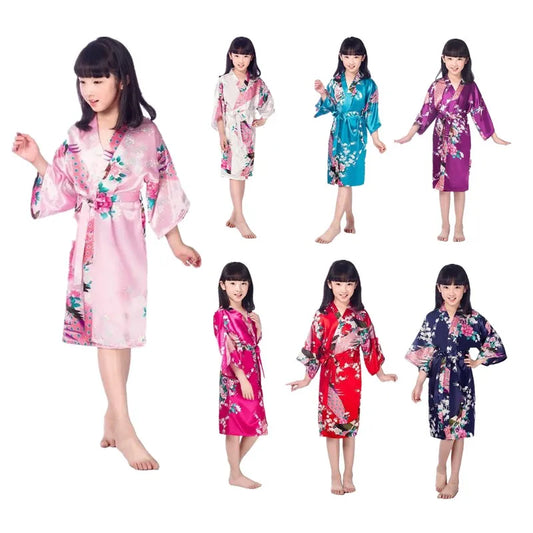
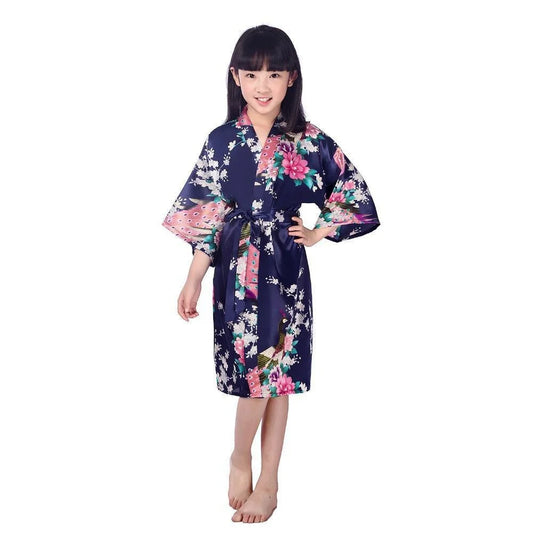
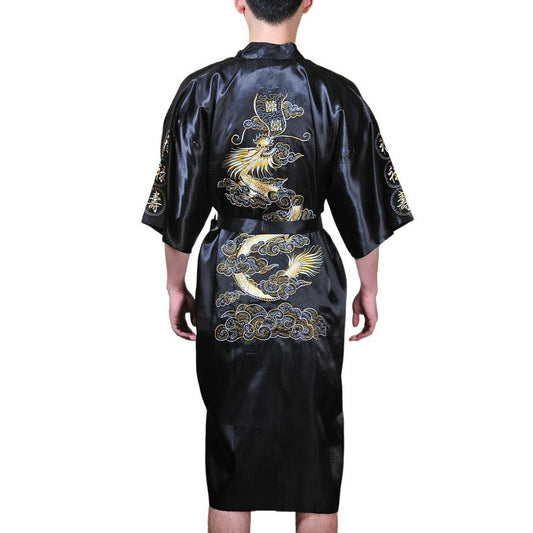
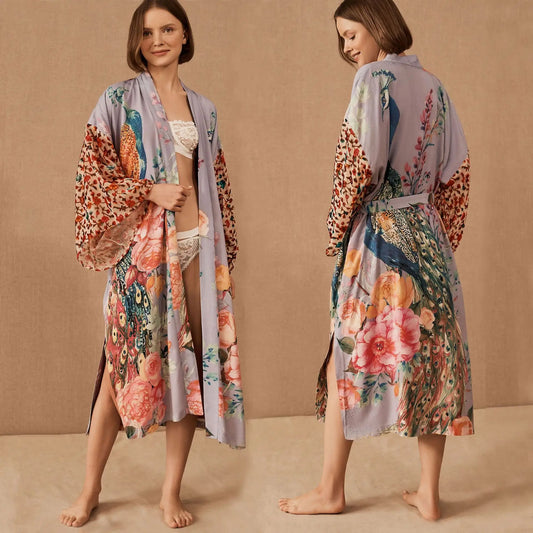
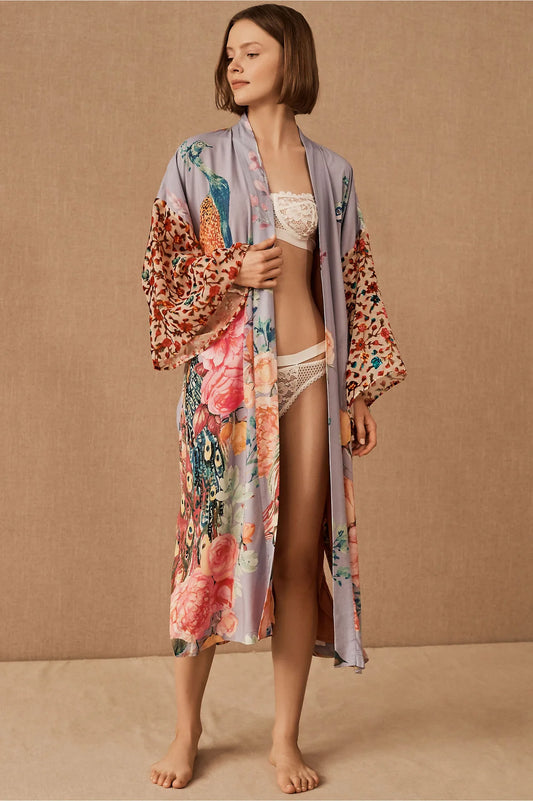
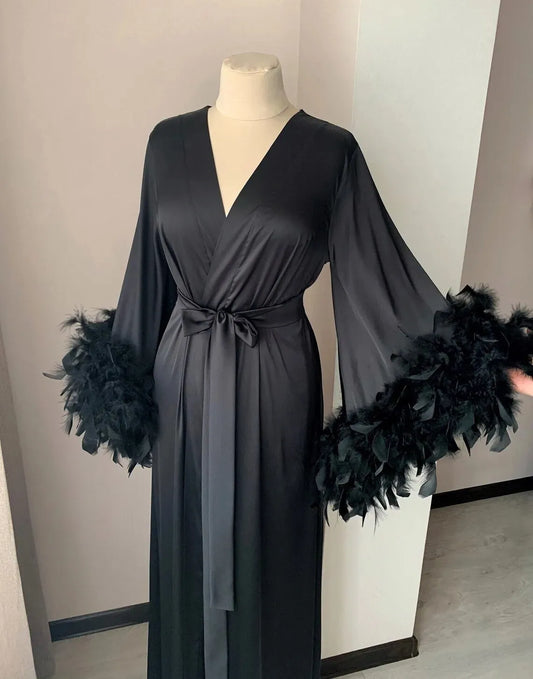
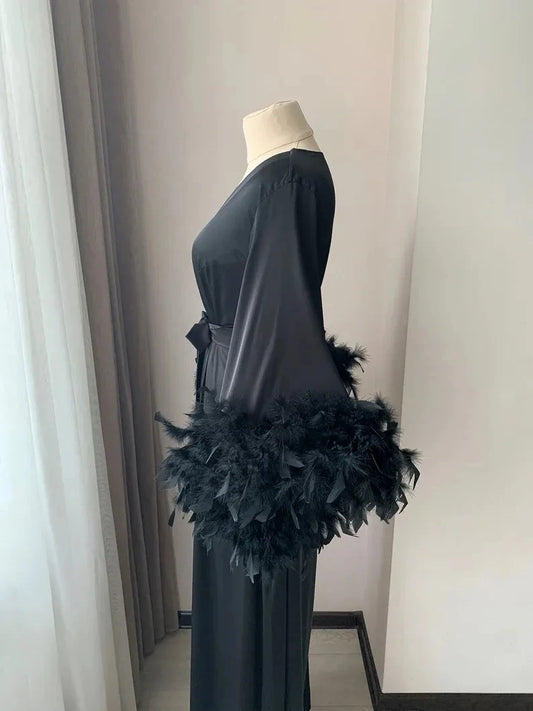
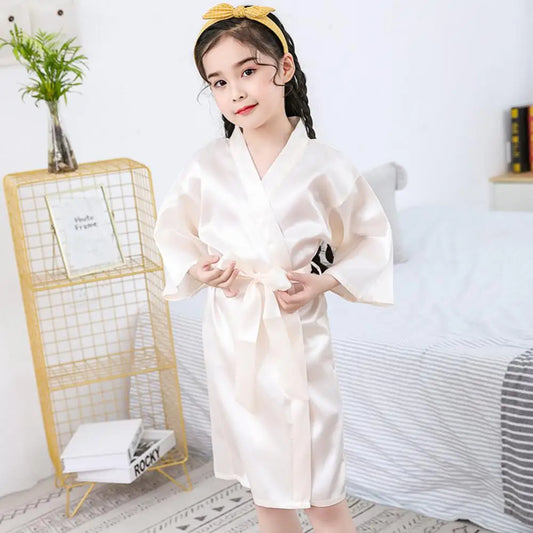
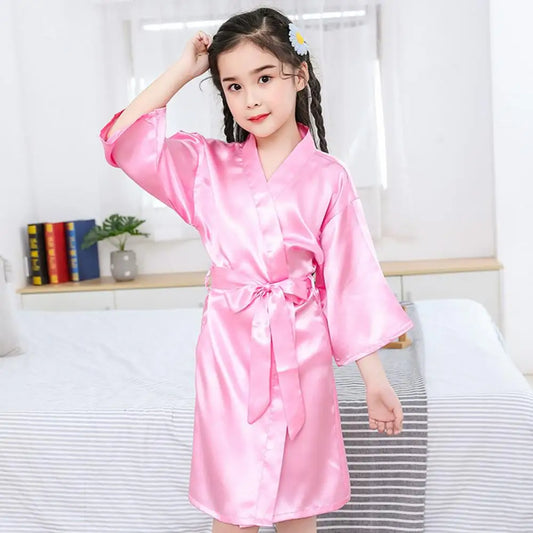
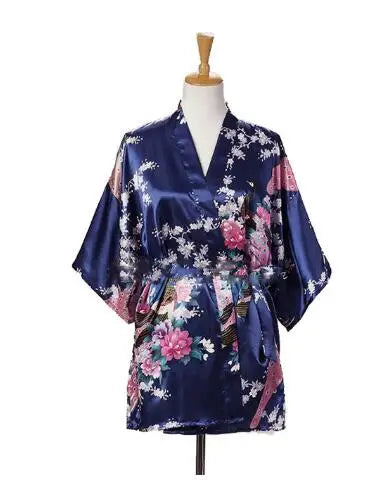
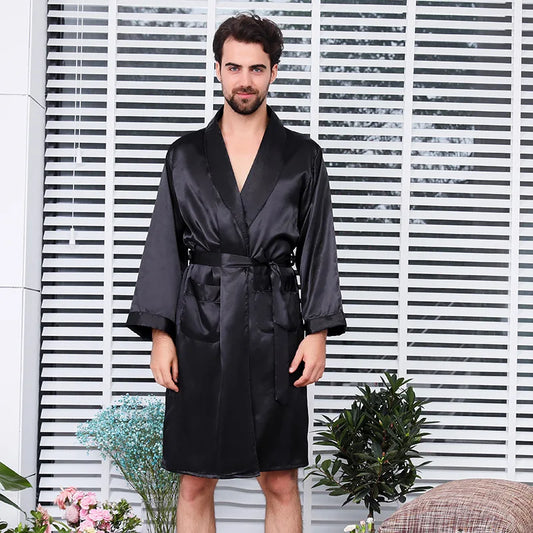
Shop Japanese kimono robes and kimono-inspired lounge robes in long, embroidered, floral, peacock, nightwear, couples and children's styles. The current collection is modern robe and loungewear fashion. These products may borrow kimono-inspired shapes, sleeves or decorative motifs, but they should not automatically be treated as traditional formal kimono.
Material, thickness, length, belt style and sizing vary by product. Do not assume every robe is silk, satin, made in Japan, handmade, suitable for sleep, appropriate as swimwear or designed for formal Japanese dress. Use the individual product page for the exact fabric, size chart and care instructions.
Jump to: robe types · how to choose · fit and sizing · materials · how to wear · robe vs kimono · children's robes · care · FAQs
Japanese Kimono Robe Styles
| Robe type |
What to compare |
| Long lounge robe |
Length, fabric weight, belt, sleeve width and warmth |
| Embroidered robe |
Embroidery placement, backing, fabric care and snag risk |
| Floral or peacock robe |
Print scale, color, garment length and whether the design is printed or embroidered |
| Nightwear robe |
Fabric feel, opacity, closure and care instructions |
| Children's robe |
Age/height sizing, belt design, length, fabric and adult supervision where needed |
How to Choose a Japanese Kimono Robe
-
Start with use. A warm thick robe, lightweight lounge robe and decorative robe serve different purposes.
-
Check garment length. Long robes create more coverage but need more care around stairs and movement.
-
Check the size chart. Adult letter sizes and children's age or height labels are not standardized across suppliers.
-
Check the fabric. Different textiles change softness, breathability, warmth, shine and washing requirements.
-
Check the closure. Confirm whether the robe uses a removable belt, internal tie or another fastening system.
-
Check opacity. Lightweight or pale robes may be more sheer than product photos suggest.
-
Choose decoration after fit. Peacock, floral, dragon or feather styling should not come before practical sizing and comfort.
Kimono Robe Fit and Sizing
Robe silhouettes are often relaxed, but relaxed fit does not mean one size suits everyone. Shoulder width, sleeve length, total length and overlap at the front can all affect comfort and coverage.
Compare the product measurements with a robe or loose garment you already own. If the listing gives body measurements, check whether they describe the wearer or the garment itself.
Fit tip: for a wrap robe, enough front overlap matters as much as chest width. A robe can technically close but still provide less coverage than expected.
Kimono Robe Materials
The collection should not be described as one material. Product titles include satin-style, thick, embroidered and nightwear robes, but exact textile composition is product-specific.
Satin and Satin-Look Fabrics
“Satin” describes a smooth, lustrous weave or surface and does not automatically mean silk. Satin robes can be made from polyester or other fibers. Check the fiber content when material matters.
Thicker Robes
Heavier or lined robes can provide more warmth for home wear, but thickness and insulation should be checked on the exact product.
Embroidered Robes
Embroidery adds texture and visual detail but may require gentler washing and storage to protect raised threads.
Printed Robes
Printed floral, peacock and other decorative designs may need lower heat and gentler washing to preserve color.
How to Wear a Japanese Kimono Robe
At Home
Use a robe as a lounge layer over sleepwear or comfortable clothing. Choose thickness based on room temperature and season.
Getting Ready
Lightweight robes can be useful while getting dressed, doing hair or makeup, provided the fabric and sleeves do not create a hazard around hot tools.
Decorative Fashion Layer
Some longer or highly printed robes can be styled over simple clothing as modern fashion. Whether this works outside the home depends on fabric transparency, length and overall construction.
Photography
Embroidered, peacock, floral and dragon designs can create strong visual interest for portraits. Check whether the decorative work is concentrated on the back, sleeves or front before planning the pose.
Do not automatically describe these robes as appropriate for weddings, formal Japanese ceremonies, martial-arts costume or historical cosplay. Those uses require more specific garment context.
Kimono Robe vs Traditional Kimono vs Yukata
A traditional kimono is a specific Japanese garment with its own construction, dressing conventions and accessories. A modern “kimono robe” is usually a lounge or fashion robe inspired by the wrap shape or visual style of kimono.
A yukata is also a distinct Japanese garment, typically an unlined casual kimono associated with warm-weather and bath-related settings in Japan. A modern satin or nightwear robe should not automatically be labeled yukata.
For broader kimono-style garments, browse the Japanese Kimono collection. For jacket-style layers, browse Japanese Kimono Jackets.
Japanese-Inspired Motifs on Robes
The assortment includes dragon, floral, peacock, feather and other decorative imagery. These motifs can create a Japanese-inspired or East Asian fashion look, but the artwork alone does not prove a traditional garment, cultural symbolism or Japanese manufacture.
A peacock or dragon design may be chosen simply for visual appeal. Avoid assigning one fixed cultural meaning unless the individual design has documented context.
Children's Kimono Robes
Children's robes need more careful sizing than adult lounge robes. Age labels are only a starting point.
- Check the child's height and the garment length.
- Make sure the hem does not create a tripping hazard.
- Check sleeve length around food, candles, heaters and hot surfaces.
- Keep removable belts or long ties away from very young children when unsupervised.
- Do not treat a decorative robe as sleepwear unless the product is specifically intended and labeled for that use.
Are These Robes Made in Japan?
Do not assume Japanese manufacture, traditional tailoring, silk construction or artisan production from the collection name. Check the individual product listing for origin and material information.
What Affects Kimono Robe Prices?
Use live product cards for current pricing. Differences can reflect garment length, fabric, lining, embroidery, print complexity, children's vs adult sizing and construction.
Kimono Robe Care
- Follow the exact care label for the selected robe.
- Do not assume satin-look robes are silk or require the same washing method as silk.
- Wash embroidered areas gently and avoid snagging raised threads.
- Use lower heat when the print or synthetic fabric can be damaged by high temperatures.
- Dry thick robes fully before enclosed storage.
- Store long robes so hems and belts do not remain tightly creased for long periods.
- Do not use bleach or tumble drying unless the care label specifically permits it.
Japanese Kimono Robe FAQs
Is a kimono robe the same as a traditional kimono?
No. The robes in this collection are modern lounge and fashion garments inspired by kimono shapes or decoration.
Is a kimono robe the same as a yukata?
No. Yukata is a specific casual Japanese kimono category. A modern nightwear or satin-style robe should not automatically be called yukata.
Are all kimono robes satin?
No. Material varies by product. Check the exact fabric specification instead of assuming one textile across the collection.
How should I choose a robe size?
Compare garment measurements, total length and front overlap with a robe you already own. For children, use height as well as age guidance.
Can I wear a kimono robe outside?
Some modern robes can work as fashion layers, but check opacity, fabric, closure and length before treating loungewear as outerwear.
Are these robes made in Japan?
Do not assume Japanese manufacture from the collection name. Check the product listing for origin information.
Shop Japanese Kimono Robes
Compare robes by intended use, garment length, size chart, fabric, thickness, closure, decoration, opacity and care requirements, then choose the product that fits your actual home, fashion or photography use.